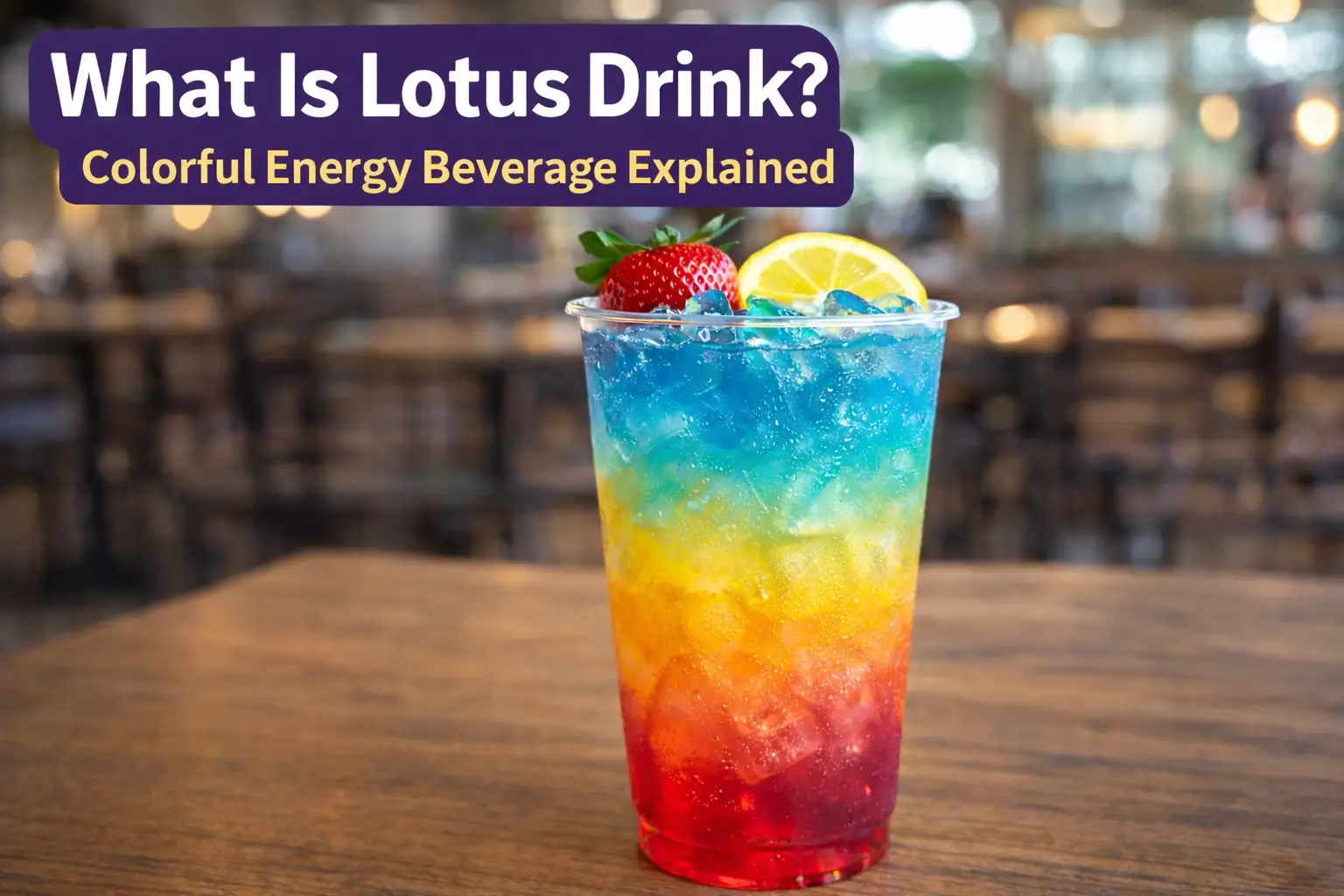
What is lotus drink? It’s a question more and more people in the United States are asking as colorful energy beverages begin appearing in cafés, drive-through coffee stands, and social media posts. In simple terms, it’s a plant-based energy beverage made with Lotus Plant Energy concentrate, often mixed with sparkling water, flavored syrups, fruit juices, and ice to create a bright, refreshing drink.
Unlike traditional canned energy drinks, lotus beverages are known for their vibrant colors, customizable flavors, and smoother taste — closer to a sparkling fruit soda with an energy boost than a typical can of energy drink. Coffee stands often build their own signature versions with names like Ocean Lotus, Sunset Lotus, or Tropical Lotus, which is part of why the drink has become so shareable on TikTok and Instagram.
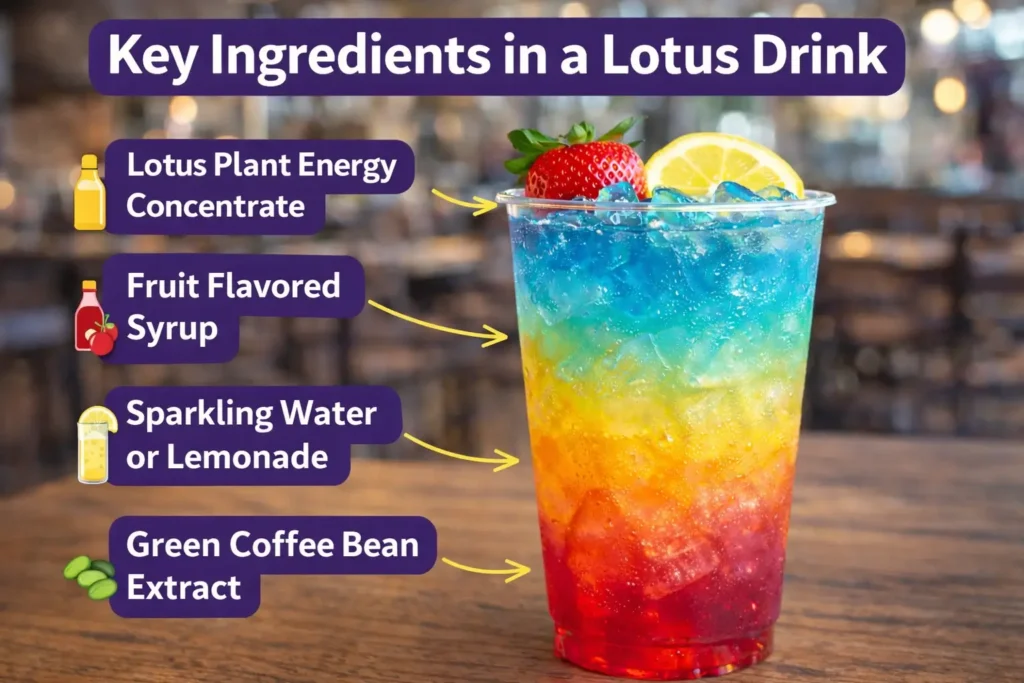
At its core, a lotus drink uses Lotus Plant Energy, a botanical energy concentrate made from ingredients such as green coffee bean extract, natural caffeine, vitamins, and fruit flavorings. When mixed with sparkling water, lemonade, or flavored syrups, the result is a colorful beverage that feels lighter and more customizable than most standard energy drinks — similar in spirit to the citrus-forward ranch water recipe, just built around a different base.
This guide covers what lotus drinks are made of, what they taste like, how cafés prepare them, how they compare to coffee and traditional energy drinks, and whether questions like is lotus drink bad for you or lotus energy drink side effects are worth worrying about.
Once you know what lotus drink actually contains, the preparation itself is refreshingly simple. The range of customizable ingredients is what lets each café put its own spin on it.
What Is Lotus Drink Made Of? Key Ingredients Explained
Many people are surprised to learn the beverage isn’t actually made from lotus flowers. The name refers to the Lotus Energy brand, which produces the plant-based concentrate used in these drinks. The energy boost comes from natural caffeine derived from green coffee beans, combined with vitamins, botanical extracts, and fruit flavorings — which is why lotus drinks tend to taste lighter and fruitier than most traditional energy drinks.
Calorie content depends almost entirely on what’s added to the base. A basic lotus drink with sparkling water stays relatively light, while versions built with flavored syrups or cream can add up quickly. Like most caffeinated beverages, it’s worth having in moderation, especially if you’re sensitive to caffeine — though since the drink is customizable, most cafés are happy to adjust sweetness and flavor to taste.
Main Ingredients in a Lotus Drink
| Ingredient | Purpose in the Drink |
|---|---|
| Lotus energy concentrate | Provides the plant-based energy base |
| Natural caffeine | Gives the drink its energizing effect |
| Green coffee bean extract | Main plant source of caffeine |
| B vitamins | Support energy metabolism |
| Fruit syrups or flavorings | Add sweetness and flavor variety |
| Sparkling water or soda | Creates a refreshing fizzy texture |
The lotus energy syrup is designed to be mixed rather than consumed on its own — cafés commonly combine it with sparkling water, lemonade, coconut water, or fruit juice. One of the reasons these drinks stand out visually is that the concentrate comes in several base varieties: blue lotus, red lotus, purple lotus, and gold lotus, each with slightly different flavor notes that let cafés design signature drinks with a distinct look.
Popular Lotus Drink Flavors and Color Variations
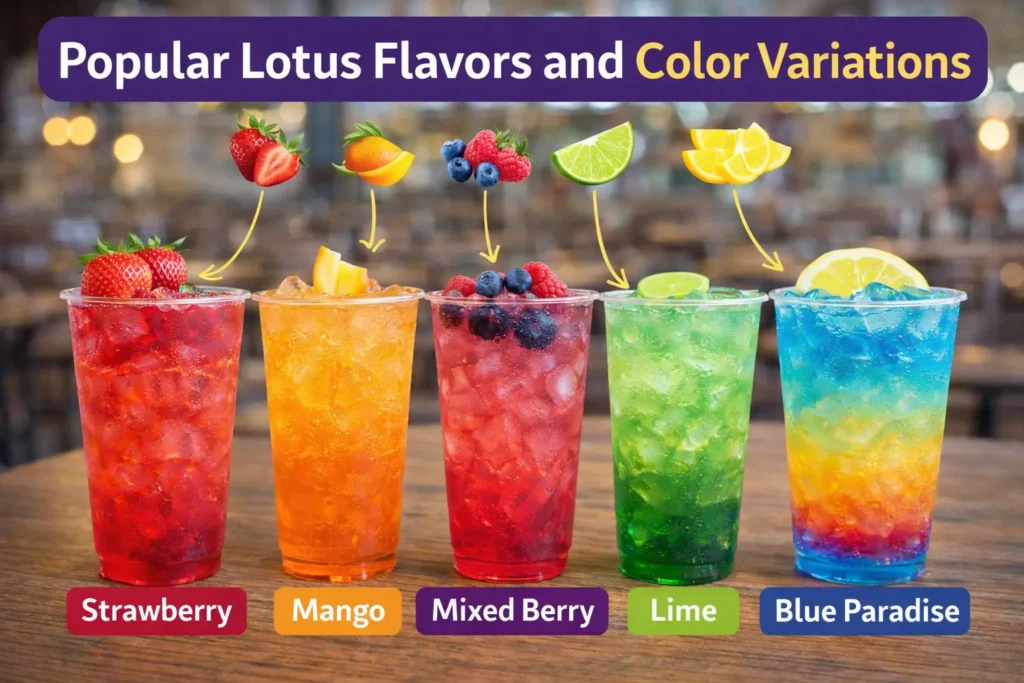
One of the main reasons these drinks have caught on is the sheer variety of colorful, fruity flavors available. Unlike most traditional energy drinks that come in a handful of fixed flavors, lotus beverages can be customized with dozens of syrups, fruit juices, and mixers — tropical fruits, berries, citrus, even creamy additions — to create combinations that feel refreshing and visually striking.
The energy base also comes in a handful of color varieties, each with its own flavor lean — a detail that matters most if you’ve heard the term “blue lotus” and aren’t sure which of two very different products people mean. My full blue lotus drink guide untangles that naming confusion and covers the flavor and caffeine details in depth.
Main Lotus Energy Base Colors
| Lotus Base | Color | Typical Flavor Notes |
|---|---|---|
| Blue Lotus | Bright blue | Light citrus and tropical notes |
| Red Lotus | Red or pink | Berry forward flavor |
| Purple Lotus | Purple | Mixed fruit taste |
| Gold Lotus | Golden yellow | Smooth tropical flavor |
Red, purple, and gold lotus bases stay closer to fruit-forward café mixing and don’t (yet) have their own dedicated guide here, so the flavor notes above stay brief. Blue Lotus gets the deep-dive treatment because it’s the variety people search for most, and the one most often confused with an unrelated herbal tea — worth reading if that’s the one you saw on a menu.
Common Lotus Drink Flavor Combinations
| Drink Style | Popular Ingredients |
|---|---|
| Tropical Lotus | Mango, pineapple, coconut |
| Berry Lotus | Strawberry, raspberry, blueberry |
| Citrus Lotus | Lemon, lime, orange |
| Sunset Lotus | Peach, passion fruit, mango |
| Ocean Lotus | Blue Lotus base with coconut and lime |
Instead of ordering the same drink every visit, most regulars end up picking their own combination of fruit syrup and sparkling base — part of why lotus energy drink recipes have become a popular thing to search for, as people try to recreate café versions at home. Baristas often layer the syrup and energy base carefully so the drink shows multiple colors in the glass, which is a big part of why it photographs so well.
Caffeine Content in a Lotus Drink
Caffeine content is one of the first things people want to know when they see these drinks on a menu. The energy comes from plant-based caffeine derived from green coffee bean extract, a natural source that differs from the synthetic caffeine in many commercial energy drinks — which is part of why the boost from a lotus beverage often feels smoother and less intense.
A typical serving of lotus concentrate contains about 80 milligrams of caffeine per ounce. The final caffeine level in your cup depends on how much concentrate the café uses and the size of the drink. For context on daily caffeine limits, the FDA’s guidance on caffeine intake is a reliable reference point if you’re tracking how lotus drinks fit into your day.
Typical Caffeine Levels
| Beverage | Average Caffeine |
|---|---|
| Lotus drink (12 to 16 oz) | 80 to 160 mg |
| Regular coffee (8 oz) | 95 mg |
| Espresso shot | 63 mg |
| Traditional canned energy drink | 150 to 200 mg |
A lotus drink made with two ounces of concentrate can land in the same range as a strong cup of coffee, especially in a larger iced serving. Baristas can also adjust the amount of concentrate up or down, so if you want more control over your caffeine intake, it’s worth asking for a specific amount rather than the default pour. Beyond caffeine, the concentrate also includes B vitamins and botanical ingredients that support energy metabolism — the same general idea behind other plant-based wellness drinks like clove water.
How Cafés Prepare a Lotus Drink
Once you understand what is lotus drink at its core, the preparation itself is refreshingly simple. Preparation starts with a measured amount of Lotus Plant Energy concentrate poured over ice, then mixed with sparkling water, lemonade, fruit juice, or another liquid base. From there, baristas usually add fruit syrups or purées — mango, strawberry, raspberry, peach, and passion fruit are the most common — to round out the flavor.
Many baristas layer the ingredients carefully so the drink shows a gradient of color in the glass, which is a big part of why these drinks do so well on social media. A lotus beverage typically takes under a minute to prepare, which is also why it’s such a natural fit for busy coffee stands and drive-throughs — and easy enough to recreate at home with the same basic ingredients.
Basic Steps to Make a Lotus Drink
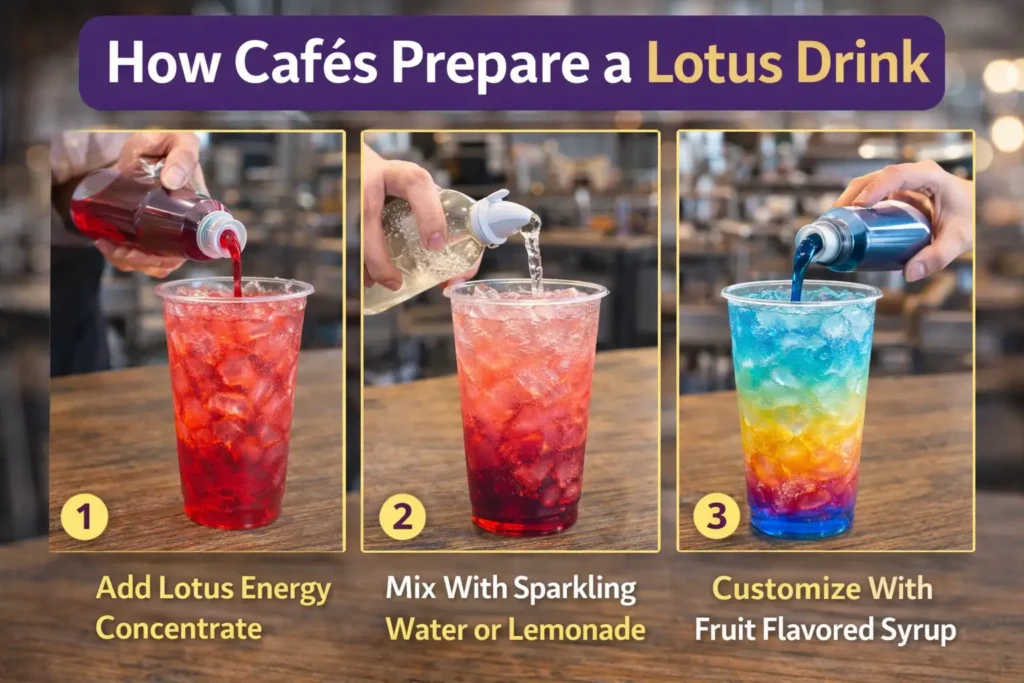
| Step | What the Barista Does |
|---|---|
| Step 1 | Fill a cup with ice |
| Step 2 | Add 1 to 2 ounces of Lotus energy concentrate |
| Step 3 | Add flavored syrup or fruit flavor |
| Step 4 | Pour sparkling water, soda, or lemonade |
| Step 5 | Stir or layer ingredients for color effects |
Lotus Drink vs Coffee and Regular Energy Drinks
Most people want to know how a lotus drink actually compares to coffee or a canned energy drink before trying one. The most noticeable difference is flavor: coffee is roasted and often a little bitter, canned energy drinks tend to lean sweet and artificial, and lotus beverages land somewhere fruitier and lighter thanks to the fruit syrups and sparkling mixers built into most recipes.
Comparison of Popular Energy Beverages
| Feature | Lotus Drink | Coffee | Traditional Energy Drink |
|---|---|---|---|
| Main caffeine source | Green coffee bean extract | Brewed coffee beans | Synthetic or mixed caffeine |
| Flavor profile | Fruity and refreshing | Roasted and bold | Sweet and artificial |
| Customization | Very high with syrups and fruit | Limited | Usually fixed flavors |
| Presentation | Colorful layered drinks | Simple hot or iced coffee | Packaged canned drink |
| Typical serving location | Cafés and drink stands | Coffee shops | Grocery stores and convenience stores |
Since lotus beverages are usually mixed fresh rather than pre-packaged, customers generally have more control over sweetness, flavor intensity, and caffeine level than they would with a canned drink off the shelf.
Why Lotus Drinks Are Becoming So Popular in the US
What is lotus drink and why is everyone suddenly asking? Searches for these drinks have climbed steadily over the past few years as more cafés and drive-through stands add them to the menu. A few things are driving that growth at once: the sheer amount of customization possible, how well the drinks photograph, and the appeal of a plant-based alternative to synthetic energy drinks. Small independent coffee shops in particular have used lotus drinks as a way to stand out from bigger chains, offering colorful, personalized options that feel different from a standard menu item.
Key Reasons Lotus Drinks Are Trending
| Reason | Explanation |
|---|---|
| High customization | Customers can mix many fruit flavors and syrups |
| Colorful appearance | Vibrant drinks look great in photos |
| Alternative to coffee | Provides energy without coffee flavor |
| Café creativity | Shops create unique signature drinks |
| Social media popularity | Visually striking drinks attract attention online |
Lotus drinks are part of a bigger wave of viral drinks people are trying at home and at cafés. If you’re curious about the savory end of that trend, the arterial flush recipe — a sharp garlic, lemon, and ginger tonic — is another drink making the rounds online, and a very different flavor from a fruity lotus drink.
Conclusion
What is lotus drink? It’s a question that’s become increasingly common as this colorful energy beverage spreads across cafés and drink stands throughout the United States. At its simplest, a lotus drink is a plant-based energy beverage made from Lotus Plant Energy concentrate, typically mixed with sparkling water, lemonade, or fruit-flavored syrups, and built around natural caffeine from green coffee bean extract along with B vitamins and botanical ingredients.
Its rapid popularity comes down to flexibility — baristas can mix syrups, fruits, and sparkling bases into dozens of variations, similar in spirit to how a ranch water recipe turns a few simple ingredients into something you can make your own. As more people discover it, the lotus drink keeps growing as a trendy, customizable alternative to coffee and traditional energy drinks.
FAQs About What Is Lotus Drink
What is lotus drink?
A lotus drink is a colorful plant-based energy beverage made with Lotus Plant Energy concentrate, a syrup-style energy base derived from green coffee bean extract, vitamins, and botanical ingredients, usually mixed with sparkling water, lemonade, or fruit syrups.
What is Lotus drink made from?
The main ingredients are Lotus energy syrup, natural caffeine from green coffee bean extract, B vitamins, sparkling water or soda, and fruit syrups or juices.
How much caffeine is in a Lotus drink?
A typical lotus beverage contains between 80 and 160 milligrams of caffeine, roughly comparable to a standard cup of coffee, depending on how much concentrate is used.
What does a Lotus drink taste like?
Light, fruity, and slightly sweet — closer to a sparkling fruit soda than a typical energy drink, thanks to the fruit syrups and citrus flavors most versions include.
Is a Lotus drink healthier than traditional energy drinks?
It depends on what’s added. Lotus beverages use plant-derived caffeine and are usually mixed fresh, giving you more control over sweetness, but added syrups can still bring the sugar and calorie count up.
Can you make a Lotus drink at home?
Yes, if you have Lotus energy concentrate. Add it to a glass of ice, then mix in sparkling water, lemonade, or fruit juice, and experiment with syrups to build your own combination.
Why are Lotus drinks so popular in cafés?
They offer a colorful, customizable alternative to standard coffee drinks, and their vibrant look makes them highly shareable on social media, which has helped them spread quickly.
What flavors are available for Lotus drinks?
Popular combinations include tropical drinks with mango or pineapple, berry drinks with strawberry or raspberry, and citrus blends with lemon or lime, plus botanical variations some cafés experiment with.
Do Lotus drinks contain coffee?
No brewed coffee, but they do contain caffeine derived from green coffee bean extract, which provides energy without a roasted coffee flavor.
Where can you buy a Lotus drink?
Now that what is lotus drink makes more sense, you’ll find it most commonly at independent coffee shops, specialty beverage stands, and drive-through cafés. Some online retailers also sell the concentrate for making it at home.
Is the lotus drink good for you?
It can fit into a balanced diet, but nutritional value depends heavily on the ingredients used — the base itself contains plant-derived caffeine and vitamins, while added syrups or sweeteners can raise the calorie and sugar content.
Is lotus healthier than Red Bull?
Some consider it a lighter alternative since it’s often mixed fresh with more control over ingredients, but both drinks contain caffeine, so moderation still applies either way.
Is lotus more caffeine than coffee?
Usually similar or slightly lower, depending on the amount of concentrate used — a typical lotus drink ranges from about 80 to 160 mg of caffeine, comparable to a regular cup of coffee.
What is a lotus drink in the USA?
In the US, it refers to a colorful café-style energy beverage made with Lotus Plant Energy concentrate, sparkling mixers, and fruit syrups, especially popular at drive-through coffee stands and specialty drink cafés.