
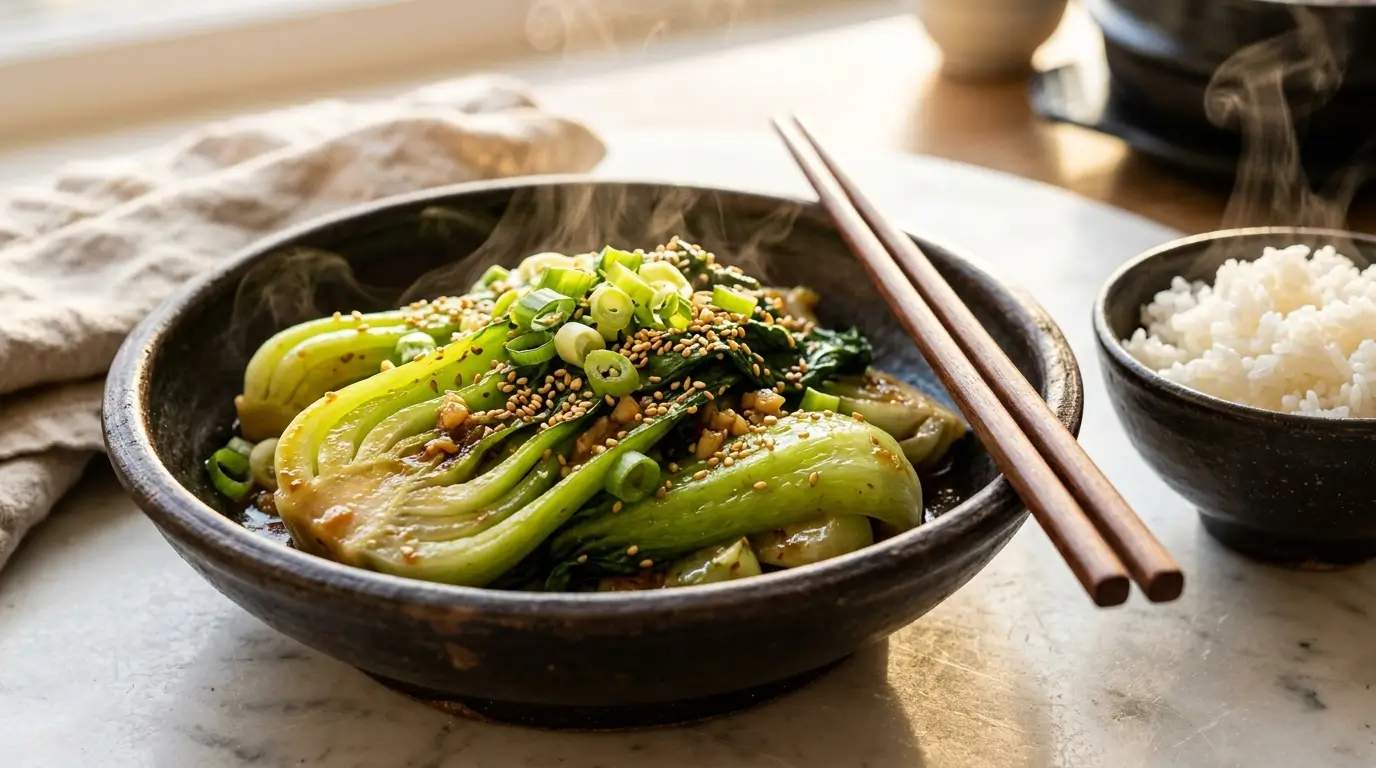
If you have been searching for a vegetable that is quick to cook, packed with nutrition, and bold enough to stand up to Korean flavors, bok choy is the answer. From fast weeknight stir-fries to comforting soups and banchan side dishes, bok choy Korean recipes deliver serious flavor without complicated steps. This guide covers everything — from choosing the best bok choy at the store to mastering the seasonings that make Korean cooking so distinct and crave-worthy.
What Is Bok Choy and Why It Works in Korean Cooking
Bok choy, also called Chinese white cabbage or pak choy, is a cruciferous vegetable with thick, juicy white stalks and dark leafy green tops. It belongs to the same family as broccoli, kale, and cabbage. In Korean cuisine, it is commonly known as ‘cheonggyeongchae’ and shows up in banchan dishes, soups, stir-fries, and even kimchi variations.
Its mild flavor is the secret weapon here. Bok choy absorbs bold Korean seasonings beautifully — think soy sauce, sesame oil, garlic, gochugaru, and doenjang — without getting overpowered. The stalks stay crisp under high heat while the leaves wilt just enough to create a satisfying texture contrast.
Why Bok Choy Fits Korean Flavor Profiles
Korean cooking relies heavily on balance: salty, savory, spicy, and slightly sweet. Bok choy sits right in the middle of all these notes. Its natural sweetness plays off the heat of gochugaru. Its water content mellows intense garlic and soy sauces. And unlike some leafy greens that turn mushy or bitter when cooked fast over high heat, bok choy holds up perfectly — which is essential for stir-fries and hot pot-style soups.
Baby bok choy (the smaller, more tender variety) is especially popular in Korean home cooking because it cooks in under five minutes and the whole head can be halved and cooked whole, making prep minimal.
Bok Choy vs Other Korean Greens
Korean cuisine uses a wide range of greens — napa cabbage, spinach (sigeumchi), water spinach, perilla leaves, and chrysanthemum greens. So why choose bok choy? Compared to napa cabbage, bok choy has a firmer texture and holds up better in soups and stir-fries. Compared to spinach, it has more crunch and a more neutral flavor that works across a wider range of Korean dishes. If you already love Korean spinach namul, you will love what happens when you swap in bok choy.
Nutritional Benefits
Bok choy is one of the most nutrient-dense vegetables you can add to your plate. A single cup of cooked bok choy delivers significant amounts of vitamin C, vitamin K, vitamin A, folate, calcium, and potassium — all for fewer than 20 calories. It is also rich in antioxidants and has anti-inflammatory properties, making it a smart addition to any diet. When paired with Korean sesame oil and garlic (both known for their own health benefits), you get a dish that is as good for your body as it tastes.
Essential Ingredients in Bok Choy Korean Recipes
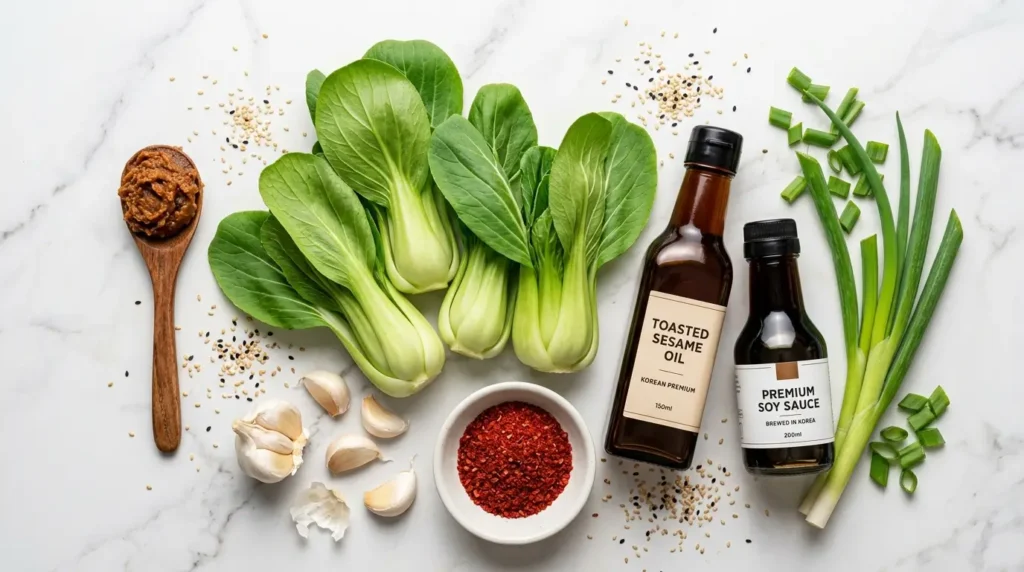
Getting the ingredients right is what separates a bland bok choy dish from one that tastes like it came from a Korean restaurant. Here is what you need on hand:
Core Korean Seasonings Used with Bok Choy
| Ingredient | Amount |
| Sesame oil | 1–2 tablespoons (finishing oil, not for high heat) |
| Soy sauce (ganjang) | 1–3 tablespoons depending on dish |
| Minced garlic | 3–5 cloves, freshly minced |
| Gochugaru (Korean red pepper flakes) | 1–2 teaspoons for mild, up to 1 tablespoon for spicy |
| Gochujang (Korean chili paste) | 1 tablespoon for stir-fries and soups |
| Rice vinegar | 1 teaspoon for brightness in cold preparations |
| Sugar or honey | 1 teaspoon to balance spice and salt |
| Green onions | 2–3 stalks, sliced thin for garnish and cooking |
| Toasted sesame seeds | 1 tablespoon for topping |
| Fish sauce (optional) | 1 teaspoon for deeper umami — skip for vegan dishes |
| Neutral oil (avocado or vegetable) | 1–2 tablespoons for stir-frying |
Flavor Balance in Korean Vegetable Dishes
Korean banchan is built on achieving perfect balance in every bite. For bok choy dishes, the formula typically works like this: soy sauce provides salt and umami, sesame oil adds richness and nutty aroma, garlic delivers sharpness and depth, gochugaru or gochujang bring heat and color, and a touch of sugar or honey smooths out the edges. Rice vinegar or a squeeze of lemon lifts the whole dish when it risks feeling too heavy.
Do not skip the finishing sesame oil. Adding it at the very end — off the heat — preserves its flavor and fragrance. This single habit elevates every Korean bok choy dish you make.
Easy Bok Choy Korean Recipes You Can Cook at Home
Korean Style Garlic Bok Choy Stir Fry
This is the recipe to start with. It takes under ten minutes, uses a short ingredients list, and delivers the bold, garlicky flavor that makes Korean cooking so satisfying. It works as a side dish for rice or as a topping for ramen bowls.
Yield: 4 servings | Prep time: 5 minutes | Cook time: 6 minutes
Ingredients:
| Ingredient | Amount |
| Baby bok choy | 4–6 heads, halved lengthwise |
| Garlic, minced | 4 cloves |
| Soy sauce | 2 tablespoons |
| Sesame oil | 1.5 tablespoons |
| Neutral oil | 1 tablespoon |
| Gochugaru | 1 teaspoon (optional) |
| Toasted sesame seeds | 1 tablespoon |
| Sugar | 1/2 teaspoon |
| Water | 2 tablespoons |
Method:
- Wash bok choy well, separating any grit from the base. Halve each head lengthwise.
- Heat a large skillet or wok over high heat. Add neutral oil and swirl to coat.
- Add garlic and stir for 30 seconds until fragrant but not brown.
- Place bok choy cut-side down. Cook without moving for 2 minutes to get a light sear.
- Add soy sauce, sugar, gochugaru, and water. Toss and cook for 2 more minutes.
- Remove from heat. Drizzle with sesame oil and top with sesame seeds. Serve immediately.
Pro tip:
Do not crowd the pan. Cook in two batches if needed. Crowded bok choy steams instead of searing, and you lose that caramelized, slightly charred edge that makes this dish special.
Spicy Korean Bok Choy Side Dish (Banchan Style — Bok Choy Muchim)
This cold-dressed preparation is inspired by Korean muchim, where vegetables are blanched and then tossed in a bold seasoning sauce. It is served at room temperature or cold and keeps well in the refrigerator for up to three days — making it perfect for meal prep.
Yield: 4 servings | Prep time: 8 minutes | Cook time: 3 minutes
Ingredients:
| Ingredient | Amount |
| Baby bok choy | 6 heads, quartered |
| Soy sauce | 2 tablespoons |
| Gochugaru | 1.5 teaspoons |
| Sesame oil | 1 tablespoon |
| Rice vinegar | 1 teaspoon |
| Garlic, minced | 3 cloves |
| Sugar | 1/2 teaspoon |
| Green onion | 2 stalks, sliced thin |
| Toasted sesame seeds | 2 teaspoons |
Method:
- Bring a pot of lightly salted water to a boil. Add bok choy and blanch for 60–90 seconds only. The stalks should be just tender, the leaves bright green.
- Immediately transfer to an ice water bath to stop cooking and preserve color. Drain well and gently squeeze out excess water.
- In a large bowl, combine soy sauce, gochugaru, sesame oil, vinegar, garlic, and sugar. Whisk well.
- Add bok choy and toss gently until fully coated. Top with green onion and sesame seeds.
- Serve immediately or refrigerate. The flavor deepens after 30 minutes of resting.
Bok Choy Korean Soup (Doenjang-Style)
This comforting soup pulls from the tradition of Korean doenjang jjigae (fermented soybean paste stew) and turns it into a lighter, broth-based version that features bok choy as the star. It is warming, deeply savory, and ready in about 20 minutes.
Yield: 4 servings | Prep time: 5 minutes | Cook time: 15 minutes
Ingredients:
| Ingredient | Amount |
| Baby bok choy | 5–6 heads, halved |
| Doenjang (Korean fermented soybean paste) | 2 tablespoons |
| Gochugaru | 1 teaspoon |
| Garlic, minced | 4 cloves |
| Tofu (firm or soft), cubed | 1 cup |
| Green onion | 3 stalks, chopped |
| Vegetable or anchovy broth | 4 cups |
| Sesame oil | 1 tablespoon |
| Soy sauce | 1 tablespoon |
| Zucchini (optional) | 1 small, sliced into half-moons |
Method:
- Bring broth to a simmer in a medium pot over medium heat.
- Whisk in doenjang until fully dissolved. Add garlic and gochugaru.
- Add tofu and zucchini (if using). Simmer for 5 minutes.
- Add bok choy and soy sauce. Cook for 3–4 minutes until stalks are just tender.
- Finish with sesame oil. Top with green onion and serve hot with steamed rice.
Step by Step Guide to Cooking Bok Choy Korean Style
Whether you follow a specific recipe or improvise based on what you have in the fridge, these four steps apply to almost every Korean bok choy dish you will ever make.
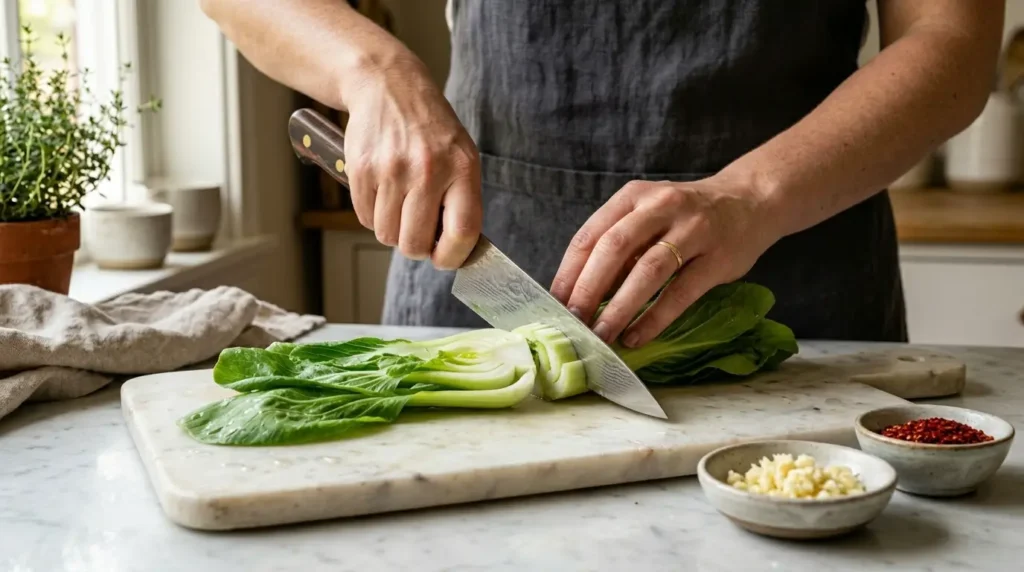
Step 1: Prepare the Bok Choy
Start by rinsing bok choy under cold running water. The base of the stalks tends to trap dirt, so spread the leaves apart and rinse thoroughly. For baby bok choy, halving or quartering lengthwise works for most preparations. For larger heads, separate the leaves and chop stalks into 1-inch pieces, keeping them separate from the leaves since they need slightly longer cooking.
Pat dry with a kitchen towel before stir-frying. Excess water in a hot pan causes splattering and steam instead of sear — the enemy of good texture.
Step 2: Choose the Cooking Method
The method you choose shapes the final dish:
- High-heat stir-fry: Best for garlic bok choy, banchan-style dishes. Gives you that coveted wok hei (smoky, charred edge).
- Blanching and dressing: Best for muchim (Korean-style salad). Preserves the bright green color and gives a crisper texture.
- Simmering in broth: Best for soups and jjigae. Stalks stay firm while leaves soften and absorb the broth.
- Steaming then saucing: A gentler method that keeps more moisture and nutrients intact.
Step 3: Add Korean Seasonings
The order you add seasonings matters. Start with aromatics — garlic, ginger, green onion — in hot oil. These bloom and release their flavor into the fat, which carries them through the dish. Then add your liquid seasonings (soy sauce, gochujang, doenjang) and let them reduce slightly. Finish with sesame oil off the heat. This layering is what gives Korean dishes their complex, built flavor versus a flat, one-note seasoning.
Step 4: Finish and Serve
Korean bok choy dishes are best served immediately after cooking. Garnish with toasted sesame seeds, thinly sliced green onions, and a final light drizzle of sesame oil. For cold preparations like bok choy namul or muchim, let the dressed vegetables rest for at least 20–30 minutes before serving so the flavors can fully absorb.
Tips for Making the Best Bok Choy Korean Recipes
Choose Fresh Bok Choy
Look for firm, tightly packed stalks with no yellowing or wilting. The leaves should be deep green and glossy. Avoid heads with brown spots or soft, waterlogged stalks. Baby bok choy is more tender and sweeter than mature bok choy — both work well in Korean recipes, but baby varieties are ideal for stir-fries and banchan where presentation matters.
Cook with High Heat
Korean stir-fries require a genuinely hot pan. Preheat your skillet or wok for at least 2 minutes before adding oil, and make sure the oil shimmers before you add ingredients. A hot pan sears instead of steams, giving you that slightly caramelized edge on the bok choy stalks that makes these dishes so satisfying. If your pan is not hot enough, the bok choy releases water and turns limp.
Balance the Seasonings
Taste as you cook. Korean seasoning ratios vary by brand — one brand’s soy sauce is saltier than another’s, and gochugaru heat levels differ depending on the grind. Start with the lower end of the seasoning range in any recipe, taste after combining, and adjust from there. A small pinch of sugar can rescue a dish that tastes too salty or sharp.
Avoid Too Much Sauce
Bok choy releases water as it cooks. If you add too much liquid seasoning before the vegetables cook down, you risk a watery, diluted dish. Keep sauce amounts conservative, let the bok choy cook for a minute or two first, and then add your seasonings. The reduced liquid will coat everything beautifully instead of pooling at the bottom of the pan.
Serving Ideas and Variations for Bok Choy Korean Recipes
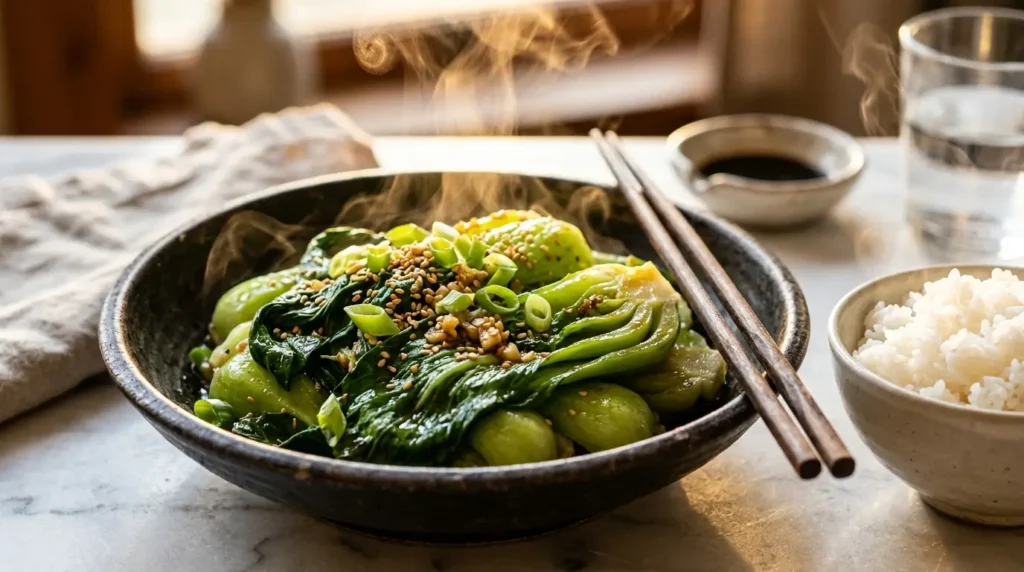
Traditional Korean Style Serving
In a Korean meal, bok choy side dishes (banchan) are served alongside steamed white rice and at least one or two other side dishes — kimchi, seasoned spinach, braised tofu, or a small portion of grilled meat. The bok choy dish does not need to be the star of the table. Its role is to complement and balance the other flavors around it. Serve in small portions in shallow banchan dishes or bowls.
Bok Choy in Korean Inspired Bowls
Build a Korean-inspired grain bowl using bok choy as your main vegetable. Start with a base of steamed short-grain sushi rice or mixed grains. Add stir-fried or blanched bok choy, sliced cucumber, pickled radish (danmuji), and a fried egg or sliced bulgogi. Drizzle with gochujang sauce and a few drops of sesame oil. This bowl format has become popular across the U.S. as a fast, nutritious lunch that feels like a full Korean meal without requiring multiple dishes.
Popular Variations
- Bok choy namul: Blanched and dressed with sesame oil, garlic, and soy sauce — no heat required, served cold.
- Bok choy kimchi: Fermented with gochugaru, ginger, garlic, and fish sauce for a quick kimchi alternative to napa cabbage.
- Bok choy banchan with oyster sauce: A Korean-Chinese fusion preparation popular in Korean-American households.
- Bok choy doenjang soup: Light miso-style broth with tofu and bok choy, ready in under 20 minutes.
- Bok choy over ramen: Stir-fried garlicky bok choy served directly on top of Korean instant ramen for a fast upgrade.
Make It Vegetarian or Vegan
Every bok choy Korean recipe in this guide can be made fully plant-based with simple swaps. Replace fish sauce with a few extra drops of soy sauce or miso thinned with water. Use vegetable broth instead of anchovy stock. Swap oyster sauce for a vegetarian oyster sauce made from mushrooms — widely available in Asian grocery stores. The flavor depth stays strong because Korean seasoning blends like doenjang and gochujang are already plant-based.
Storage Tips and Meal Prep for Bok Choy Korean Recipes
How to Store Fresh Bok Choy
Store unwashed bok choy in a loosely sealed plastic bag or airtight container in the crisper drawer of your refrigerator. It stays fresh for 3–5 days. Do not wash until you are ready to cook — excess moisture accelerates spoilage. If the outer leaves start to wilt slightly, remove them and use the inner, firmer stalks first.
Storing Cooked Bok Choy Dishes
Cooked Korean bok choy dishes are best eaten fresh, but most can be stored in an airtight container in the refrigerator for up to 3 days. Stir-fried preparations will soften over time, so if you are meal prepping, blanched and dressed versions like muchim hold up better in the fridge. Reheat stir-fried dishes in a hot pan for 1–2 minutes rather than microwaving to restore some texture.
Meal Prep Ideas
- Blanch a large batch of bok choy at the start of the week and keep it undressed in the fridge. Dress individual portions with different sauces throughout the week.
- Make a double batch of bok choy muchim — it tastes even better after 24 hours in the fridge as the flavors deepen.
- Add raw bok choy to pre-portioned soup kits with broth and seasonings in the freezer for quick weeknight soups.
Conclusion
Korean bok choy recipes prove that the best food does not have to be complicated. With a handful of pantry staples and one humble vegetable, you can build dishes that are bold, nourishing, and deeply satisfying. Whether you choose the fast garlic stir-fry, the bright blanched muchim, or the warming doenjang soup, every preparation brings something different to the table while staying rooted in the same Korean flavor principles.
The next time you see bok choy at the grocery store, skip past it and head to the Asian grocery section first — grab gochugaru, sesame oil, and a good soy sauce while you’re there. With these in your kitchen, you are ready to cook Korean bok choy any night of the week.
For more Asian-inspired recipes and Korean cooking ideas, check out our guides on Korean side dishes, quick weeknight stir-fries, and warming Asian soups right here on sistafood.com.
More Recipes You Will Love
- Desert Sun Mocktail Recipe
- Applebee’s Broccoli Recipe
- Pizza Hut Wing Sauce Recipe
- Taco Mac Ranch Recipe
- Yard House Mac and Cheese Recipe
What is bok choy and why is it used in Korean cooking?
Bok choy is a type of Chinese cabbage with crisp white stalks and dark leafy tops. Korean cooks use it because it absorbs bold seasonings well, cooks quickly, and holds its texture even over high heat — making it ideal for stir-fries, soups, and banchan preparations.
Are bok choy Korean recipes traditional Korean dishes?
While bok choy is more commonly associated with Chinese cuisine, it has been widely used in Korean cooking for generations — particularly in soups, namul (seasoned vegetable dishes), and as a lighter alternative to napa cabbage in fermented preparations. Many Korean-American households cook bok choy regularly using classic Korean seasoning techniques.
What Korean seasonings work best with bok choy?
The core Korean seasoning trio for bok choy is sesame oil, soy sauce, and garlic. From there, gochugaru adds heat and color, doenjang adds fermented depth for soups, and rice vinegar brightens cold preparations. Toasted sesame seeds and green onion are essential finishers.
Can bok choy be used in Korean soups?
Yes, and it works beautifully. Bok choy holds up well in hot broth because the stalks stay firm even after simmering for several minutes. It pairs particularly well with doenjang (fermented soybean paste) broth, clear anchovy or kombu stock, and spicy gochujang-based soups.
Is bok choy good for diabetics?
Bok choy is an excellent choice for people managing blood sugar. It is very low in carbohydrates, has a low glycemic index, and is rich in fiber, which helps moderate the blood sugar response after meals. Its high water and nutrient content make it a filling vegetable with minimal caloric impact. Always consult your healthcare provider for personalized dietary guidance.
Is bok choy used in Korean food?
Yes. Bok choy (cheonggyeongchae in Korean) appears across multiple categories of Korean cooking — banchan, soups, jjigae, stir-fries, and even some kimchi variations. It is widely available in Korean grocery stores across the U.S. and has become a staple in Korean-American home kitchens.
What is the most recommended method for cooking bok choy?
High-heat stir-frying is the most popular method for Korean bok choy dishes. It produces the best texture — crisp stalks, slightly wilted leaves — and the fastest results. For cold preparations or meal prep, blanching followed by a bold dressing is equally effective and produces a different but equally satisfying result.
Is there any part of bok choy you should not eat?
The entire bok choy plant is edible — from the tips of the leaves all the way down to the base of the stalks. The only part worth trimming is the very bottom of the stem (about a quarter inch) if it looks discolored or dried. Some cooks prefer to separate the stalks and leaves for cooking since the stalks take slightly longer to become tender, but this is a technique choice, not a food safety concern.
What dishes can bok choy be served with?
Korean bok choy side dishes pair well with steamed white or brown rice, Korean ramen, bibimbap, braised meats like galbi or bulgogi, grilled fish, tofu dishes, and other banchan. The mild, slightly sweet flavor of bok choy works alongside both bold and delicate main dishes without overpowering them.
Can you prepare bok choy dishes in advance?
Yes. Blanched and dressed preparations like bok choy namul and muchim are actually better after resting in the refrigerator for several hours — the seasonings fully absorb and the flavor deepens. Stir-fried bok choy is best eaten fresh, but can be refrigerated and reheated in a hot pan within 2–3 days.
What is the easiest bok choy Korean recipe for beginners?
Korean garlic bok choy stir-fry is the best starting point. It requires only six ingredients, cooks in under ten minutes, and teaches the core Korean stir-fry technique — hot pan, aromatics first, sauce in the middle, sesame oil at the end — that applies to dozens of other Korean vegetable dishes. Once you have made it once, you can riff on it endlessly.
Bok Choy Korean Recipes — Quick Reference Card
| Dish | Key Technique |
| Dish | Key Technique |
| Korean Garlic Bok Choy Stir Fry | High-heat wok, sear cut-side down |
| Bok Choy Muchim (Banchan) | Blanch, ice bath, cold dressing |
| Korean Bok Choy Soup | Doenjang broth, simmer gently |
| Bok Choy Namul | Blanch, sesame oil and garlic dressing |
| Bok Choy Kimchi | Salt-wilt, gochugaru paste, ferment 1–2 days |
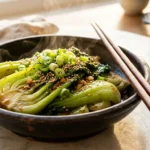
Korean Bok Choy Recipes: Easy, Bold, and Ready in Minutes
- Total Time: 11 minutes
- Yield: 4 servings 1x
- Diet: Vegetarian
Description
A quick Korean-style bok choy stir fry packed with garlic, soy sauce, and sesame oil. This simple side dish cooks in under 10 minutes and pairs perfectly with rice, ramen, or Korean meals.
Ingredients
- 4–6 heads baby bok choy, halved lengthwise
- 4 cloves garlic, minced
- 2 tablespoons soy sauce
- 1.5 tablespoons sesame oil
- 1 tablespoon neutral oil (vegetable or avocado)
- 1 teaspoon gochugaru (optional)
- 1 tablespoon toasted sesame seeds
- 1/2 teaspoon sugar
- 2 tablespoons water
Instructions
- Wash bok choy thoroughly and halve each head lengthwise.
- Heat a large skillet or wok over high heat.
- Add neutral oil and swirl to coat the pan.
- Add minced garlic and stir for about 30 seconds until fragrant.
- Place bok choy cut-side down in the pan and cook without moving for 2 minutes to lightly sear.
- Add soy sauce, sugar, gochugaru, and water.
- Toss and cook for another 2 minutes until the bok choy is tender-crisp.
- Remove from heat and drizzle with sesame oil.
- Sprinkle toasted sesame seeds on top.
- Serve immediately as a Korean-style side dish.
Notes
Cook bok choy in batches if needed to avoid overcrowding the pan. A hot pan helps achieve the best texture with lightly caramelized stalks and tender leaves.
- Prep Time: 5 minutes
- Cook Time: 6 minutes
- Category: Side Dish
- Method: Stir Fry
- Cuisine: Korean
Nutrition
- Serving Size: 1 serving
- Calories: 90
- Sugar: 2g
- Sodium: 420mg
- Fat: 6g
- Saturated Fat: 1g
- Unsaturated Fat: 4g
- Trans Fat: 0g
- Carbohydrates: 7g
- Fiber: 2g
- Protein: 3g
- Cholesterol: 0mg
Keywords: korean bok choy stir fry, bok choy recipe, garlic bok choy, korean bok choy side dish, bok choy banchan