
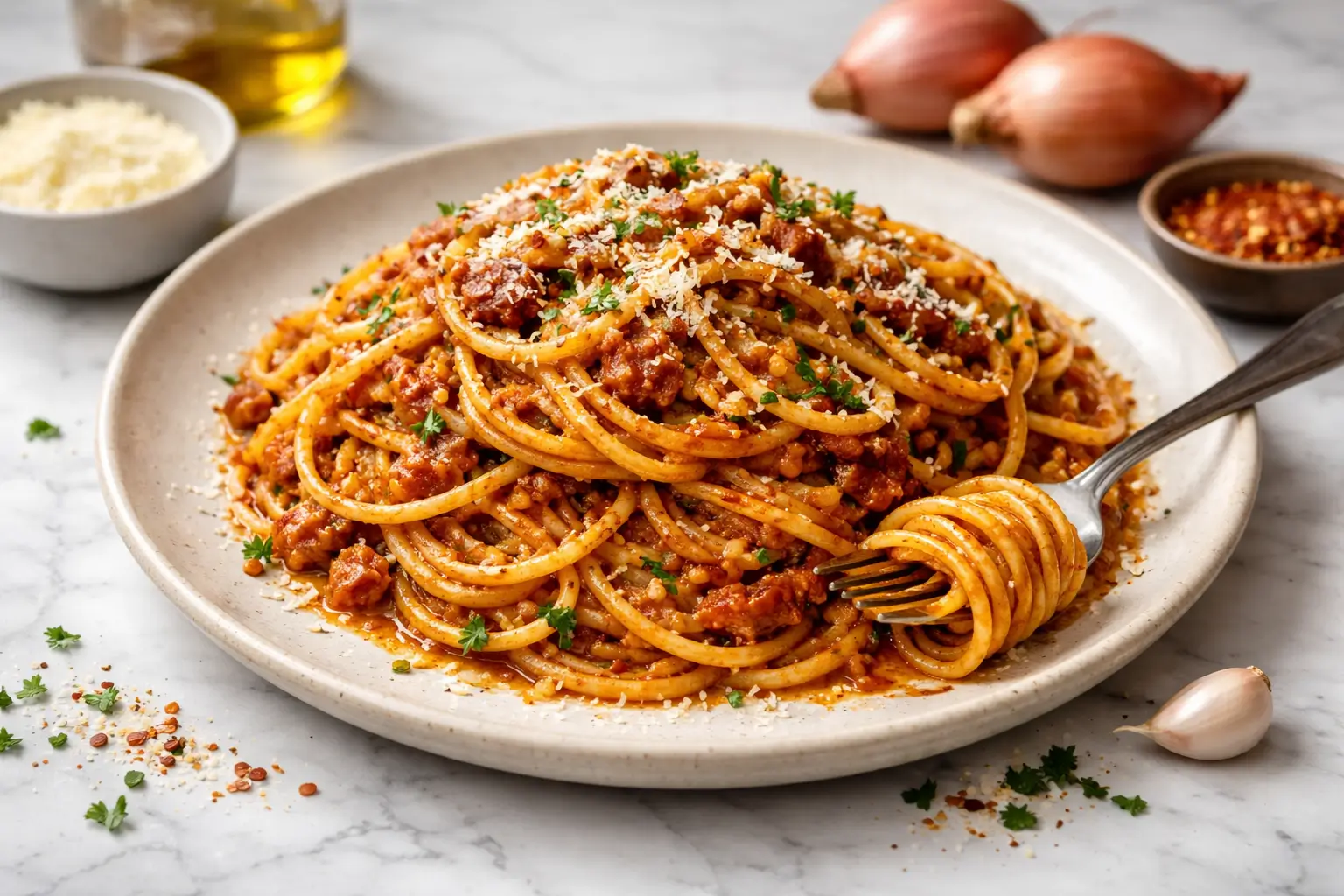
Alison Roman caramelized shallot pasta is one of those rare viral recipes that actually lives up to the hype. Some dishes go viral because they look good on camera. This one went viral because it tastes like something you’d pay $22 for at a restaurant — and costs almost nothing to make at home. It’s been pinned, screenshotted, and debated on Reddit food threads since it first appeared in her cookbook Nothing Fancy. People call it “the pasta,” which says a lot.
Alison Roman’s caramelized shallot pasta has been pinned, screenshotted, and debated on Reddit food threads since it first appeared in her cookbook Nothing Fancy. People call it “the pasta,” which says a lot. If you’ve been curious about what all the fuss is about — or you’ve already tried it and something went sideways — this guide covers everything you need to know.
1. What Is Alison Roman Caramelized Shallot Pasta?
At its core, this is a slow-cooked shallot sauce tossed with pasta and a handful of pantry staples. But that description doesn’t do it justice.
What Alison Roman figured out — and what makes this dish stand apart — is that shallots, when cooked low and slow in a generous amount of olive oil, become something completely different. They turn jammy, deeply sweet, and caramel-golden. That transformation is the entire soul of the dish.
1.1 Why This Pasta Became So Popular
A few things aligned perfectly. First, the ingredient list reads like what most people already have: shallots, garlic, olive oil, tomato paste, pasta. Second, the technique is forgiving — there’s no precise timing or culinary skill required, just patience while the shallots do their thing.
Food communities on Reddit’s r/seriouseats and r/Cooking shared it widely. Home cooks praised how the sauce tasted like something slow-braised for hours, even though the active work takes under 45 minutes. It became one of those rare “pantry pasta” recipes that genuinely delivers on the hype.
1.2 How It Differs from Traditional Pasta Sauces
Most tomato sauces start with crushed tomatoes or marinara as the base. Here, tomato paste is the tomato component — and it’s cooked directly into the caramelized shallots, which concentrates its flavor even further. The result is less acidic and brighter than a marinara, with a roasted, almost bittersweet depth that feels more like a French onion dish than an Italian Sunday sauce.
2. Ingredients for Alison Roman Caramelized Shallot Pasta
2.1 Core Ingredients
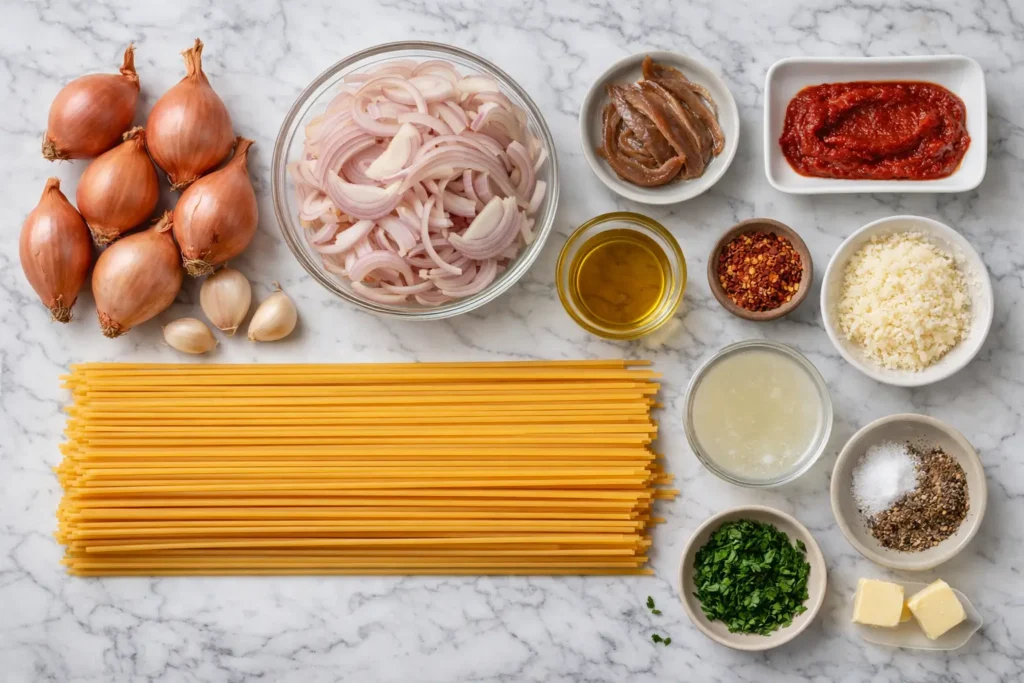
Here’s what you’ll need for four servings:
- 6–8 large shallots, thinly sliced (don’t skimp — they cook down significantly)
- ⅓ cup olive oil (extra virgin, or a neutral oil works too)
- 4 cloves garlic, thinly sliced
- 3 tablespoons tomato paste
- 1 lb pasta — linguine, bucatini, or spaghetti all work well
- 2 tablespoons unsalted butter
- ½ cup grated Parmesan (plus more for serving)
- 1 cup reserved pasta water (essential — don’t skip this)
- Salt and black pepper to taste
- Fresh herbs for finishing — flat-leaf parsley, chives, or basil
Optional but original: 4–5 anchovy fillets or 1 teaspoon anchovy paste. This is one of the recipe’s signature ingredients — it melts completely into the sauce and adds a savory depth that’s hard to put your finger on. You won’t taste “fish.” You’ll just taste something richer.
2.2 Why These Ingredients Work Together
The magic in this recipe is layered umami. Slow-cooked shallots build a sweet, savory base. Tomato paste adds concentrated acidity and color. Anchovies (if used) deepen the savory quality without overpowering. Parmesan brings salt and nuttiness. Pasta water — starchy and silky — ties it all into a sauce that clings to every noodle.
Each ingredient amplifies the others. It’s a short list, but there’s no filler on it.
2.3 Optional Additions and Substitutions
| Add-On / Swap | How It Changes the Dish |
|---|---|
| Red pepper flakes | Adds gentle heat; great if you like a kick |
| Capers (1 tbsp) | Bright, briny pop; works well with or without anchovies |
| Cream (2 tbsp) | Slightly richer, more restaurant-style sauce |
| Lemon zest | Lifts the whole dish with a fresh finish |
| Nutritional yeast instead of Parmesan | Works for dairy-free versions |
| Onions instead of shallots | Will work, but the sweetness won’t be quite the same |
The table above shows how small additions can shift the dish’s character without overhauling it — a useful reference for anyone adapting to dietary needs or pantry availability.
3. How to Make Alison Roman Caramelized Shallot Pasta
3.1 Quick Cooking Overview
The whole process takes about 40–50 minutes, with most of that being hands-off cooking time while the shallots caramelize. The actual active work — slicing, stirring, tossing — adds up to maybe 15 minutes.
3.2 Step-by-Step Instructions
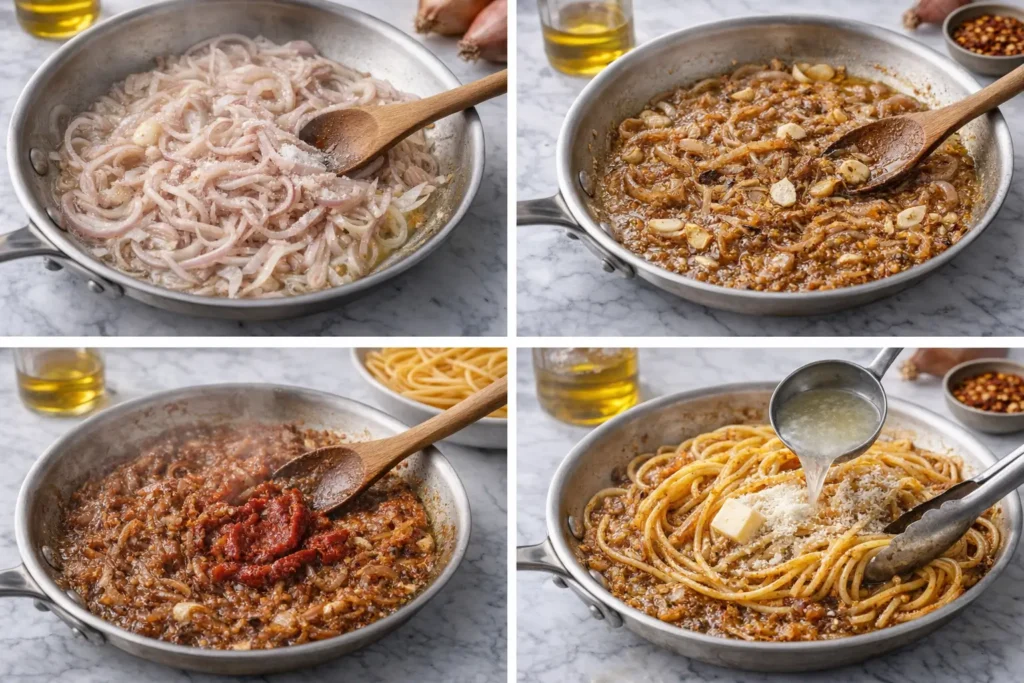
Step 1 — Slice the shallots thin. Paper-thin is ideal. A mandoline speeds this up, but a sharp knife works fine. The thinner they are, the faster and more evenly they caramelize.
Step 2 — Start low and slow. Add olive oil to a wide skillet or Dutch oven over medium-low heat. Add the shallots and a generous pinch of salt. You’re not trying to brown them quickly — you want them to slowly release their moisture and become golden and soft over 20–25 minutes. Stir occasionally.
Step 3 — Add the anchovies and garlic. Once the shallots are deeply golden and jammy, add the anchovy fillets (if using) and garlic. Stir until the anchovies dissolve — this takes about 2 minutes. If skipping anchovies, just add the garlic here and cook until fragrant.
Step 4 — Add tomato paste. Add the tomato paste directly to the pan and cook, stirring frequently, for 3–5 minutes. It should darken slightly and start to stick to the bottom of the pan. That fond is flavor.
Step 5 — Cook your pasta. While the sauce develops, cook your pasta in heavily salted water until just barely al dente (about 1–2 minutes under package time). Before draining, scoop out at least 1 cup of pasta water.
Step 6 — Bring it together. Add the drained pasta directly to the shallot sauce over medium heat. Add ½ cup of pasta water and toss vigorously. Add the butter and Parmesan, tossing constantly. Add more pasta water as needed to reach a glossy, clingy sauce consistency.
Step 7 — Taste, adjust, and serve. Season with salt and black pepper. Plate and finish with fresh herbs, an extra drizzle of olive oil, and more Parmesan.
3.3 Common Mistakes to Avoid
Rushing the shallots. Turning up the heat to save time is the most common error. Shallots cooked too fast will brown on the outside but remain bitter and acrid inside. Medium-low heat is non-negotiable here.
Skipping pasta water. This starchy liquid is what transforms the sauce from “shallot jam on noodles” into something that actually coats pasta properly. Keep at least a full cup on hand.
Under-salting the pasta water. The pasta should taste seasoned on its own. If it tastes bland coming out of the pot, the whole dish will taste flat, no matter how good the sauce is.
Using too small a pan. You need room to toss the pasta aggressively. A wide skillet or a large Dutch oven gives you the space to work.
4. Flavor Profile and What Makes It Unique
4.1 The Signature Taste Explained
The dominant note here is savory-sweet — that specific flavor you get from long-cooked alliums. It’s not sugary. It’s more like caramel with a savory backbone: complex, round, and deeply satisfying in a way that simple tomato pasta rarely is.
The anchovy note (if included) sits quietly in the background. You don’t taste fish — you taste depth. It’s the same principle behind Worcestershire sauce: a small amount of anchovy makes everything taste more like itself.
4.2 Flavor Comparison Table
| Pasta Style | Dominant Flavor | Texture | Richness Level |
|---|---|---|---|
| Alison Roman Shallot Pasta | Sweet-savory, umami-rich | Silky, clingy sauce | Medium-high |
| Classic marinara | Bright, acidic tomato | Thin, light | Low-medium |
| Aglio e olio | Sharp garlic, grassy olive oil | Very light | Low |
| Cacio e pepe | Salty, sharp cheese, peppery | Creamy, dense | High |
| Arrabiata | Spicy, tomato-forward | Light, peppery | Low-medium |
As the table shows, this pasta occupies a distinctive flavor lane — richer and more layered than most tomato-based pastas, but without the heavy cream or long braising time of something like a Bolognese.
4.3 Why People Keep Coming Back to This Flavor
Part of the appeal is how unexpected it is. When you read the ingredient list, you might expect something mild. What you get is something that tastes like it was made with real intention — the kind of dinner that makes people ask “what’s in this?” It satisfies a craving that’s hard to name but easy to recognize.
5. Tips for Perfect Caramelized Shallot Pasta
5.1 Key Cooking Tips
- Use a wide, heavy pan — cast iron or a stainless steel skillet retains heat evenly and helps the shallots caramelize without burning.
- Don’t stir constantly — let the shallots sit undisturbed for a few minutes between stirs. Some contact with the hot pan builds flavor.
- Add a small splash of water if the shallots look like they might burn before they caramelize fully. This resets the moisture without washing away the flavor.
5.2 Pro Tips for Better Results
- Make the shallot base ahead of time. The caramelized shallot mixture keeps well in the refrigerator for up to 5 days and freezes beautifully. On a busy weeknight, you can have this on the table in under 15 minutes if the base is ready.
- Use bucatini or linguine rather than short pasta. The long noodles wrap around the jammy sauce in a way that penne or rigatoni doesn’t quite replicate.
- Grate your own Parmesan. Pre-shredded Parmesan contains anti-caking agents that prevent it from melting smoothly into the sauce.
5.3 Texture and Balance Tips
The sauce should be glossy and slightly loose — not thick like a ragù, not watery like broth. If it’s too tight, add pasta water. If it’s too loose, toss over medium heat for another minute.
The fresh herbs at the end aren’t decoration — they provide a bright, grassy contrast that keeps the rich sauce from feeling heavy. Don’t skip them.
6. Variations and Serving Ideas
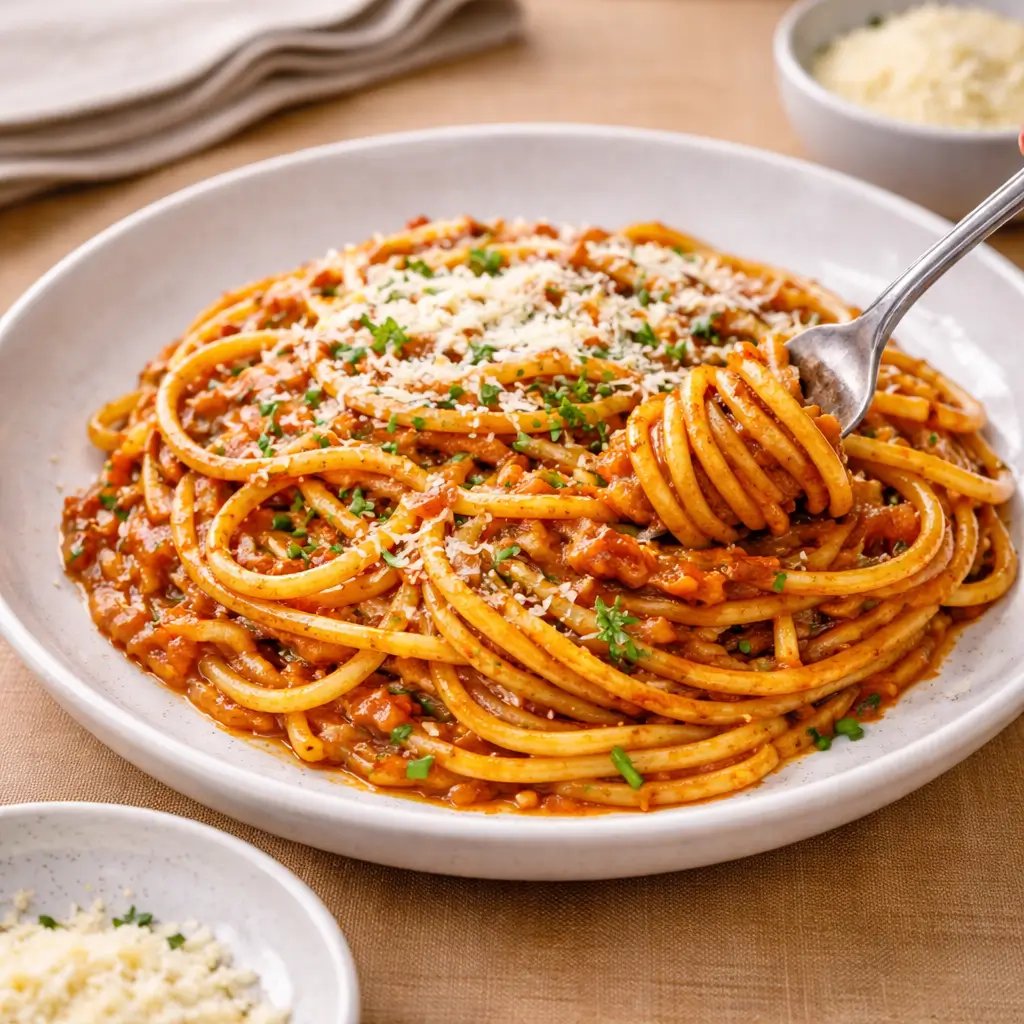
6.1 Vegetarian Version (No Anchovies)
This is one of the most-searched variations, and the good news is that the dish holds up very well without anchovies. The shallots and tomato paste provide enough savory depth on their own.
To compensate slightly, consider:
- Adding 1 tablespoon of capers for a briny punch
- Using a small amount of white miso stirred into the sauce (about ½ teaspoon) for an umami boost
- Finishing with extra Parmesan
The vegetarian version is genuinely delicious — not a compromise. If you’re making it for guests with dietary restrictions, it works seamlessly.
6.2 Making It a Full Meal
The pasta is satisfying on its own, but a few additions can round it out into a complete dinner:
- A simple green salad with a sharp vinaigrette balances the richness well
- Crispy roasted chickpeas tossed in on top add protein and crunch
- A soft-boiled or poached egg placed on each serving makes it more substantial
- Burrata placed on top right before serving adds a creamy, luxurious element
For inspiration on other comfort pasta dishes worth adding to your rotation, the Joanna Gaines Chicken Spaghetti recipe is another beloved weeknight option with a very different flavor profile.
6.3 Presentation Tips
- Twirl the pasta into a nest using tongs for a cleaner, more intentional look
- Scatter fresh herbs generously — don’t be shy
- A drizzle of your best olive oil over the top right before serving makes it look like something from a restaurant
- Serve in warmed bowls (just run hot water through them for 30 seconds) — it keeps the pasta warm longer
7. Storage, Reheating, and Make-Ahead Tips
7.1 How to Store Leftovers
Leftover pasta keeps in an airtight container in the refrigerator for up to 3 days. It will continue to absorb the sauce as it sits, so it may look drier the next day — that’s normal and easily fixed.
7.2 How to Reheat Properly
The best way to reheat this pasta is in a skillet over medium-low heat with a splash of water or broth. Toss constantly and let the moisture re-emulsify with the sauce. The microwave works in a pinch, but it can make the pasta gummy — add a small splash of water to the bowl before heating.
7.3 Make-Ahead Tips
The shallot sauce base is the make-ahead hero here. You can caramelize a large batch of shallots with the tomato paste and anchovies, cool it down, and store it refrigerated for up to 5 days or frozen for up to 2 months. When you want the pasta, just reheat the base, cook fresh pasta, and bring it all together. This is one of the most practical pantry pasta setups you can have. For more on building pantry-ready caramel-style bases, the coconut sugar caramel sauce on this site explores similar slow-cooking techniques worth knowing.
7.4 Freezing Tips
The finished pasta doesn’t freeze as well as the sauce base does — pasta texture tends to suffer after freezing and reheating. If you want to batch-cook, freeze just the shallot base and cook fresh pasta when serving.
8. Conclusion
Alison Roman’s caramelized shallot pasta earned its viral status the honest way: it delivers a flavor that surprises people, uses ingredients they already own, and rewards patience rather than speed. Whether you make it with anchovies or without, with bucatini or whatever pasta you have on hand, the technique is the same — and once you understand what slow-cooked shallots can do, you’ll find yourself applying that logic to other dishes too.
If you’re looking for another impressive pasta dish for your weeknight lineup, the Yard House Mac and Cheese recipe offers a completely different but equally satisfying direction.
9. FAQs About Alison Roman Caramelized Shallot Pasta
What makes this pasta recipe different from regular tomato pasta?
The difference is in the base. Instead of starting with crushed tomatoes, this sauce builds from deeply caramelized shallots, which creates a sweet, savory, jammy foundation that no marinara can replicate. The tomato paste is cooked into that base rather than being the main event.
How do I make this dish without anchovies?
Simply omit the anchovies. The dish is still very good — the caramelized shallots and tomato paste provide plenty of depth on their own. Some cooks add a teaspoon of white miso or a tablespoon of capers to replace some of the briny, savory quality that anchovies provide.
How do I know when the shallots are properly caramelized?
They should be deeply golden-brown, significantly reduced in volume, and very soft. When you taste one, it should be sweet with no trace of raw sharpness. This typically takes 20–25 minutes over medium-low heat. If they smell like they might burn, add a tiny splash of water and lower the heat.
Is this recipe spicy?
Not inherently. The base recipe has no heat. Red pepper flakes are a common addition for those who enjoy it, and the amount is entirely adjustable.
Can I add protein to make this dish more filling?
Yes, according to many people who’ve adapted this recipe. Crispy pan-seared chicken thighs, Italian sausage crumbled into the sauce, or white beans stirred in near the end all work well. Some home cooks also add shrimp tossed in during the last few minutes of cooking.
How can I make this pasta healthier?
A few adjustments are worth considering: reduce the olive oil slightly, swap the butter for additional pasta water, use a legume-based pasta for added protein and fiber, and increase the proportion of fresh herbs. That said, this is a recipe built on simple, real ingredients — it’s already a relatively clean dish.
Why is pasta water important in this recipe?
Pasta water is starchy from the cooking process, which gives it an emulsifying quality. When added to the sauce, it helps bind the oil-based sauce with the pasta, creating a glossy, clingy coating rather than a greasy or separated finish. It’s a technique borrowed from traditional Italian pasta-making.
Can I make the shallot sauce ahead of time?
Yes, and in many ways it’s better that way. The caramelized shallot base can be made up to 5 days ahead and stored in the refrigerator, or frozen for up to 2 months. This dramatically reduces weeknight cooking time.
Can I use onions instead of shallots?
Onions will work, but the result is noticeably different. Shallots are milder, sweeter, and more delicate than yellow onions. They caramelize more evenly and don’t have the sharp bite that onions can retain even after long cooking. If using onions, yellow onions are the closest substitute — Vidalia or sweet onions even closer.
What is the best way to handle leftovers?
Refrigerate in an airtight container for up to 3 days. Reheat in a skillet with a splash of water over medium-low heat, tossing frequently. For best results, make the pasta fresh and only store the sauce base separately — this gives you more flexibility and better texture on reheating.
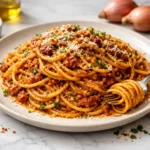
The Alison Roman Caramelized Shallot Pasta That Broke the Internet — And How to Make It Right
- Total Time: 45 minutes
- Yield: 4 servings 1x
- Diet: Vegetarian
Description
A deeply savory, sweet, and jammy shallot pasta that tastes restaurant-quality using simple pantry ingredients.
Ingredients
- 6–8 large shallots, thinly sliced
- ⅓ cup olive oil
- 4 cloves garlic, thinly sliced
- 3 tablespoons tomato paste
- 1 lb pasta (linguine, spaghetti, or bucatini)
- 2 tablespoons unsalted butter
- ½ cup grated Parmesan
- 1 cup reserved pasta water
- Salt and black pepper to taste
- Fresh herbs (parsley, chives, or basil)
- 4–5 anchovy fillets or 1 teaspoon anchovy paste (optional)
Instructions
- Thinly slice the shallots.
- Heat olive oil in a wide skillet over medium-low heat.
- Add shallots with a pinch of salt and cook slowly for 20–25 minutes, stirring occasionally until jammy and golden.
- Add anchovies (if using) and garlic, cook until dissolved and fragrant.
- Add tomato paste and cook for 3–5 minutes until darkened.
- Cook pasta in salted water until just under al dente.
- Reserve 1 cup pasta water before draining.
- Add pasta to the sauce with ½ cup pasta water.
- Add butter and Parmesan, tossing until glossy.
- Add more pasta water if needed for consistency.
- Season with salt and pepper.
- Finish with fresh herbs and extra Parmesan before serving.
Notes
Cook shallots low and slow for best flavor. Always reserve pasta water to achieve a silky, emulsified sauce.
- Prep Time: 15 minutes
- Cook Time: 30 minutes
- Category: Main Course
- Method: Stovetop
- Cuisine: Italian-inspired
Nutrition
- Serving Size: 1 serving
- Calories: 520
- Sugar: 6g
- Sodium: 480mg
- Fat: 26g
- Saturated Fat: 9g
- Unsaturated Fat: 15g
- Trans Fat: 0g
- Carbohydrates: 58g
- Fiber: 4g
- Protein: 14g
- Cholesterol: 35mg
Keywords: alison roman shallot pasta, caramelized shallot pasta, pantry pasta, viral pasta recipe