
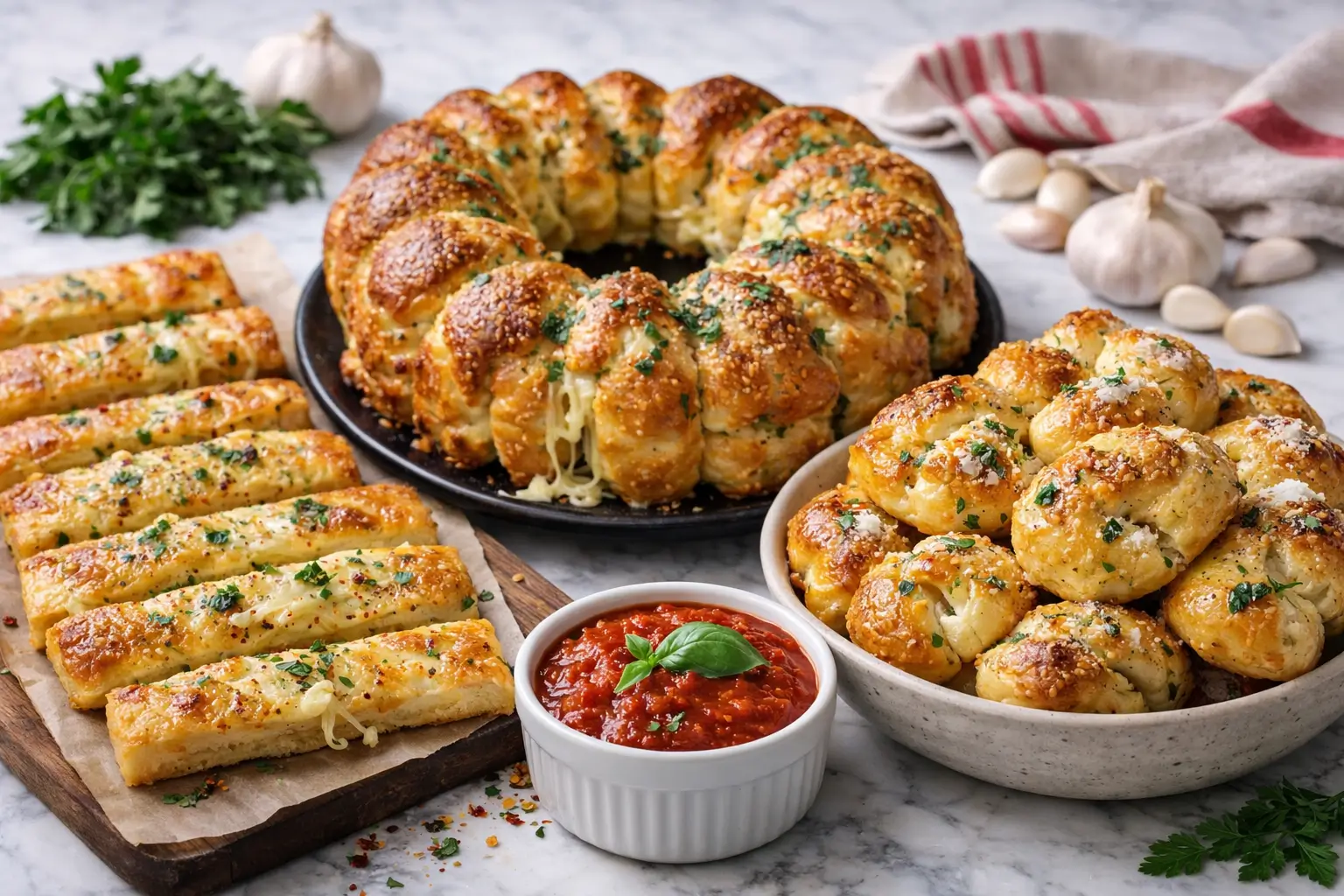
Crescent roll garlic bread is the kind of side dish that makes people forget about the main course. You pull a warm, buttery piece from the pan, and suddenly the pasta, the salad, the entire table — everything stops.
The real magic here isn’t just the garlic butter. It’s the dough. Pillsbury crescent rolls are laminated, meaning layers of fat are folded into the dough. When that hits a hot oven, those layers separate and puff, creating a surface that’s flaky and golden on the outside and impossibly soft on the inside. That texture is nearly impossible to replicate with regular bread.
This guide covers everything you need to know: the classic flat version, the crowd-pleasing pull-apart bundt pan version, and a twist on garlic knots — all using the same can of crescent roll dough. Whether you’re feeding a dinner party or just want something warm and golden with a weeknight meal, one of these three methods is about to become a staple in your kitchen.
What Makes Crescent Roll Dough So Good for Garlic Bread?
Most garlic bread recipes call for a French baguette or Italian loaf. Both work well, but they require a trip to the bakery or a bread that’s slightly stale (fresh bread can turn soggy under garlic butter). Crescent dough solves that problem entirely.
A few reasons crescent rolls work so well here:
- The laminated layers absorb butter without going soggy. The fat in the dough acts as a barrier while still soaking in every bit of garlic flavor.
- The surface browns beautifully. The egg content in most crescent dough gives it that deep golden finish that plain bread struggles to achieve.
- No prep time. No rising, no shaping from scratch, no special equipment.
- It’s forgiving. Even if you overbake it slightly, crescent roll garlic bread stays tender enough to eat.
That said, the way you shape and bake the dough matters a lot. Each of the three methods below produces a different texture and experience — and all three are worth knowing.
Ingredients You’ll Need
These ingredients apply to all three versions below, with slight adjustments noted for each.

For the garlic butter:
- 4 tablespoons unsalted butter, softened (not melted)
- 3 to 4 cloves fresh garlic, finely minced
- 1 tablespoon fresh parsley, finely chopped (or 1 teaspoon dried)
- ¼ teaspoon garlic powder (optional, for deeper flavor)
- ¼ teaspoon fine salt
- Pinch of red pepper flakes (optional)
For the bread:
- 1 to 2 cans (8 oz each) Pillsbury crescent roll dough
- ½ cup shredded mozzarella or Parmesan cheese (optional but highly recommended)
A note on the garlic: Fresh garlic and garlic powder together give you two different flavor profiles — fresh garlic is bright and sharp, while garlic powder is mellower and more evenly distributed. Using both tends to produce the most balanced result. If you only have one or the other, either will work.
How to Make Crescent Roll Garlic Bread: 3 Methods
Method 1: Classic Flat Crescent Roll Garlic Bread
This is the quickest version and closest to traditional garlic bread. It’s great when you want something fast and familiar.
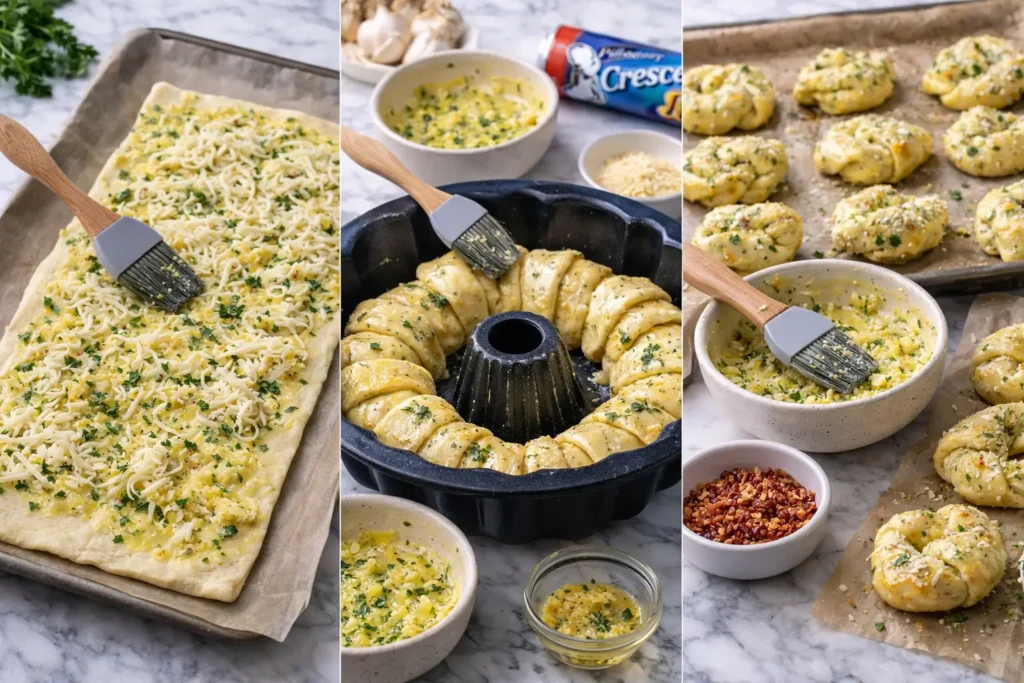
What you’ll need: 1 can crescent rolls, garlic butter mixture, optional cheese
Steps:
- Preheat your oven to 375°F. Line a baking sheet with parchment paper.
- Open the can and unroll the dough. Instead of separating it into triangles, press the perforated seams together with your fingertips to form one large rectangle.
- Transfer the rectangle to your baking sheet.
- Spread the softened garlic butter evenly across the entire surface, going close to the edges.
- If using cheese, scatter it over the butter now.
- Bake for 12 to 14 minutes, until the edges are deep golden and the top is puffed and set.
- Slice into strips or squares and serve immediately.
Tip: Pressing the seams completely is the most important step. Any gaps will cause the dough to split during baking, leaving uneven buttering across the bread.
Method 2: Pull-Apart Crescent Roll Garlic Bread in a Bundt Pan
This is the showstopper version. The bundt pan creates a ring of golden, pull-apart pieces that are garlicky all the way through — not just on top. It’s the one people photograph at the table.
What you’ll need: 2 cans crescent rolls, garlic butter (doubled), ½ cup mozzarella
Steps:
- Preheat your oven to 350°F. Generously grease a bundt pan with butter or non-stick spray, making sure to coat every ridge.
- Mix the garlic butter together in a small bowl.
- Open both cans and separate the dough into individual triangles.
- Working with one triangle at a time, brush or spread garlic butter on the surface, then roll it loosely from the wide end toward the point (the classic crescent shape).
- Place the rolled piece into the bundt pan, curved side down. Continue with the remaining triangles, layering them around the pan and overlapping slightly.
- Drizzle any remaining garlic butter over the top. Scatter mozzarella between the layers if you’d like.
- Bake for 25 to 30 minutes, until the top is deep golden brown and the center no longer looks raw.
- Let it rest in the pan for 5 minutes, then carefully invert onto a plate.
Tip: Don’t skip the resting time. The pull-apart loaf needs a few minutes to set before it will release cleanly from the pan.
Method 3: Pillsbury Crescent Roll Garlic Knots
Garlic knots are traditionally made with pizza dough, but crescent roll dough creates a version that’s flakier, more buttery, and arguably more interesting than the original.
What you’ll need: 1 can crescent rolls, garlic butter, Parmesan for finishing
Steps:
- Preheat your oven to 375°F. Line a baking sheet with parchment.
- Separate the dough into triangles. Using a sharp knife or pizza cutter, cut each triangle into a strip along its length (you’ll end up with long, thin strips of dough).
- Tie each strip loosely into a knot. Don’t pull tight — the knot will expand in the oven.
- Place the knots on the baking sheet, leaving space between them.
- Brush generously with garlic butter, making sure to get it into the folds.
- Bake for 11 to 13 minutes, until golden and puffed.
- As soon as they come out of the oven, brush again with any remaining garlic butter and sprinkle with grated Parmesan.
Tip: The second brush of garlic butter after baking is not optional — it’s what gives the knots their glossy, restaurant-style finish and keeps them from tasting dry.
Quick Comparison: Which Method Is Right for You?
Choosing between the three versions mostly comes down to your timeline and the occasion. Here’s a side-by-side look to help you decide:
| Method | Prep Time | Bake Time | Best For | Texture |
|---|---|---|---|---|
| Classic Flat | 5 min | 12–14 min | Weeknight meals, quick sides | Flaky, crisp edges |
| Bundt Pan Pull-Apart | 15 min | 25–30 min | Dinner parties, holidays | Soft layers, gooey inside |
| Garlic Knots | 10 min | 11–13 min | Game day, snacking, appetizers | Chewy, flaky, buttery |
All three use the same core ingredients — the bundt pan version simply needs more time and two cans of dough. For casual weeknights, the classic flat method is hard to beat. For anything you want to impress a crowd with, the pull-apart ring takes almost no extra skill and delivers a dramatically better presentation.
Tips for Perfect Crescent Roll Garlic Bread Every Time
Use softened butter, not melted. Melted butter runs off the dough before it bakes, pooling at the bottom of the pan instead of coating the surface. Softened butter stays exactly where you put it.
Fresh garlic over garlic powder when possible. Garlic powder is convenient, but fresh minced garlic develops a richer, more complex flavor during baking. If you’re using both (recommended), reduce the garlic powder to a pinch.
Don’t skip the parchment paper. The garlic butter will caramelize on the pan during baking and can burn or stick without protection. Parchment also makes cleanup significantly easier.
Watch the oven closely in the last 3 minutes. Crescent dough can go from perfectly golden to over-browned quickly, especially on the edges. If your oven runs hot, start checking at the 10-minute mark.
Let the pull-apart loaf rest before inverting. Patience here prevents the loaf from falling apart when you flip it. Five minutes makes a real difference.
Variations Worth Trying
Cheesy crescent roll garlic bread: Add a generous layer of shredded mozzarella on top of the garlic butter before baking. For extra flavor, mix Parmesan into the butter itself.
Herb crescent roll garlic bread: Swap the parsley for a mix of dried Italian herbs — oregano, basil, and thyme work particularly well. A little lemon zest stirred into the butter can add brightness.
Everything bagel crescent roll garlic bread: Brush the surface with garlic butter and top with everything bagel seasoning instead of plain salt. This is especially good on the flat version.
Spicy garlic crescent rolls: Double the red pepper flakes in the butter and add a thin drizzle of hot honey right after baking. The sweet heat against the garlic is surprisingly addictive.
Cream cheese crescent garlic bread: Spread a thin layer of softened cream cheese onto the dough before adding the garlic butter. It melts into the layers as it bakes and creates an almost cheesecake-like richness.
What to Serve With Crescent Roll Garlic Bread
Crescent roll garlic bread works alongside almost any comfort food, but a few pairings are worth calling out specifically.
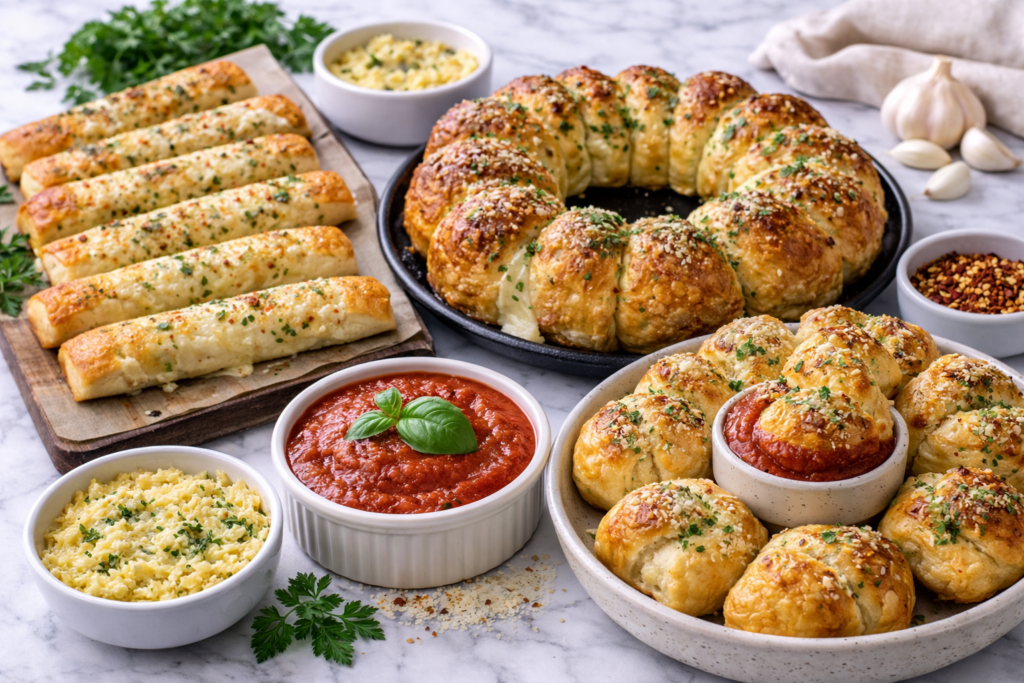
With pasta: Garlic bread and pasta is one of the most intuitive combinations in cooking. The bread is ideal for sopping up sauce — whether that’s a simple marinara, a creamy Alfredo, or something more complex. If you want a pasta dish that’s as easy to make as this bread, the Alison Roman Caramelized Shallot Pasta on this site is one of the best weeknight options you’ll find.
With chicken: Crescent roll garlic bread holds up well alongside saucier chicken dishes. The Blackened Chicken with Creamy Shallot Pan Sauce is a particularly good match — the buttery, flaky bread balances the bold spice of the chicken and gives you something to drag through that shallot sauce.
With soup: The pull-apart bundt version works especially well alongside a tomato bisque or a creamy vegetable soup. The soft, layered pieces are ideal for dipping.
As an appetizer: The garlic knots version stands on its own as a starter. Serve them with a small bowl of marinara or a simple herb dipping oil.
How to Store and Reheat Crescent Roll Garlic Bread
Storage: Leftover crescent roll garlic bread can be kept at room temperature in an airtight container or wrapped tightly in foil for up to 2 days. For longer storage, refrigerate for up to 4 days — though the texture will soften slightly.
Reheating in the oven (best method): Wrap the bread loosely in foil and bake at 325°F for 8 to 10 minutes. This restores the crisp exterior better than any other method.
Reheating in an air fryer: 350°F for 3 to 4 minutes gives excellent results, especially for the flat version and the garlic knots. The exterior crisps up quickly without drying out the center.
Avoid the microwave if possible. Microwaving crescent dough tends to make it chewy and slightly rubbery. It works in a pinch, but 30 seconds maximum is the limit before the texture starts to suffer.
Freezing: The unbaked pull-apart version can be assembled in the bundt pan, covered tightly with plastic wrap, and frozen for up to one month. Thaw overnight in the refrigerator, then bake as directed, adding 5 to 7 minutes to the bake time.
Frequently Asked Questions
Can I use croissants instead of crescent roll dough?
You can, though the result will be quite different. Croissants are a fully baked, laminated pastry — they're more delicate and already cooked. If you slice a croissant in half and spread garlic butter on it, then toast it, you'll get something closer to a garlic toast than garlic bread. It's delicious, but the texture is crispier and more fragile than what you get with crescent dough. For the pull-apart or knot versions, croissants won't work as a substitute since they can't be reshaped.
What can I make with a can of Pillsbury crescent rolls?
Quite a lot, actually. Beyond garlic bread, Pillsbury crescent rolls can be used to make pigs in a blanket (or for a non-pork version, use beef or chicken sausage), mini cinnamon rolls, cream cheese-filled crescents, taco cups, crescent roll pizza pockets, and even a simple sweet dessert ring filled with cream cheese and jam. The dough is versatile enough to go in either a savory or sweet direction depending on what you fill and top it with.
What are the most common mistakes when making garlic bread?
The three most common issues are: using melted butter instead of softened (it runs off the dough), not pressing the seams together on the flat version (the dough splits and butters unevenly), and pulling the bread out of the oven too early (the center stays doughy). For the bundt pan version, not greasing the pan thoroughly enough is the mistake that causes the most frustration — garlic bread stuck in a bundt pan is difficult to recover.
What makes garlic bread taste better?
A few things consistently improve garlic bread quality. Using fresh garlic instead of garlic powder gives a more complex, layered flavor. Adding a small amount of flaky sea salt right before serving enhances all the other flavors without making the bread salty. A sprinkle of fresh herbs after baking (rather than before, where they can burn) makes a noticeable visual and flavor difference. And if you want deeper garlic flavor, consider letting the minced garlic sit in the softened butter for 15 to 20 minutes before using — it infuses more flavor into the fat.
Crescent Roll Garlic Bread: 3 Ways, 20 Min, Zero Fails
- Total Time: 25 minutes
- Yield: 6 servings 1x
- Diet: Vegetarian
Description
Crescent roll garlic bread is flaky, buttery, and packed with bold garlic flavor. This easy recipe includes three methods — flat, pull-apart, and knots — all made with Pillsbury dough.
Ingredients
- 4 tablespoons unsalted butter, softened
- 3 to 4 cloves fresh garlic, finely minced
- 1 tablespoon fresh parsley, chopped (or 1 teaspoon dried)
- 1/4 teaspoon garlic powder (optional)
- 1/4 teaspoon fine salt
- Pinch of red pepper flakes (optional)
- 1 to 2 cans (8 oz each) Pillsbury crescent roll dough
- 1/2 cup shredded mozzarella or Parmesan cheese (optional)
Instructions
- Preheat oven to 375°F and line a baking sheet with parchment paper.
- Unroll crescent dough and press seams together to form a rectangle.
- Mix softened butter, garlic, parsley, garlic powder, salt, and red pepper flakes.
- Spread garlic butter evenly over the dough.
- Sprinkle cheese on top if using.
- Bake for 12 to 14 minutes until golden brown and puffed.
- Slice and serve warm.
- For pull-apart version: roll buttered dough pieces and layer in a greased bundt pan, then bake at 350°F for 25–30 minutes.
- For garlic knots: cut dough into strips, tie into knots, brush with butter, bake 11–13 minutes, then brush again after baking.
Notes
Use softened butter instead of melted for best texture. Press seams firmly to avoid splitting. Watch closely during the last minutes of baking to prevent over-browning. Let bundt version rest before removing from pan.
- Prep Time: 10 minutes
- Cook Time: 15 minutes
- Category: Side Dish
- Method: Baked
- Cuisine: American
Nutrition
- Serving Size: 1 serving
- Calories: 220
- Sugar: 2g
- Sodium: 380mg
- Fat: 14g
- Saturated Fat: 7g
- Unsaturated Fat: 6g
- Trans Fat: 0g
- Carbohydrates: 18g
- Fiber: 1g
- Protein: 5g
- Cholesterol: 30mg
Keywords: crescent roll garlic bread, garlic bread, pillsbury crescent rolls, easy garlic bread, pull apart garlic bread
1 thought on “Crescent Roll Garlic Bread: 3 Ways, 20 Min, Zero Fails”