
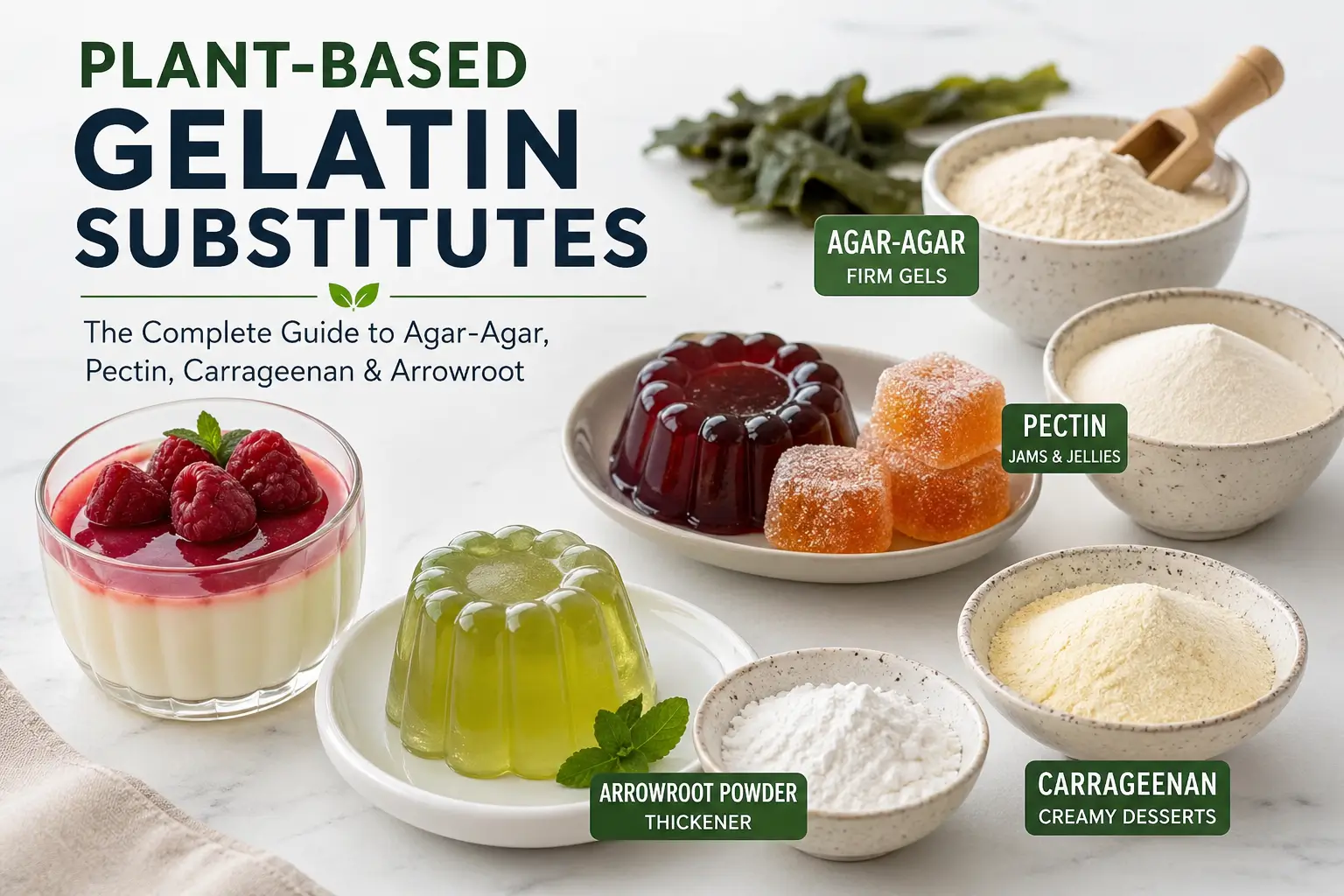
Plant-based gelatin substitutes make it easy to set vegan desserts, gummies, panna cotta, jams, and creamy fillings without animal gelatin. The key is choosing the right option: agar-agar for firm desserts, pectin for fruit recipes, carrageenan for creamy dairy-style desserts, and arrowroot for glossy thickening.
The good news is that plant-based alternatives have gotten genuinely good. After testing several in my kitchen, I can tell you that each one has a specific use case, and once you understand the differences, swapping gelatin is straightforward.
This guide covers every major plant-based gelatin substitute, how it works, and exactly how to use it in your recipes.
Traditional gelatin comes from animal collagen, usually pork or beef, which is why many people look for plant-based alternatives. If you want the full breakdown of sources and production, read our guide on what gelatin is made of.
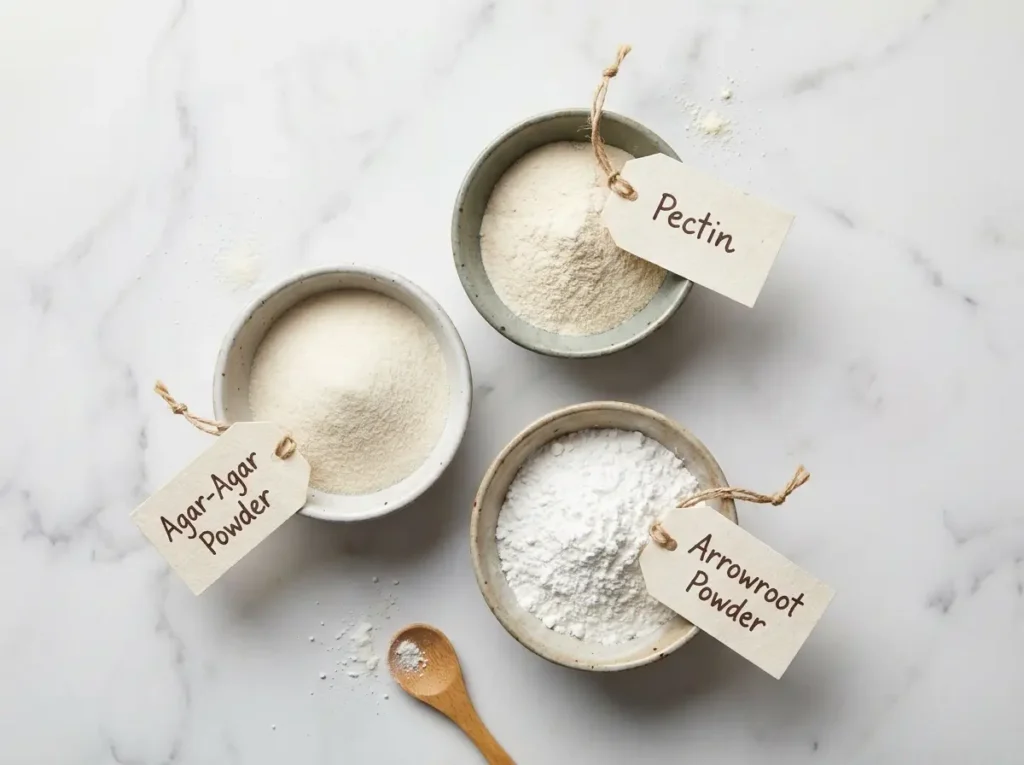
Why Is Regular Gelatin Not Plant-Based?
Traditional gelatin is made from collagen extracted from the skin, bones, and connective tissue of animals — typically pork (porcine) or beef (bovine). The collagen is boiled, filtered, and dried into the powder or sheets we use in cooking.
This makes standard gelatin unsuitable for vegans, vegetarians, and those following halal or kosher diets (since most commercial gelatin is pork-derived). For a full breakdown of what gelatin is made from, see our guide on what gelatin is made of.
Most commercial gelatin is pork-derived, which makes it unsuitable for many halal diets. Some people prefer bovine alternatives instead—here’s a full guide on is beef gelatin halal.
The 4 Best Plant-Based Gelatin Substitutes
1. Agar-Agar — The Closest Like-for-Like Swap
Agar-agar (sometimes just called ‘agar’) is a gelling agent derived from red algae. It’s the most widely used plant-based gelatin substitute and the go-to choice when you want a firm, clean set.
Sets: At room temperature (unlike gelatin, which requires refrigeration). This makes it useful for dishes served at room temperature.
Texture: Firmer and more brittle than gelatin. Less silky, but holds its shape very reliably.
Flavor: Neutral, with a very faint ocean note in large quantities.
Conversion: Use about 1 teaspoon agar powder per 1 cup liquid (vs 1 teaspoon gelatin powder). Agar sets firmer — start with slightly less and adjust.
Best for: Panna cotta, jello-style desserts, aspic, gummies, cheesecake fillings.
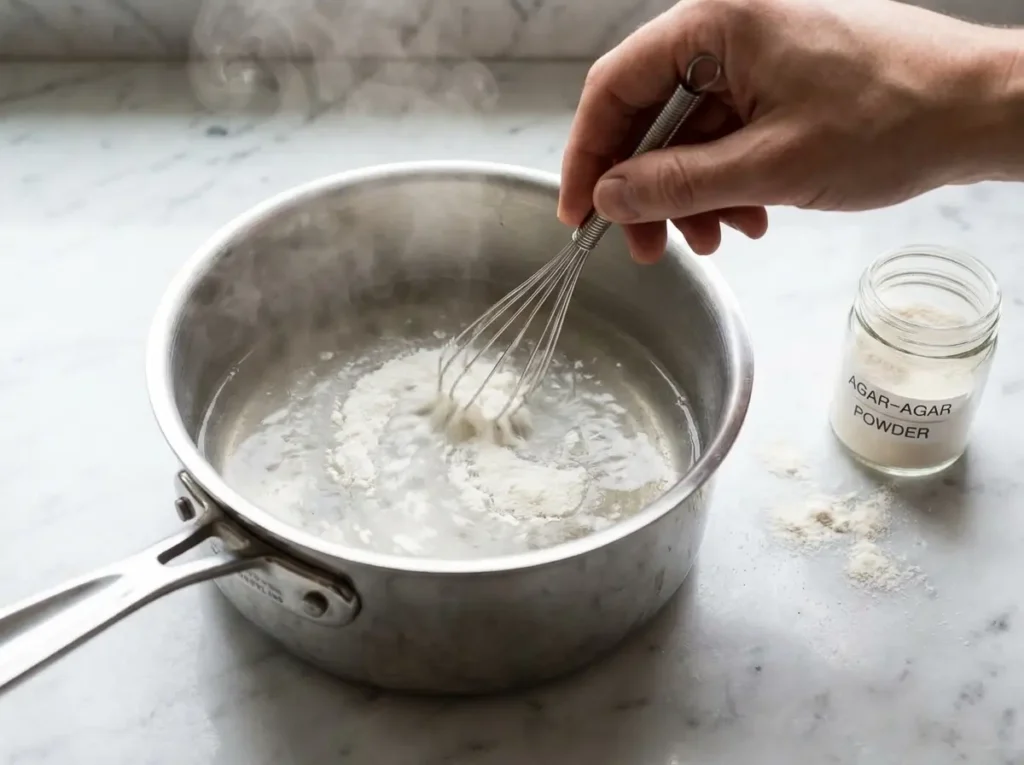
How to use: Whisk into cold liquid, bring to a boil while stirring, then remove from heat. Agar must reach a full boil to activate — unlike gelatin, which only needs warm liquid.
2. Pectin — Best for Jams, Jellies, and Gummies
Pectin is a naturally occurring carbohydrate found in the cell walls of fruits, particularly citrus peels and apple cores. It’s the reason homemade jam sets when you cook fruit with sugar.
Sets: Requires sugar and acid to gel properly. Does not work as a straight gelatin swap.
Texture: Softer and more spreadable than agar. Sets more like jam than jello.
Flavor: Neutral to slightly fruity.
Best for: Jams, jellies, fruit preserves, certain gummy recipes, fruit-based dessert fillings.
Not ideal for: Panna cotta, savory aspics, marshmallows, or any recipe that needs a firm, sliceable set without sugar.
Conversion: Pectin works by a different mechanism than gelatin — follow the specific ratios on your pectin package rather than trying to convert 1:1.
3. Carrageenan — Best for Dairy-Based Desserts
Carrageenan is extracted from red seaweed and is commonly used in the food industry to stabilize dairy products. There are two main types: kappa (firm gel) and iota (soft, elastic gel).
Sets: At refrigerator temperature.
Texture: Creamy and smooth when used with dairy. Can be rubbery or brittle in water-based applications.
Best for: Ice cream, chocolate milk, cream-based desserts, plant-based milks.
Note: Carrageenan is effective but more commonly used in commercial food production. For home cooking, agar-agar is generally easier to work with.
4. Arrowroot Powder — Best as a Thickener
Arrowroot comes from the arrowroot plant and works primarily as a starch thickener rather than a gelling agent. It doesn’t set firm the way gelatin does, but it creates smooth, glossy sauces and fillings.
Best for: Pie fillings, sauces, gravies, puddings, custards.
Not for: Any recipe that needs a firm set (jello, panna cotta, gummies).
Conversion: 2 teaspoons arrowroot = 1 tablespoon cornstarch = thickener (not a gelling agent).
| Substitute | Source | Sets Firm? | Needs Heat to Activate? | Best Use |
| Agar-agar | Red algae | Yes — very firm | Yes, must boil | Panna cotta, jello, gummies |
| Pectin | Fruit cell walls | Soft/jammy | Yes + needs sugar/acid | Jams, jellies, fruit fillings |
| Carrageenan | Red seaweed | Yes — creamy | Yes | Dairy desserts, ice cream |
| Arrowroot | Arrowroot plant | No — thickens only | Yes | Sauces, pie fillings, custards |
The table above gives a quick comparison for choosing the right substitute for your recipe.
How to Substitute Plant-Based Gelatin in Common Recipes
Panna Cotta
For panna cotta, agar-agar is the closest substitute, but the final texture is firmer and less silky than classic gelatin panna cotta. If you want the traditional creamy version, try this easy panna cotta recipe.
Jello-Style Desserts
Use 1 teaspoon agar powder per 1 cup fruit juice. Bring to a boil with the juice, stir until dissolved, pour into molds, cool at room temperature. Agar jello sets firmer than gelatin jello.
Gummies
Agar-based gummies work but have a more brittle texture than gelatin gummies. They don’t have the ‘chew.’ Reduce the agar slightly (¾ teaspoon per cup) and add a tablespoon of sugar to soften the set.
Marshmallows
Agar can work for marshmallows, but the result is usually less stretchy and more crumbly than standard marshmallows made with gelatin. For better options, check these gelatin-free marshmallows.
Still comparing options? If you’re choosing between fruit-based gelling and classic gelatin texture, this guide on pectin vs gelatin helps clarify which one works best depending on your recipe.
Frequently Asked Questions
Is agar-agar the same as gelatin?
No. Agar-agar and gelatin come from different sources (algae vs animal collagen) and behave differently in recipes. Agar sets firmer, sets at room temperature, and must be boiled to activate. They can be substituted for each other with adjustments.
Can I use agar instead of gelatin in all recipes?
In most recipes, yes — with ratio adjustments. Agar sets firmer than gelatin, so you typically need less. It also behaves differently in acidic environments (some fruits prevent agar from setting, just as they affect gelatin).
Where do I buy agar-agar?
Most health food stores, Asian grocery stores, and the natural foods aisle of large supermarkets carry agar-agar powder. It’s also widely available online.
Is carrageenan safe?
Carrageenan has been used in food for decades and is approved by the FDA for food use. There is ongoing research into its effects in large quantities, but as used in normal food applications it is considered safe.
Plant-Based Gelatin Substitutes — The Complete Guide
- Total Time: 20 minutes
- Yield: 4 servings 1x
- Diet: Vegetarian
Description
Plant-based gelatin substitutes make it easy to set vegan desserts, gummies, panna cotta, jams, and creamy fillings without animal gelatin. Learn which substitute works best for every recipe.
Ingredients
- 1 teaspoon agar-agar powder
- 1 cup liquid (juice, cream, or milk mixture)
- Pectin (for jams and jellies)
- Carrageenan (for dairy-based desserts)
- Arrowroot powder (for sauces and fillings)
- Sugar (for pectin recipes)
- Fruit juice or fruit puree
- Acid such as lemon juice (for pectin recipes)
Instructions
- Choose agar-agar when you need a firm, sliceable set like panna cotta, jello, or gummies.
- Whisk agar-agar into cold liquid before heating.
- Bring the mixture to a full boil while stirring to activate agar properly.
- Pour into molds or serving dishes and allow it to cool.
- Use pectin for jams, jellies, and fruit preserves that require sugar and acid.
- Follow the package instructions for pectin rather than converting it 1:1 with gelatin.
- Use carrageenan for creamy desserts like ice cream, chocolate milk, and dairy-style fillings.
- Use arrowroot powder for glossy sauces, pie fillings, custards, and puddings that only need thickening.
- Refrigerate creamy desserts if needed for best texture.
- Adjust the amount slightly depending on how firm or soft you want the final result.
Notes
Agar-agar is the closest like-for-like plant-based swap for gelatin, but it sets firmer and must be boiled to activate. Pectin works best for fruit recipes, while arrowroot is only a thickener, not a true gelling agent.
- Prep Time: 10 minutes
- Cook Time: 10 minutes
- Category: Dessert
- Method: Stovetop
- Cuisine: Vegan
Nutrition
- Serving Size: 1 serving
- Calories: 60
- Sugar: 8g
- Sodium: 15mg
- Fat: 0g
- Saturated Fat: 0g
- Unsaturated Fat: 0g
- Trans Fat: 0g
- Carbohydrates: 14g
- Fiber: 1g
- Protein: 0g
- Cholesterol: 0mg
Keywords: plant-based gelatin substitute, agar agar, pectin, carrageenan, arrowroot, vegan gelatin
2 thoughts on “Plant-Based Gelatin Substitutes — The Complete Guide”