
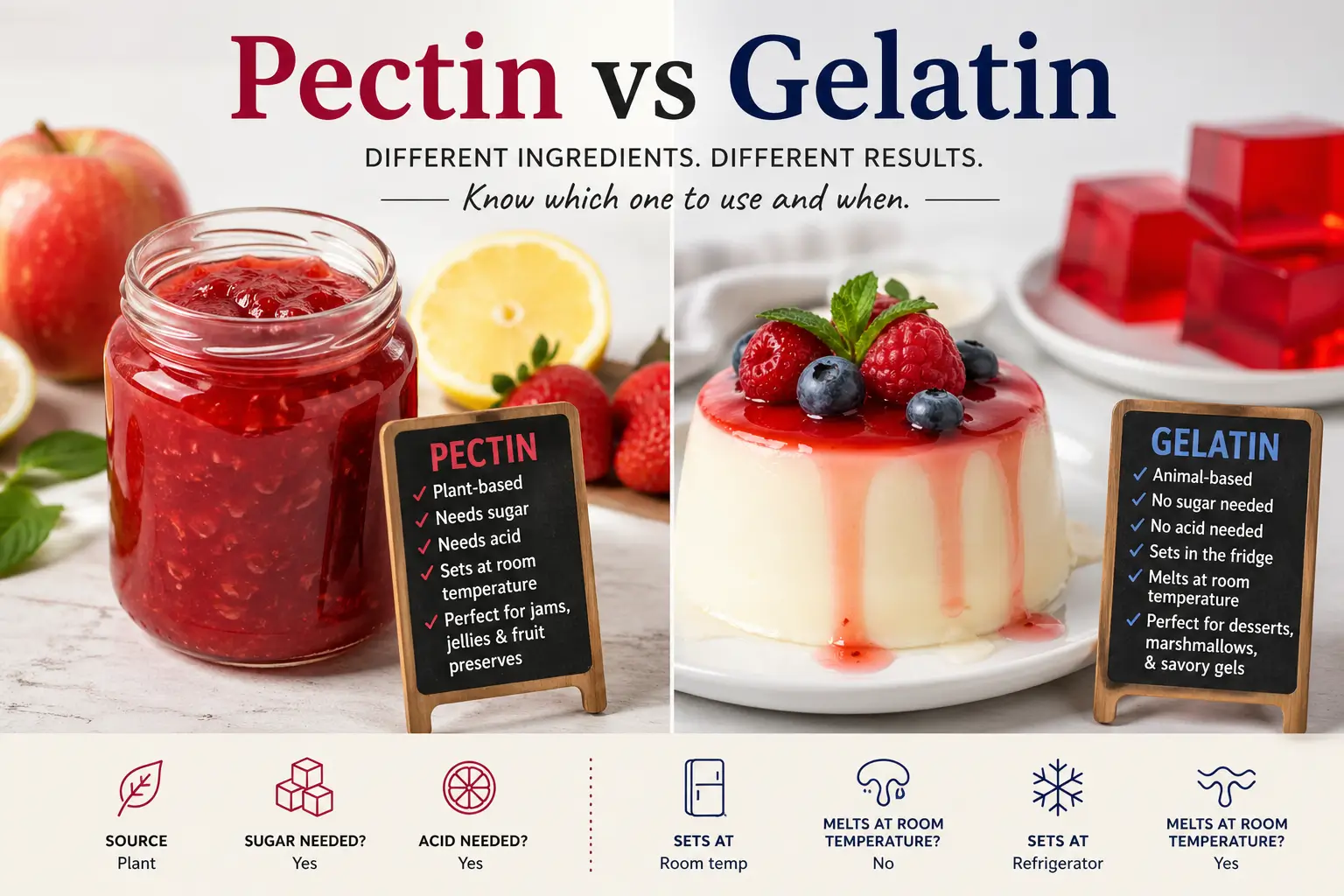
Pectin vs Gelatin both make things gel, but they work in completely different ways. If you swap one for the other without adjusting the recipe, your dessert can turn into soup… or edible rubber, which is rarely the dream.
Pectin and gelatin differ in source, texture, setting method, and best use. Knowing which one to use saves a lot of kitchen heartbreak—and fewer suspicious jars in the fridge.
I’ve used both extensively in my kitchen, and the question I hear most often is: ‘Can I just swap one for the other?’ The short answer is usually no. Here’s why, and what to use when.
What Is Gelatin?
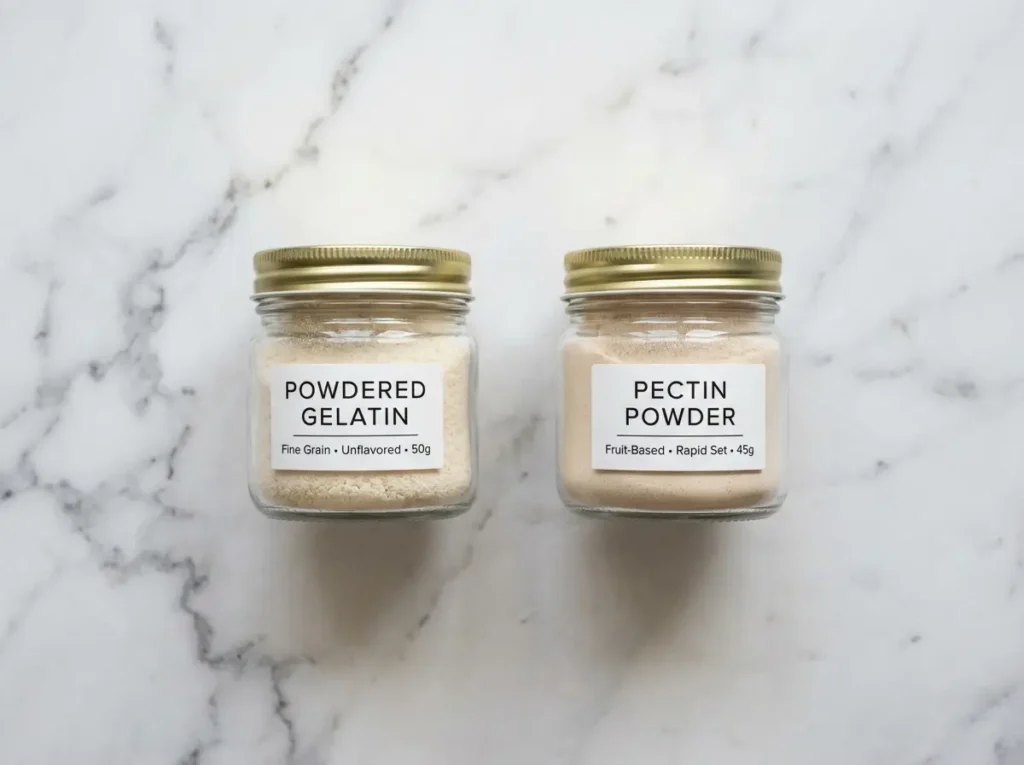
Gelatin is a protein derived from collagen found in the skin, bones, and connective tissue of animals — primarily pigs (porcine) or cattle (bovine). If you’ve ever wondered exactly what gelatin is made of, the answer starts with animal collagen and how it transforms into that familiar jiggly texture.
It’s odorless, tasteless, and dissolves in warm liquid to form a gel when cooled.
Gelatin works by forming a protein network that traps water molecules. The result is a smooth, slightly elastic gel that melts in your mouth at body temperature — which is part of why gelatin-set desserts feel so silky.
Forms available: Powder (most common in the US), sheets/leaves (more common in European recipes).
Sets at: Refrigerator temperature (~35–40°F).
Melts at: Slightly above room temperature — gelatin-set desserts will soften in warm environments.
What Is Pectin?
Pectin is a naturally occurring polysaccharide (a complex carbohydrate) found in the cell walls of plants, particularly in the skin and cores of fruits like apples and citrus. It’s what makes fruit jams and jellies set when cooked.
Unlike gelatin, pectin requires both sugar and acid to gel properly. Without the right balance of these three elements — pectin, sugar, and acid — the mixture won’t set.
Forms available: Liquid pectin, powdered pectin (regular and low-sugar), and instant/no-cook pectin.
Sets at: Room temperature after cooking, or in the refrigerator.
Does not melt: Once set, pectin gels are stable at room temperature.
| Property | Gelatin | Pectin |
|---|---|---|
| Source | Animal (pork/beef collagen) | Plant (fruit cell walls) |
| Main use | Desserts, savory aspics, marshmallows | Jams, jellies, preserves |
| Requires sugar? | No | Yes |
| Requires acid? | No | Yes |
| Melts at room temp? | Yes | No |
| Vegan/halal? | No (animal-derived) | Yes (plant-derived) |
For readers concerned about dietary restrictions, especially halal questions, understanding whether beef gelatin is halal depends heavily on sourcing and certification.
When to Use Gelatin
- Panna cotta, custards, and cream-based desserts like this classic easy panna cotta recipe rely on gelatin for that silky, delicate set that melts beautifully on the tongue.
- Marshmallows (gelatin is what gives them their chew) — if you’re looking for alternatives, these gelatin-free marshmallows are a great plant-based option.
- Cheesecake fillings that need to set without baking
- Savory aspics and chilled terrines
- Stabilizing whipped cream so it holds its shape longer
- Gummy candies
When to Use Pectin
- Jams, jellies, and fruit preserves
- Fruit fillings for pies and tarts
- Fruit-based candies and pâte de fruit
- Low-sugar or sugar-free preserves (with low-sugar pectin)
- Any recipe where you specifically want a stable, room-temperature gel from fruit
Can You Substitute One for the Other?
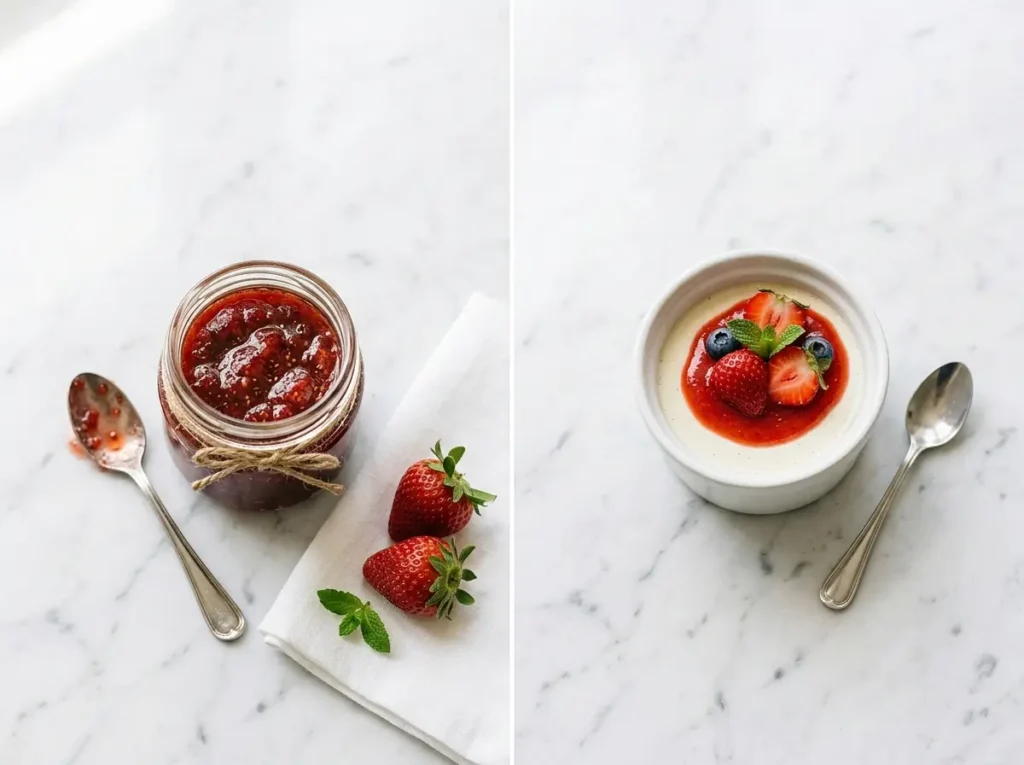
In most cases, no — not directly. Here’s why:
Replacing gelatin with pectin: Pectin needs sugar and acid to work. In a panna cotta or marshmallow recipe, there isn’t enough of either for pectin to gel. Agar-agar is a much better plant-based swap for gelatin.
Replacing pectin with gelatin: You could technically use gelatin to set a jam-like preparation, but the result will melt at room temperature, won’t have the same texture, and will be shorter in shelf life. For actual preserves, pectin is the right tool.
The only category where they overlap somewhat is in certain gummy candy recipes, where either can produce a chewy gel — though the textures and techniques differ.
What About Agar-Agar?
Agar-agar is the plant-based ingredient that most closely mirrors gelatin’s behavior. It’s derived from red algae, sets firm, and works especially well when you need a vegetarian or vegan substitute. For a full breakdown, check this guide to plant-based gelatin substitutes, where agar, carrageenan, and pectin are compared in detail.
Frequently Asked Questions
Is pectin better than gelatin?
Neither is ‘better’ — they’re suited to different jobs. Pectin is the right choice for jams and fruit-based gels. Gelatin is right for cream desserts, marshmallows, and savory gels.
Is pectin vegan?
Yes. Pectin is derived entirely from plant sources (fruit cell walls) and is suitable for vegans, vegetarians, and those following halal or kosher diets.
Can I use pectin to make jello?
Not as a direct swap. Pectin requires sugar and acid to activate, while gelatin gels with water alone. For vegan jello, agar-agar is the better substitute.
Does gelatin have a taste?
Pure unflavored gelatin has no taste when used in the correct amounts. In very high concentrations it can have a faintly savory, meaty edge — this is why too much gelatin in a dessert can taste odd.