

If you have been scrolling through high-protein snack ideas and landed here, you are in the right place. Cottage cheese onion ring muffin cups are one of those recipes that sound unusual at first — until you try them. The result is a savory, slightly crispy, cheesy bite that comes together in under 40 minutes and keeps well in the fridge for several days.
These muffin cups combine the satisfying crunch of onion rings with the protein power of cottage cheese, all baked into a handy portion-controlled cup. Whether you make them for a quick weekday snack, a high-protein breakfast, or a fun party appetizer, they deliver on every front.
Below you will find everything you need: a full ingredient list, step-by-step instructions, pro tips for perfect texture, flavor variations, serving ideas, and honest answers to the most common questions about this recipe.
1. What Are Cottage Cheese Onion Ring Muffin Cups?
Cottage cheese onion ring muffin cups are individual baked savory muffins made with a batter of cottage cheese, eggs, and flour — with an onion ring pressed into each cup before baking. When baked, the onion becomes tender and slightly caramelized while the batter sets into a firm, protein-rich shell around it.
Unlike deep-fried onion rings, these muffin cups require no oil bath, no breading station, and no cleanup nightmare. They are oven-baked and can be adapted to different dietary needs, including gluten-free and low-carb versions.
The cottage cheese does double duty here: it adds moisture so the cups do not dry out in the oven, and it contributes a notable amount of protein per serving — one reason this recipe has become popular among those looking for high-protein snack ideas.
2. Ingredients for Cottage Cheese Onion Ring Muffin Cups
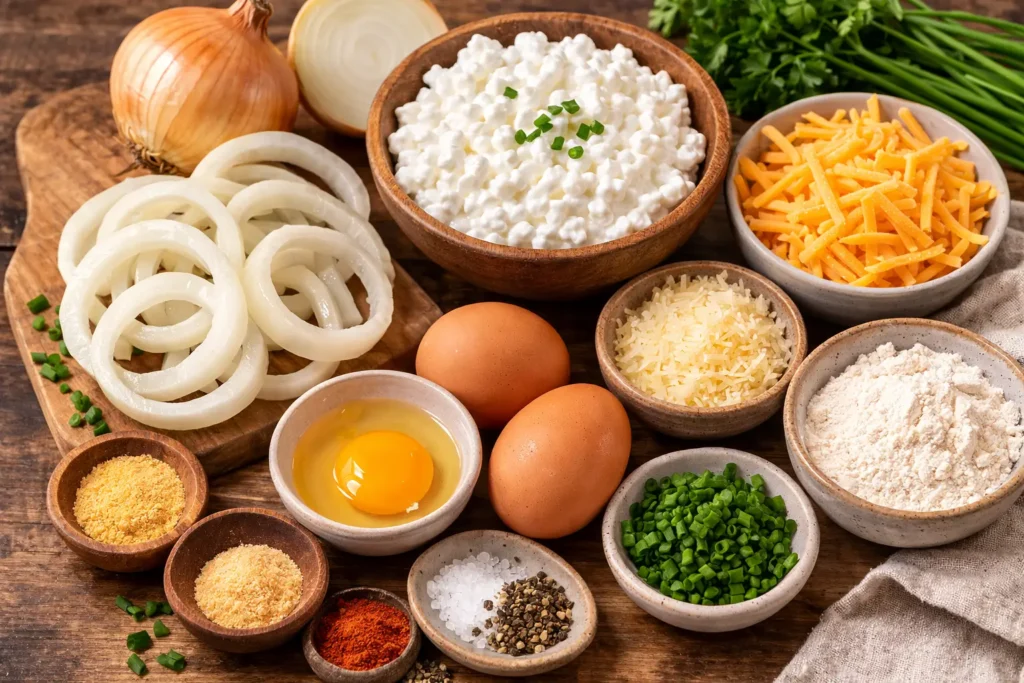
All ingredients are straightforward and available in any grocery store. Here is what you will need for 12 muffin cups:
For the batter:
- 1 cup full-fat cottage cheese (or low-fat — see tips below)
- 2 large eggs
- 1/2 cup all-purpose flour (or almond flour for a low-carb version)
- 1/2 cup shredded sharp cheddar cheese
- 2 tablespoons grated parmesan cheese
- 1/2 teaspoon garlic powder
- 1/2 teaspoon onion powder
- 1/2 teaspoon paprika (smoked or sweet)
- Salt and freshly ground black pepper, to taste
For the onion rings:
- 1 large yellow or sweet onion, sliced into thick rings (about 1/2 inch)
For the muffin tin:
- Cooking spray or a light coat of olive oil
Optional add-ins: chopped chives, diced jalapeños, everything bagel seasoning, or a sprinkle of cayenne pepper on top before baking.
Note on cottage cheese: Full-fat cottage cheese will give you the richest texture and best binding. Low-fat can work, but the cups may be slightly less firm. Avoid fat-free versions — the lower moisture content can make the batter too dry.
3. Why Cottage Cheese Onion Ring Muffin Cups Are So Popular Right Now
This recipe checks several boxes that are driving food trends in 2025 and 2026:
High Protein With Simple Ingredients
Cottage cheese has had a major moment on social media, and for good reason. A single cup contains roughly 25–28 grams of protein depending on the brand. Combined with eggs and cheese, these muffin cups can offer an estimated 8–12 grams of protein per piece — though exact values vary based on specific brands and portion sizes.
If you enjoy pairing your protein snacks with light, warm drinks, you might also like this clove tea recipe for weight loss from our collection — a gentle, flavorful tea that pairs well with savory bites.
No Frying Required
Traditional onion rings are fried in oil, which significantly increases the calorie count. These muffin cups are fully oven-baked, which makes cleanup far easier and keeps things lighter without sacrificing that satisfying savory flavor.
Portion Control Built In
The muffin tin format means each serving is already measured out for you. This makes them convenient for meal prep, lunchboxes, or snack planning across the week.
Endlessly Adaptable
Once you have the base formula down, you can change the spices, the cheese, or the add-ins to suit whatever you are craving. A few variation ideas are covered further below.
4. How to Make Cottage Cheese Onion Ring Muffin Cups Step by Step
Step 1: Prepare the Oven and Muffin Tin
Preheat your oven to 375°F (190°C). Generously coat a standard 12-cup muffin tin with cooking spray. Make sure to spray not just the bottom of each cup but also the sides — this batter can stick, especially if using low-fat cottage cheese.
If you want extra insurance against sticking, use a silicone muffin mold instead of a metal tin.
Step 2: Mix the Batter
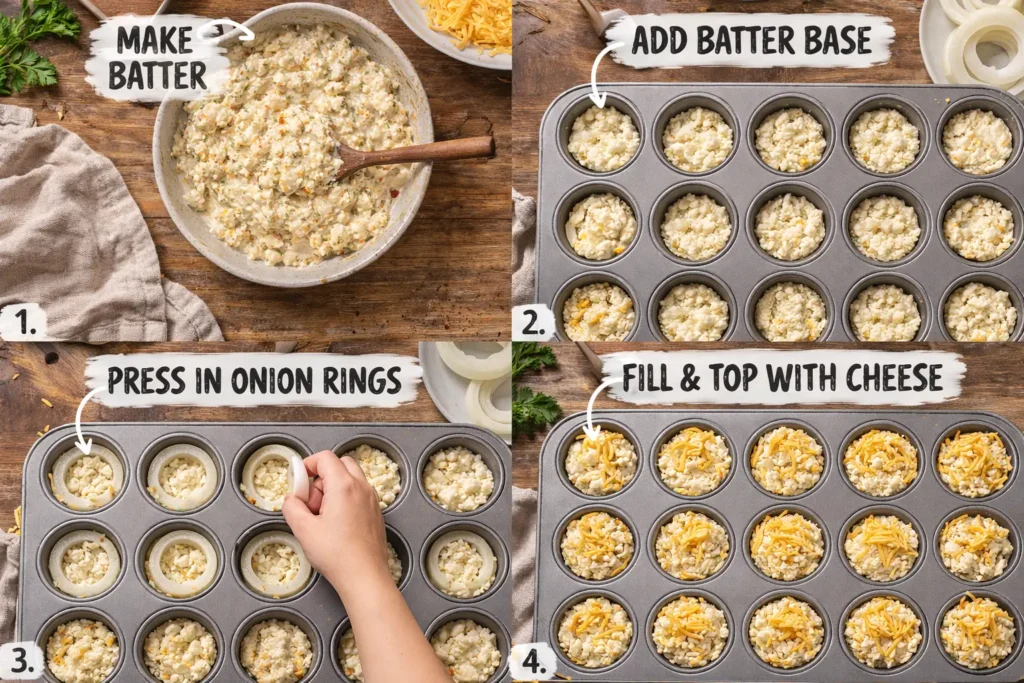
In a large mixing bowl, combine the cottage cheese, eggs, flour, cheddar, parmesan, garlic powder, onion powder, paprika, salt, and pepper. Stir everything together until you have a thick, cohesive batter. Do not overmix — a few lumps from the cottage cheese curds are perfectly fine and will not affect the final texture.
Tip: If the batter seems too thin (this can happen with very wet cottage cheese), add one extra tablespoon of flour and stir again.
Step 3: Fill the Muffin Cups
Spoon about one tablespoon of batter into the bottom of each muffin cup. You want just enough to create a thin base layer — not so much that you run out of batter for the top.
Then, press one onion ring flat into the batter in each cup. The ring should sit as flush as possible. Spoon the remaining batter over and around each onion ring, filling the cups roughly three-quarters of the way full.
Step 4: Add the Cheese Topping
Sprinkle a small amount of extra shredded cheddar or parmesan on top of each cup. This creates a golden, slightly crispy top layer during baking — one of the best parts of this recipe.
Step 5: Bake
Place the muffin tin in the preheated oven and bake for 25 to 30 minutes, or until the tops are golden and the centers feel set when lightly pressed. Baking times may vary depending on your oven, so start checking at the 23-minute mark.
The cups should pull away slightly from the sides of the tin when they are done.
Step 6: Cool and Remove
Let the muffin cups rest in the tin for 5 minutes before removing. This brief resting time is important — it allows the batter to firm up fully and makes removing the cups much easier without breaking them.
Use a butter knife or small offset spatula to gently loosen the edges before lifting each cup out.
5. Tips for Perfect Texture and Flavor
Choose the Right Cottage Cheese
Small curd or large curd both work. Full-fat is preferred for a richer, more cohesive batter. If your cottage cheese has excess liquid at the top, drain it briefly before measuring.
Cut Thick Onion Rings
Thin onion slices can become too soft or disappear into the batter during baking. Aim for rings that are at least 1/2 inch thick. This gives you a visible onion layer inside each cup and a better texture contrast.
Avoid Overmixing
Overmixing can make the batter too dense. Stir just until everything is combined.
Grease the Muffin Tin Generously
This is one step worth not skipping. An under-greased tin can cause the cups to stick and break when you try to remove them. If in doubt, use a silicone mold.
Bake Until the Center Is Fully Set
If the center still jiggles noticeably when you shake the pan, give the cups an extra 3 to 5 minutes. A fully set center means the cups will hold together cleanly when you bite into them.
Let Them Rest Before Serving
Five minutes on the counter after baking makes a real difference in texture. The cups continue to firm up as they cool slightly, resulting in a better consistency.
6. Flavor Variations and Serving Ideas
Add Fresh Herbs for Extra Aroma
Fold two tablespoons of finely chopped fresh chives, dill, or parsley into the batter before filling the cups. This adds a fresh, bright note that balances the richness of the cheese.
Experiment With Different Cheeses
Sharp cheddar is the go-to, but gruyere, smoked gouda, monterey jack, or pepper jack all work beautifully here. Each brings a slightly different flavor profile to the cup.
Add Vegetables for Extra Texture
Finely diced bell pepper, chopped spinach, or even corn kernels can be stirred into the batter for added color and texture. If you enjoy vegetable-forward cooking, you might also enjoy this Korean bok choy recipe for a nutritious side dish to serve alongside.
Try a Low-Carb Version
Replace the all-purpose flour with almond flour or coconut flour (use slightly less coconut flour, as it absorbs more liquid). This keeps the recipe lower in carbohydrates while maintaining the overall structure of the batter.
Serving Suggestions
These cups are versatile enough to serve in multiple ways:
- As a standalone high-protein snack at any time of day
- Alongside a green salad for a light, satisfying lunch
- On a party platter with dipping sauces like sriracha mayo, ranch, or honey mustard
- As a side dish next to grilled chicken or a hearty casserole like this
- Packed in a lunchbox — they reheat well and travel without falling apart
They also pair well with comfort food mains. For another crowd-pleasing recipe, consider trying this Mission BBQ mac and cheese recipe — a rich, satisfying dish that works well for gatherings.
7. Cottage Cheese Muffin Cups vs. Regular Onion Rings: A Quick Comparison
For those who want to understand how this recipe stacks up against traditional fried onion rings, the table below offers a side-by-side look at key differences. Keep in mind that exact nutritional values vary by brand and preparation method.
| Feature | Cottage Cheese Muffin Cups | Traditional Fried Onion Rings |
| Cooking method | Oven-baked | Deep fried |
| Protein content (est. per piece) | ~8–12g | ~1–2g |
| Oil/fat used | None or minimal (spray) | Significant frying oil |
| Prep & cleanup | Simple, one bowl + muffin tin | Multiple bowls + oil management |
| Meal prep friendly | Yes — stays well for 4 days | Best served immediately |
| Low-carb adaptable | Yes (almond flour swap) | Difficult |
| Portion control | Built-in (muffin format) | Free-form portions |
The comparison makes a clear case: for those prioritizing protein, convenience, and ease of preparation, cottage cheese muffin cups offer meaningful advantages over traditional fried onion rings.

8. Storage, Reheating, and Meal Prep Tips
Storing in the Refrigerator
Place cooled muffin cups in an airtight container and refrigerate for up to 4 days. They hold their shape well and do not become soggy, which makes them a reliable meal prep option.
Freezing for Longer Storage
These muffin cups freeze well. Arrange them in a single layer on a baking sheet and freeze until solid (about 1 to 2 hours), then transfer to a freezer-safe bag or container. They can be frozen for up to 2 months. Thaw overnight in the refrigerator before reheating.
Best Reheating Methods
For the best texture, reheat in the oven or toaster oven at 350°F (175°C) for about 8 to 10 minutes. This restores some of the outer crispiness. Microwave reheating also works if you are short on time — about 60 to 90 seconds — though the texture will be slightly softer.
Meal Prep Strategy
Make a double batch on Sunday and refrigerate for weekday snacks. They reheat quickly and work well in lunchboxes. If you are interested in other practical ideas for healthy eating routines, this apple cider vinegar gummies recipe for weight loss is another reader favorite worth bookmarking.
Print
Cottage Cheese Onion Ring Muffin Cups: Crispy, Cheesy & Packed With Protein
- Total Time: 40 minutes
- Yield: 12 muffin cups 1x
- Diet: Vegetarian
Description
Savory, cheesy cottage cheese muffin cups baked with thick onion rings. These high-protein bites are crispy on top, tender inside, and perfect for snacks, appetizers, or meal prep.
Ingredients
- 1 cup full-fat cottage cheese
- 2 large eggs
- 1/2 cup all-purpose flour (or almond flour)
- 1/2 cup shredded sharp cheddar cheese
- 2 tablespoons grated parmesan cheese
- 1/2 teaspoon garlic powder
- 1/2 teaspoon onion powder
- 1/2 teaspoon paprika
- Salt and freshly ground black pepper, to taste
- 1 large yellow or sweet onion, sliced into thick rings (about 1/2 inch)
- Cooking spray or light olive oil for greasing
Instructions
- Preheat oven to 190°C (375°F) and generously grease a 12-cup muffin tin.
- In a large bowl combine cottage cheese, eggs, flour, cheddar cheese, parmesan, garlic powder, onion powder, paprika, salt, and pepper.
- Stir until a thick batter forms; avoid overmixing.
- Add about one tablespoon of batter to the bottom of each muffin cup.
- Press one thick onion ring into the batter in each cup.
- Spoon the remaining batter over and around the onion rings until cups are about three-quarters full.
- Sprinkle a little extra cheddar or parmesan on top for a crispy finish.
- Bake for 25–30 minutes until the tops are golden and the centers are set.
- Allow the muffin cups to cool for 5 minutes in the pan.
- Gently loosen with a knife and remove from the muffin tin before serving.
Notes
Use full-fat cottage cheese for the best texture. Cut onion rings thick so they stay visible after baking. These muffin cups store well in the refrigerator for up to 4 days and can be reheated in the oven for the best texture.
- Prep Time: 10 minutes
- Cook Time: 25–30 minutes
- Category: Snack
- Method: Baked
- Cuisine: American
Nutrition
- Serving Size: 1 muffin cup
- Calories: 120
- Sugar: 2g
- Sodium: 260mg
- Fat: 7g
- Saturated Fat: 3g
- Unsaturated Fat: 3g
- Trans Fat: 0g
- Carbohydrates: 6g
- Fiber: 1g
- Protein: 9g
- Cholesterol: 55mg
Keywords: cottage cheese onion ring muffin cups, high protein snack, savory muffins, onion ring muffins, cottage cheese recipe
10. Conclusion
Cottage cheese onion ring muffin cups are the kind of recipe that earns a permanent spot in your rotation. They are quick to put together, packed with protein, adaptable to different tastes, and hold up well in the fridge for several days.
Whether you are looking for a high-protein snack, a fun party appetizer, or a creative way to use cottage cheese, this recipe delivers without requiring complicated techniques or specialty equipment.
Try the base recipe first, then experiment with the variations to find your favorite version. And if you enjoy savory baked snacks, check out the full recipe section on sistafood.com for more ideas — from quick weeknight recipes to reader-favorite restaurant copycat dishes.
11. Frequently Asked Questions
What are cottage cheese onion ring muffin cups?
They are individual baked savory cups made from a cottage cheese and egg batter with an onion ring embedded in each one. They are protein-rich, oven-baked, and work well as a snack, appetizer, or light meal.
Why are these muffin cups becoming popular?
Cottage cheese has gained significant attention for its protein content and versatility in cooking. When combined with the visual appeal of the onion ring format, this recipe fits the growing interest in high-protein, low-effort snacks that look good and taste great.
Can I make this recipe with low-fat cottage cheese?
Yes, low-fat cottage cheese can be used. The cups will generally be slightly less rich in flavor and may not hold together quite as firmly. Full-fat is recommended for best results, but low-fat is a workable substitute in most cases.
What type of onion works best?
Yellow onions are the most widely used and give a balanced savory flavor. Sweet onions (like Vidalia) add a mild sweetness. Red onions are also an option but have a slightly stronger taste. Avoid very thin slices — aim for rings that are at least 1/2 inch thick.
Can I make this recipe gluten-free?
Yes. Replace the all-purpose flour with almond flour (use the same amount) or oat flour. Coconut flour absorbs more liquid, so if using it, start with about 1/3 cup and adjust as needed to reach the right batter consistency.
What cheeses work best in this recipe?
Sharp cheddar is the classic choice. Gruyere, smoked gouda, pepper jack, and monterey jack are all good alternatives. Parmesan adds a sharp, salty depth, especially as a topping.
How long do these muffin cups stay fresh?
Stored in an airtight container in the refrigerator, they generally keep well for up to 4 days. For longer storage, they can be frozen for up to 2 months.
Can these muffin cups be frozen?
Yes. Freeze them in a single layer first, then transfer to a freezer bag. Thaw overnight in the fridge and reheat in the oven at 350°F for best texture.
What is the best way to reheat them?
The oven or toaster oven at 350°F for 8 to 10 minutes gives the best result — it revives some of the outer crispiness. The microwave works too (60–90 seconds) but produces a softer texture.
Can I add other ingredients to the recipe?
Absolutely. The base batter is forgiving and easy to customize. Common additions include chopped chives, diced jalapeños, sun-dried tomatoes, everything bagel seasoning, corn, or diced bell pepper. As long as the add-ins are not too wet, they integrate well into the batter without affecting the structure.