

Ina Garten lemon blueberry bread recipe is one of those bakes that feels special without being complicated. It’s tender, bright with fresh lemon, studded with juicy blueberries, and finished with a glossy lemon glaze that soaks right into the top. Once you try it, it’s hard to go back to any other quick bread.
If you’ve ever wondered why this particular recipe keeps showing up on baking boards, food blogs, and family brunches across America — this article is for you. We’ll walk through every ingredient, every step, and every tip that makes the difference between a good loaf and an unforgettable one.
What Makes This Ina Garten Recipe Stand Out
Ina Garten — known to millions as the Barefoot Contessa — has built a reputation around recipes that are elegant but entirely doable at home. Her lemon blueberry bread follows the same philosophy.
What separates it from a standard blueberry loaf is the combination of whole-milk yogurt, fresh lemon zest, and a two-step finishing process: a warm lemon syrup poured over the hot loaf, followed by a cool lemon glaze once it rests. That layering of lemon flavor is what makes every slice taste intentional — not just sweet, but genuinely bright and balanced.
The yogurt plays a key role here. According to baking experts, the acidity in plain yogurt interacts with baking powder to produce a very tender, fine crumb — closer to a bakery-style cake than a dense homemade loaf. It also helps keep the bread moist for days, which is a bonus if you’re baking ahead.
If you’ve already enjoyed her other classics on this site — like the Barefoot Contessa Grape Nut Pudding or the Barefoot Contessa Crab Quiche — you already know her approach: simple ingredients, no shortcuts on quality, and results that consistently exceed expectations.
Ingredients for Ina Garten’s Lemon Blueberry Bread
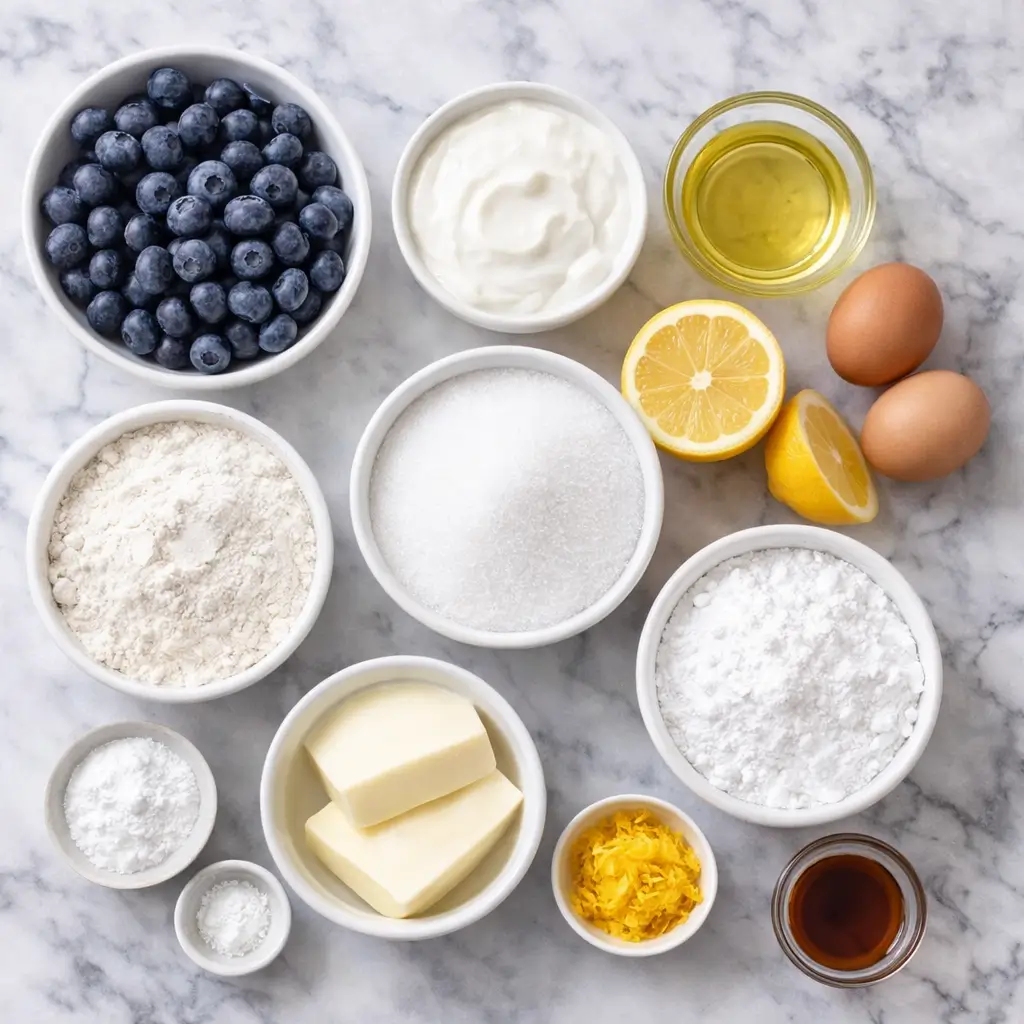
Getting the ingredients right is more than half the work. Here’s what you’ll need, plus notes on each one.
For the Bread Batter
- 1½ cups all-purpose flour — Spooned and leveled, not scooped directly, to avoid a dense loaf
- 2 teaspoons baking powder — Make sure it’s fresh; old baking powder may cause the loaf to fall flat
- ½ teaspoon kosher salt — Balances the sweetness and amplifies the lemon
- 1 cup plain whole-milk yogurt — Do not substitute low-fat; the fat content is part of what makes this loaf moist
- 1 cup + 1 tablespoon granulated sugar — The extra tablespoon goes directly into the blueberries
- 3 large eggs — Room temperature blends more smoothly into the batter
- Zest of 2 lemons — About 2 tightly packed teaspoons; this is where most of the lemon flavor lives
- ½ teaspoon pure vanilla extract
- ½ cup vegetable oil — Neutral oil keeps the texture tender; melted coconut oil can work as a variation
- 1½ cups fresh blueberries — Frozen berries can also be used (see tips below)
For the Lemon Syrup (brushed on warm)
- ⅓ cup freshly squeezed lemon juice
- ⅓ cup granulated sugar
For the Lemon Glaze (poured on cooled loaf)
- 1 cup powdered sugar, sifted
- 3 to 4 tablespoons freshly squeezed lemon juice — Add one tablespoon at a time until the glaze pours slowly off a spoon
Quick Ingredient Reference
Here’s a compact overview of the key ingredients and what each one actually does in this recipe.
| Ingredient | Amount | Purpose |
|---|---|---|
| All-purpose flour | 1½ cups | Structure |
| Plain whole-milk yogurt | 1 cup | Moisture, tenderness |
| Granulated sugar | 1 cup + 1 tbsp | Sweetness, browning |
| Large eggs | 3 | Binding, lift |
| Lemon zest | ~2 tsp | Primary lemon flavor |
| Vegetable oil | ½ cup | Tenderness, moisture |
| Fresh blueberries | 1½ cups | Flavor, texture |
| Lemon juice (syrup) | ⅓ cup | Post-bake soaking |
| Powdered sugar (glaze) | 1 cup | Finishing sweetness |
Use this table as a quick shopping checklist before you start. Having everything measured and ready before you begin mixing makes the process noticeably smoother.
Step-by-Step Instructions
Step 1 — Prepare Your Pan and Oven
Preheat your oven to 350°F. Grease an 8½ x 4½-inch loaf pan and line it with parchment paper, leaving a small overhang on the long sides. This makes it easy to lift the finished loaf out cleanly.
Step 2 — Mix the Dry Ingredients
In a medium bowl, whisk together the flour, baking powder, and salt. Set aside. This step ensures the leavening is evenly distributed before you add anything wet — a small step that makes a consistent crumb possible.
Step 3 — Mix the Wet Ingredients
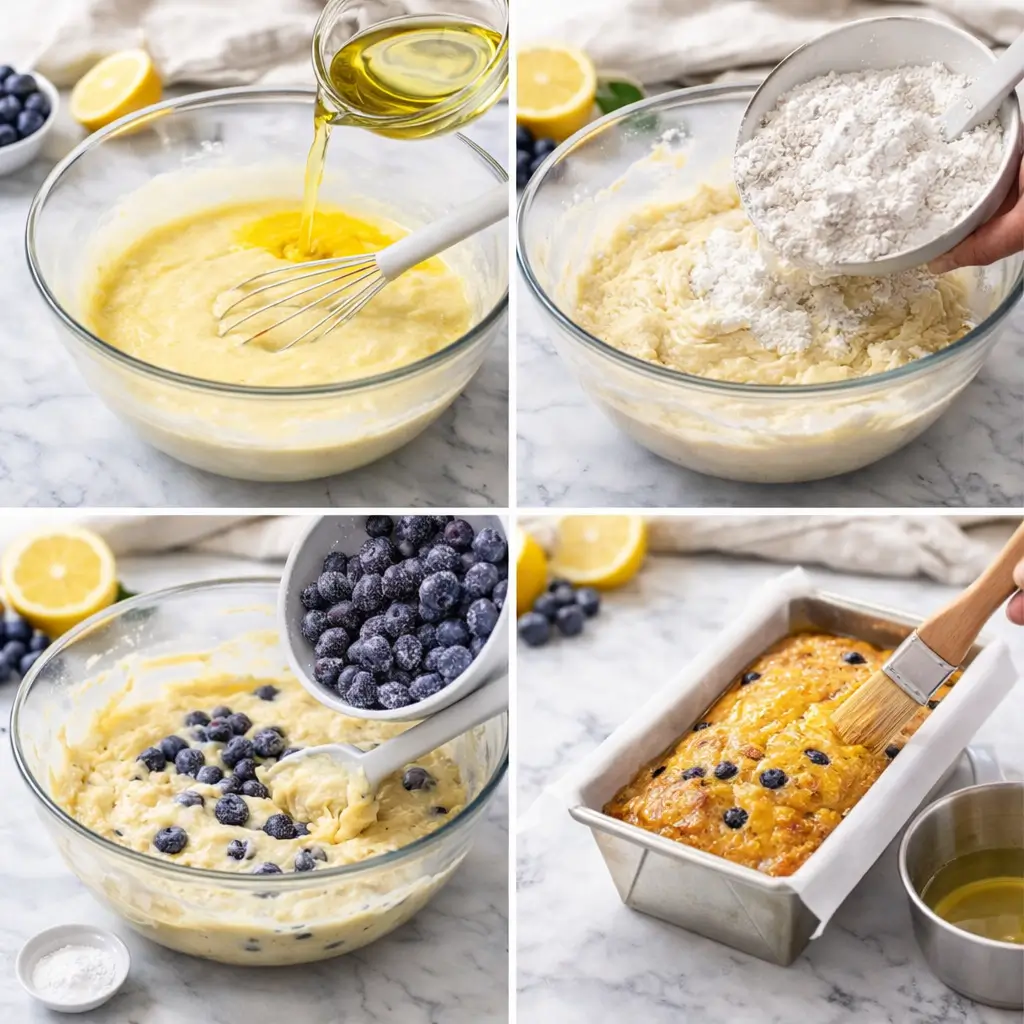
In a large bowl, whisk the yogurt, 1 cup of sugar, eggs, lemon zest, and vanilla extract until fully combined. Slowly whisk in the vegetable oil. The batter will look slightly glossy — that’s normal.
Step 4 — Combine Wet and Dry
Using a rubber spatula, gently fold the dry ingredients into the wet mixture. Mix only until the flour disappears — overmixing develops gluten and can make the loaf tough. A few small streaks of flour are fine; they’ll incorporate as you fold in the blueberries.
Step 5 — Add the Blueberries
Toss the blueberries with the reserved 1 tablespoon of sugar. This light coating can help reduce sinking. Gently fold them into the batter using just a few strokes.
Step 6 — Bake
Pour the batter into the prepared pan and smooth the top. Bake for 50 to 55 minutes, until a toothpick inserted in the center comes out clean and the top is golden. If the top begins to brown too quickly before the center is set, tent loosely with aluminum foil after 40 minutes.
Step 7 — Make and Apply the Lemon Syrup
While the bread is still in the pan and still hot, combine the lemon juice and sugar in a small saucepan over medium heat. Stir until the sugar dissolves completely, about 2 to 3 minutes. Pour the warm syrup slowly and evenly over the surface of the hot loaf. Let it absorb for at least 10 minutes before removing from the pan.
Step 8 — Cool and Glaze
Transfer the loaf to a wire rack and allow it to cool completely — at least 1 hour. Then whisk the powdered sugar with lemon juice until smooth and pour the glaze over the top, letting it drip naturally down the sides. Allow the glaze to set for 15 to 20 minutes before slicing.
Expert Tips for the Best Texture and Flavor
A few small adjustments can make a noticeable difference in the finished loaf.
Use room temperature eggs and yogurt. Cold ingredients can cause the batter to curdle slightly, which affects texture. Taking them out 30 minutes before you start is enough.
Zest before you juice. Once a lemon is juiced, zesting it becomes very difficult. Always zest first, then cut and juice.
Don’t skip the lemon syrup. Some recipes skip this step, but it’s what gives Ina’s version that deeply infused, tangy quality that a plain loaf just doesn’t have. The syrup seeps into the warm crumb and becomes part of the bread itself.
For frozen blueberries: Do not thaw them before adding to the batter. Toss them frozen with the tablespoon of sugar, then fold in quickly. This minimizes the streak of blue-purple color that can bleed into the batter, though some color transfer is entirely normal.
Check for doneness with a toothpick, not just color. The top can look done while the center is still underbaked. The toothpick test is the most reliable indicator.
Pro Tips at a Glance
These are the details that home bakers often overlook — and that make a real difference in the final result.
| Tip | Why It Matters |
|---|---|
| Use room temp eggs and yogurt | Prevents batter from curdling; smoother texture |
| Zest lemons before juicing | Easier to zest; captures more essential oils |
| Don’t skip lemon syrup | Infuses flavor deep into the crumb |
| Fold blueberries gently | Prevents streaking and keeps berries whole |
| Test with a toothpick | More reliable than checking surface color |
Paying attention to these small details is often the difference between a loaf that looks good and one that tastes truly memorable.
Common Mistakes and How to Avoid Them
Even experienced bakers run into trouble with quick breads. Here are the most common issues and what actually causes them.
| Mistake | Why It Happens | Fix |
|---|---|---|
| Blueberries sink to the bottom | Batter too thin or berries not coated | Toss berries in sugar + 1 tsp flour before folding |
| Loaf is dense and gummy | Overmixed or underbaked | Fold gently; test with toothpick |
| Top is dark, inside is wet | Oven too hot | Use an oven thermometer; lower by 25°F if needed |
| Glaze is too thick or too runny | Lemon juice ratio off | Add juice one tablespoon at a time |
| Loaf sticks to pan | No parchment lining | Always line with parchment and grease the pan |
These mistakes are preventable with a little attention to technique. The recipe itself is forgiving — the yogurt and oil give it a buffer that more delicate cakes don’t have.
Serving Ideas and Delicious Variations
How to Serve Lemon Blueberry Bread
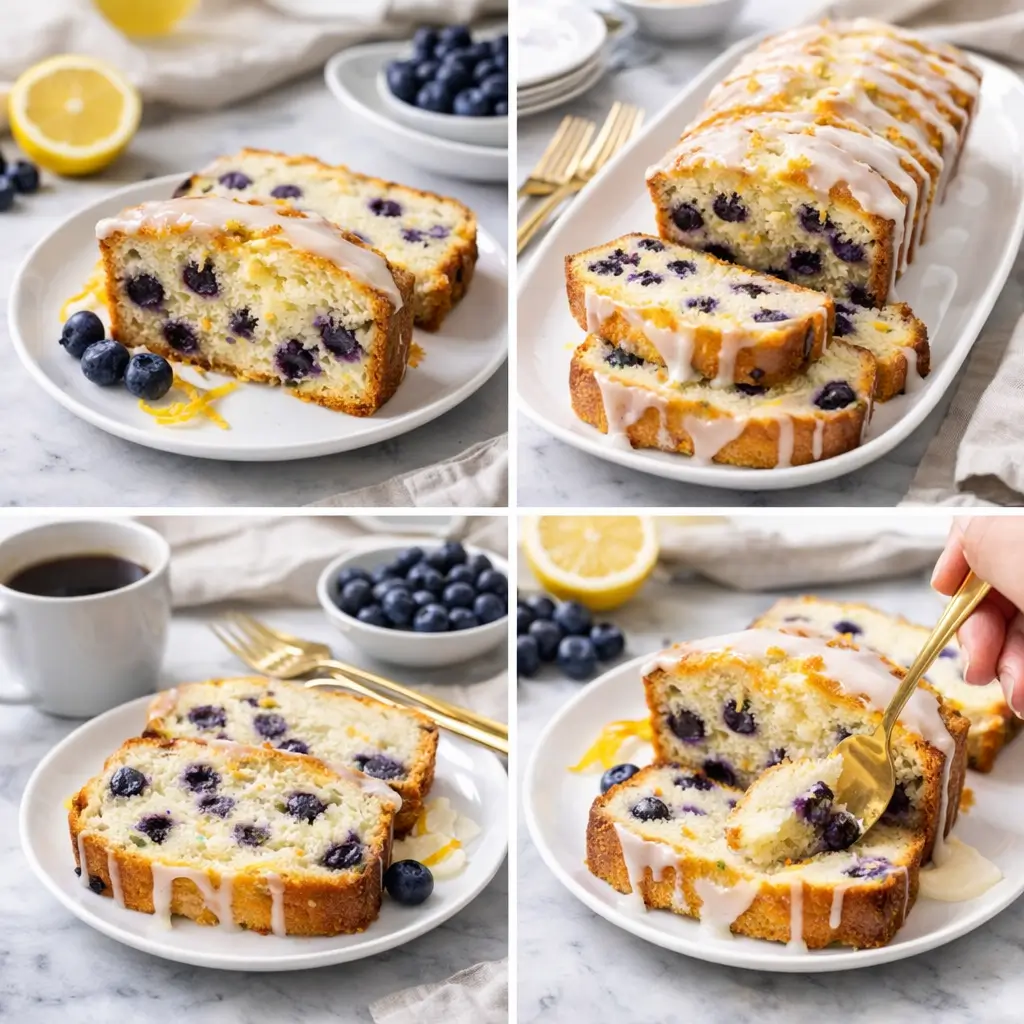
This loaf works beautifully at room temperature, sliced thick. It’s a natural fit for brunch alongside fruit salad and coffee, for afternoon tea with a light spread of cream cheese, or as a relaxed dessert with a small scoop of vanilla ice cream. A drizzle of coconut sugar caramel sauce on the side adds a warm, cozy twist that works surprisingly well with the lemon glaze.
It also makes a thoughtful homemade gift, wrapped in parchment and tied with twine. The lemon glaze firms up as it sets, making sliced pieces easy to wrap individually.
Easy Variations to Try
Lemon Poppy Seed Version — Omit the blueberries and add 2 tablespoons of poppy seeds to the batter. The lemon syrup and glaze stay exactly the same.
Mixed Berry Version — Replace half the blueberries with raspberries or blackberries. The tartness pairs beautifully with the lemon glaze.
Orange Instead of Lemon — Swap the lemon zest, lemon syrup, and lemon glaze for navel orange equivalents. The result is softer and sweeter, with a more floral finish.
Mini Loaf Version — Divide the batter across three mini loaf pans and reduce baking time to approximately 35 to 40 minutes. Makes a great batch for gifting.
How to Store Lemon Blueberry Bread and Keep It Fresh
At room temperature: Once the glaze has fully set, wrap the loaf in plastic wrap or store in an airtight container. It keeps well at room temperature for up to 3 days. The lemon syrup helps retain moisture during this period.
In the refrigerator: If you live somewhere warm or humid, refrigerating extends freshness to about 5 to 6 days. Bring individual slices to room temperature before serving for the best texture.
In the freezer: Lemon blueberry bread freezes very well. Wrap the fully cooled loaf tightly in plastic wrap and then in foil. It can be frozen for up to 3 months. Thaw overnight in the refrigerator, then bring to room temperature before serving. If frozen without glaze, you can add a fresh glaze once thawed for a just-baked appearance.
A quick note: the glaze may become slightly sticky after refrigerating, especially in humid conditions. This is a cosmetic change caused by moisture interacting with the powdered sugar — it doesn’t affect taste at all.
Frequently Asked Questions
Why do my blueberries sink to the bottom of the bread?
This usually happens when the batter is too loose or the berries aren’t coated. Tossing the blueberries in a teaspoon of flour along with the tablespoon of sugar before folding them in gives them a slightly gripped surface that can help them stay suspended in the batter.
Can I use low-fat or non-fat yogurt?
According to baking experts, substituting low-fat or non-fat yogurt may produce a slightly drier loaf. Whole-milk yogurt is recommended for the texture this recipe is known for. Greek yogurt can also work — it tends to produce a slightly denser crumb but still a flavorful result.
Can I use lemon extract instead of fresh lemon zest?
Lemon extract can be used in a pinch, but the flavor profile will be different. Zest contains the essential oils from the peel, which give a more rounded, aromatic lemon flavor. Extract tends to taste sharper and more one-dimensional. If using extract, start with ½ teaspoon and adjust to taste.
How do I know when the bread is fully baked?
The most reliable test is inserting a toothpick or thin skewer into the center of the loaf. It should come out clean or with just a few dry crumbs. The internal temperature of a fully baked quick bread is typically around 205°F if you use an instant-read thermometer.
Can I make this recipe as muffins?
Yes. Divide the batter into a lined 12-cup muffin tin, filling each cup about two-thirds full. Bake at 350°F for approximately 20 to 24 minutes. You can brush the warm muffins with a small amount of lemon syrup and drizzle with glaze once cooled.
Can I reduce the sugar?
Reducing the sugar in the batter can affect both the moisture and the browning of the loaf. If you’d like a less sweet result, reducing by 2 to 3 tablespoons is generally considered safe without dramatically changing the texture. Reducing further is not recommended without testing, as sugar plays a structural role in quick breads.
Does the lemon syrup make the bread soggy?
When poured onto a hot loaf directly out of the oven, the syrup absorbs into the crumb rather than sitting on the surface. The key is to pour it slowly and evenly and to let the loaf rest in the pan for at least 10 minutes before removing it. The result is a moist interior, not a wet one.
Can I bake this bread ahead for a special occasion?
Absolutely. The loaf can be baked and syrup-soaked a day in advance. Store tightly wrapped at room temperature. Add the glaze the morning of serving for a fresh, polished look.

The Ina Garten Lemon Blueberry Bread Recipe That Outshines Every Other Loaf
- Total Time: 1 hour 10 minutes
- Yield: 1 loaf (8 slices) 1x
- Diet: Vegetarian
Description
A tender, moist lemon blueberry bread bursting with fresh citrus flavor, juicy blueberries, and finished with a bright lemon syrup and sweet glaze.
Ingredients
- 1½ cups all-purpose flour
- 2 teaspoons baking powder
- ½ teaspoon kosher salt
- 1 cup plain whole-milk yogurt
- 1 cup + 1 tablespoon granulated sugar
- 3 large eggs
- Zest of 2 lemons
- ½ teaspoon vanilla extract
- ½ cup vegetable oil
- 1½ cups fresh blueberries
- ⅓ cup lemon juice (for syrup)
- ⅓ cup granulated sugar (for syrup)
- 1 cup powdered sugar (for glaze)
- 3–4 tablespoons lemon juice (for glaze)
Instructions
- Preheat oven to 350°F and line a loaf pan with parchment.
- Whisk flour, baking powder, and salt in a bowl.
- In another bowl, mix yogurt, sugar, eggs, lemon zest, and vanilla.
- Slowly whisk in vegetable oil.
- Fold dry ingredients into wet mixture gently.
- Toss blueberries with 1 tablespoon sugar and fold into batter.
- Pour batter into pan and smooth top.
- Bake for 50–55 minutes until a toothpick comes out clean.
- Heat lemon juice and sugar to make syrup.
- Pour warm syrup over hot loaf and let absorb.
- Cool completely on a rack.
- Mix powdered sugar with lemon juice to make glaze.
- Pour glaze over cooled loaf and let set before slicing.
Notes
Use room temperature ingredients for best texture. Do not skip the lemon syrup as it enhances moisture and flavor. Frozen blueberries can be used without thawing.
- Prep Time: 15 minutes
- Cook Time: 55 minutes
- Category: Dessert
- Method: Baking
- Cuisine: American
Nutrition
- Serving Size: 1 slice
- Calories: 320
- Sugar: 28g
- Sodium: 180mg
- Fat: 14g
- Saturated Fat: 2g
- Unsaturated Fat: 11g
- Trans Fat: 0g
- Carbohydrates: 44g
- Fiber: 1g
- Protein: 5g
- Cholesterol: 55mg
Keywords: ina garten lemon blueberry bread, lemon loaf, blueberry bread, quick bread, glazed lemon bread
Final Thoughts
The Ina Garten lemon blueberry bread recipe earns its reputation. Between the yogurt-based batter, the warm lemon syrup that soaks into every crumb, and the bright glaze on top, there’s genuine thought behind every element. It’s the kind of recipe that rewards even a first-time baker with results that look and taste like they came from a real bakery.
If you enjoy baking in the Barefoot Contessa style, you might also want to check out the Barefoot Contessa Chicken Divan Recipe — another classic that delivers big flavor with surprisingly approachable steps.
Whether you’re baking this for a weekend brunch, a neighbor’s gift, or simply because you have a bag of blueberries and a few lemons sitting on the counter, this loaf is worth every minute it takes to make.