
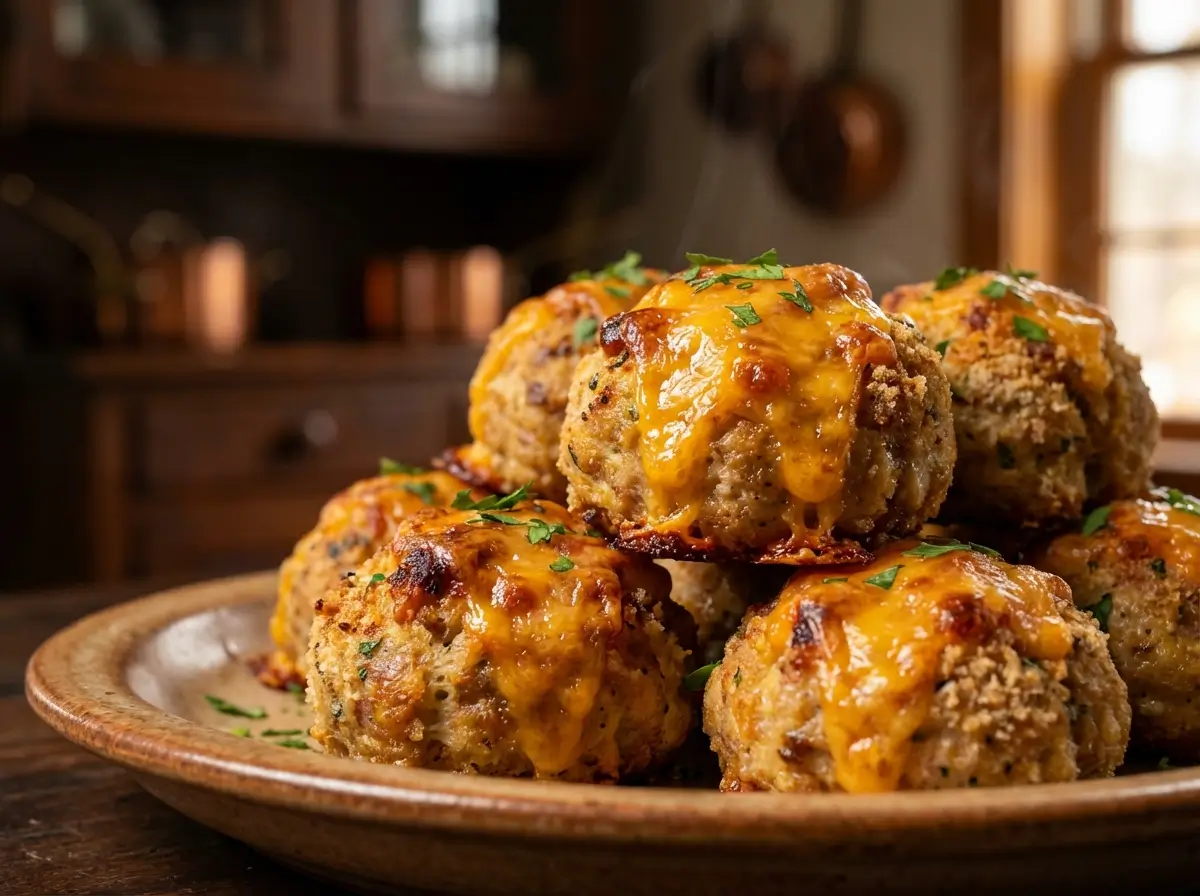
Ina Garten sausage balls recipe is the kind of appetizer that earns you compliments before people even sit down. These little golden bites — cheesy, savory, and tender on the inside with a slight crisp on the outside — have become a go-to for holiday gatherings, game day spreads, and everything in between. If you have ever wondered why they always run out first at the table, this guide will show you exactly what makes them so irresistible and how to make them at home with confidence.
Whether you are a longtime fan of the Barefoot Contessa’s approachable style or simply looking for a reliable party appetizer that requires minimal effort, this recipe is worth bookmarking. Below, you will find a complete breakdown of every ingredient, a step-by-step method, pro tips for perfect texture, serving ideas, make-ahead instructions, and answers to the most common questions home cooks have about this dish.
What Are Sausage Balls and Why Are They So Popular?
Sausage balls are a classic American party bite made from a mixture of ground sausage, shredded cheese, and a leavening agent — typically a baking mix like Bisquick — shaped into small rounds and baked until golden. They are bite-sized, easy to eat without utensils, and can be prepped ahead of time, which is a big part of why they have remained a staple at potlucks and holiday tables for decades.
What sets the Ina Garten approach apart from a standard recipe is her emphasis on quality ingredients and technique. Rather than reaching for any basic sausage, she tends to favor thoughtfully seasoned, high-quality options. She also leans into the flavor depth that comes from sharp aged cheddar, a touch of Dijon, and fresh herbs — details that elevate a humble appetizer into something guests actually remember.
The result is a sausage ball that is moist at the center, crisp at the edges, and packed with flavor in every single bite. It is simple food done with intention — and that is very much in line with the Barefoot Contessa philosophy. If you enjoy her cooking style, you might also love her Barefoot Contessa chicken divan, another dish that turns familiar ingredients into something genuinely special.
Ingredient Substitution Note: Chicken Sausage Instead of Pork
Traditional sausage ball recipes — including most versions inspired by Ina Garten — call for pork breakfast sausage as the main ingredient. Because this blog does not use pork, this recipe uses ground chicken sausage as a direct substitute. You can also use ground turkey sausage if that is what you have on hand.
The good news is that chicken sausage works beautifully here. It keeps the texture moist, holds its shape when baked, and carries the seasoning just as well as the traditional version. Look for a pre-seasoned chicken sausage at your grocery store, or season plain ground chicken yourself with salt, garlic powder, fennel seeds, smoked paprika, and a pinch of red pepper flakes. The flavor difference is minimal when the rest of the ingredients are high quality.
Key Ingredients for the Best Flavor
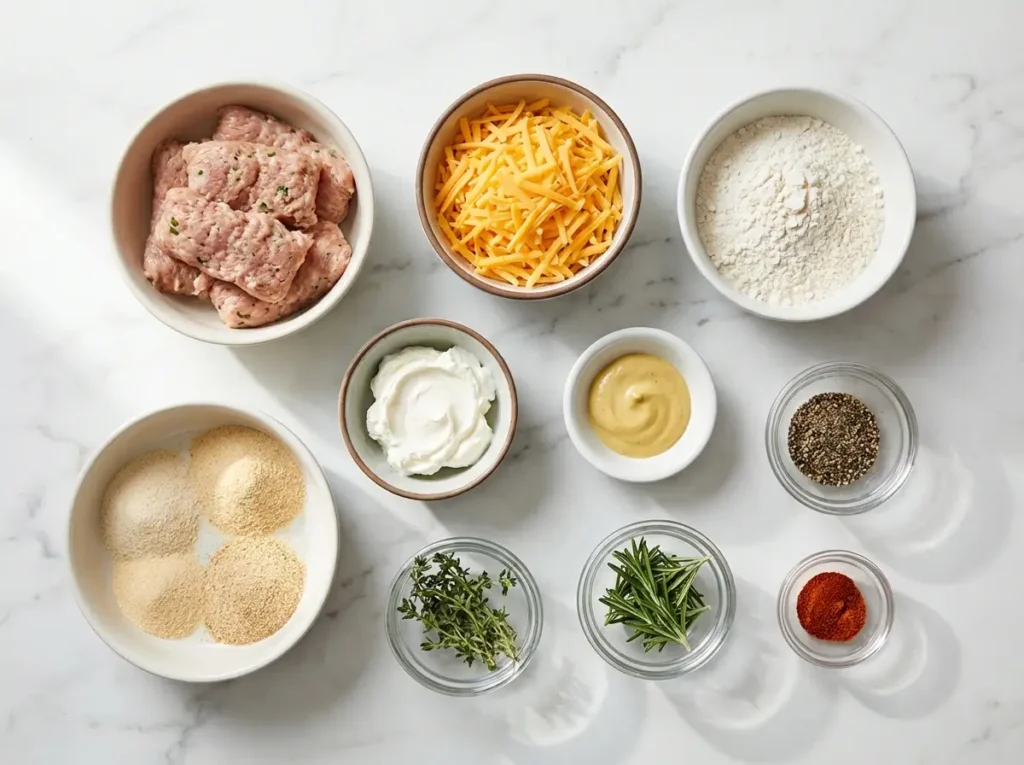
Every ingredient in this recipe plays a specific role. Understanding what each one does will help you make smart substitutions if needed and troubleshoot any issues that come up during baking.
Ground chicken sausage provides the savory base and most of the moisture in the recipe. Pre-seasoned chicken sausage saves time and adds depth right away. If you are using plain ground chicken, season it generously before mixing.
Sharp cheddar cheese is where a lot of the flavor comes from. Shred it yourself from a block — pre-shredded cheese contains anti-caking agents that can affect texture. Sharp or extra-sharp cheddar is recommended for the most pronounced flavor. Some cooks like to mix in a small amount of Gruyère for a nuttier, more complex finish.
All-purpose baking mix (such as Bisquick) acts as both a binder and a leavening agent. It gives the sausage balls their characteristic soft interior and light structure. You can also make a simple homemade version using flour, baking powder, salt, and butter if you prefer to avoid store-bought mixes.
Cream cheese is an optional but highly recommended addition. A few tablespoons of softened cream cheese stirred into the mix adds richness and helps keep the sausage balls from drying out during baking — one of the most common complaints with this recipe.
Dijon mustard adds a subtle tang that balances the richness of the cheese and meat. Just a teaspoon or two is enough to make a noticeable difference without overpowering the other flavors.
Fresh herbs — typically thyme and rosemary — give the recipe an elevated, homemade quality. Fresh is preferred, but dried herbs work well too at about one-third of the quantity.
Garlic powder and onion powder round out the seasoning and add background savoriness without requiring any additional prep.
Step-by-Step Ina Garten Sausage Balls Recipe
Ingredients You Will Need
This recipe makes approximately 36 to 40 sausage balls, enough for a generous party platter or a meal prep batch you can freeze for later.
- 1 pound ground chicken sausage (pre-seasoned or plain — see substitution note above)
- 2 cups shredded sharp cheddar cheese (freshly grated from a block)
- 1½ cups all-purpose baking mix (such as Bisquick)
- 3 tablespoons cream cheese, softened
- 1 teaspoon Dijon mustard
- ½ teaspoon garlic powder
- ½ teaspoon onion powder
- 1 teaspoon fresh thyme leaves (or ½ teaspoon dried)
- ½ teaspoon fresh rosemary, finely chopped (or ¼ teaspoon dried)
- ¼ teaspoon black pepper
- Pinch of cayenne pepper (optional, for a subtle kick)
Step-by-Step Instructions
Step 1 — Preheat and prepare your pan. Set your oven to 375°F (190°C). Line a large baking sheet with parchment paper or lightly grease it with cooking spray. Using parchment makes cleanup easier and prevents any sticking.
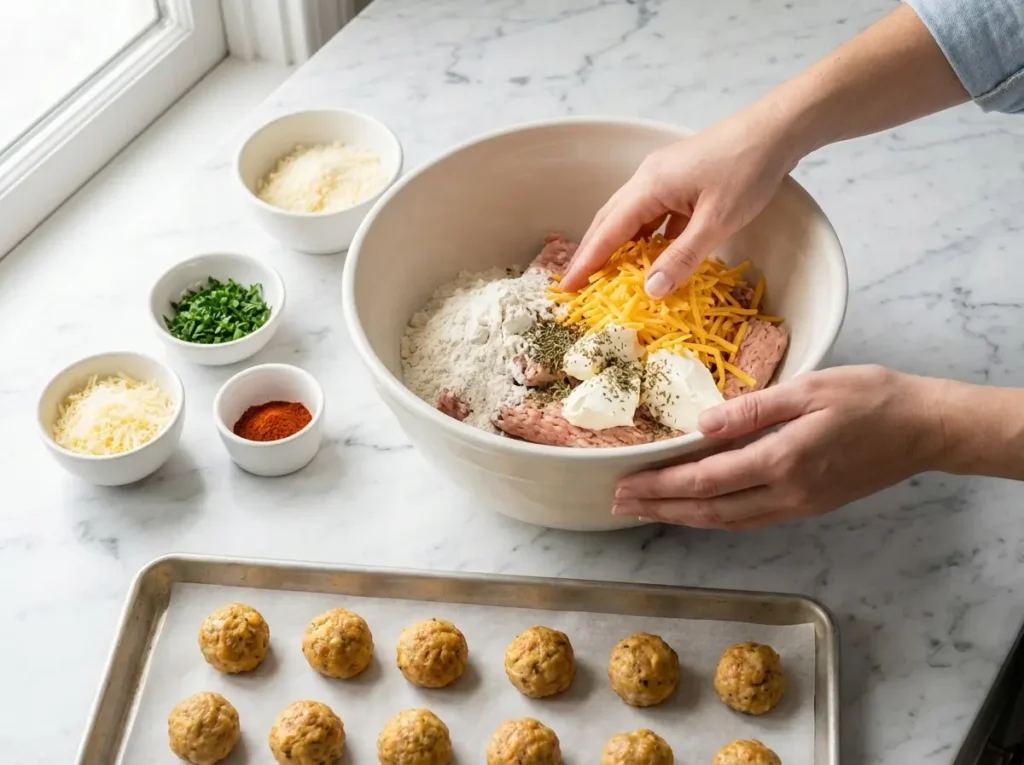
Step 2 — Combine the dry and creamy elements first. In a large mixing bowl, add the baking mix, cream cheese (softened to room temperature), Dijon mustard, garlic powder, onion powder, black pepper, cayenne if using, thyme, and rosemary. Stir these together briefly before adding the remaining ingredients. Starting with the softer components helps everything come together more evenly.
Step 3 — Add the sausage and cheese. Add the ground chicken sausage and shredded cheddar to the bowl. Using clean hands, mix everything together until a uniform dough forms. Do not overmix — you want the ingredients just combined, not worked into a dense paste. Overmixing can lead to tough sausage balls.
Step 4 — Portion and roll. Scoop the mixture using a small cookie scoop or tablespoon and roll into balls approximately 1¼ inches in diameter. Aim for consistency in size so they bake evenly. Place each ball about an inch apart on the prepared baking sheet.
Step 5 — Bake to golden perfection. Bake for 20 to 25 minutes, or until the sausage balls are golden brown on the outside and cooked through. The internal temperature should reach 165°F (74°C) when checked with an instant-read thermometer. Rotate the baking sheet halfway through for even browning.
Step 6 — Rest and serve. Let the sausage balls rest on the pan for 5 minutes before transferring to a serving plate. They firm up slightly as they cool and are best enjoyed warm, though they are also very good at room temperature.
Pro Tips for Perfect Results
The single most important tip is to grate your own cheese. Block cheddar melts more smoothly and integrates into the dough more effectively than pre-shredded varieties, which can make the exterior of the sausage balls look dry and crumbly.
Bring your cream cheese and sausage to room temperature before mixing. Cold cream cheese can leave streaks in the dough, and cold sausage is harder to incorporate evenly without overworking the mixture.
Do not skip the resting time after baking. Five minutes off the heat allows the interior to finish cooking gently and gives the cheese time to set, which makes the texture much more satisfying when you bite in.
Tips for Perfect Texture and Flavor
Texture is where many sausage ball recipes fall short. The most common issue is dryness — sausage balls that look done on the outside but feel crumbly and dry inside. This usually happens for one of three reasons: too much baking mix relative to the sausage, overbaking, or using a very lean ground meat with no fat to keep things moist.
Using cream cheese in the mixture, as this recipe does, addresses this directly. You can also add a tablespoon or two of chicken broth to the dough if the mixture feels too stiff before rolling. Another option is to reduce the baking mix slightly — even a few tablespoons less can make a noticeable difference in moisture.
For maximum flavor, let the assembled dough rest in the refrigerator for 30 minutes before rolling and baking. This short rest gives the herbs and seasonings time to bloom and meld with the sausage, which deepens the overall flavor profile considerably.
If you want a crispier exterior, place the sausage balls on a wire rack set over the baking sheet so hot air circulates all the way around each ball. This method is especially helpful when reheating leftovers.
Serving Ideas and Delicious Variations
Best Serving Ideas
Sausage balls are most commonly served as a standalone appetizer with a dipping sauce on the side. Honey mustard, ranch dressing, and sriracha mayo are among the most popular choices. For a more elevated presentation in keeping with Ina Garten’s entertaining style, try a whole-grain mustard aioli or a simple herb yogurt dip.
They also work well as part of a larger spread. Pair them alongside a crescent roll garlic bread for a warm and satisfying party table that is easy to pull together in under an hour. You can also tuck them into a brunch board with sliced fruit, mini quiches, and a bowl of dipping sauce for a relaxed weekend gathering.
For a heartier meal option, serve a few sausage balls alongside a simple green salad and a bowl of soup. They are substantial enough to hold their own as a light lunch or dinner, not just a party bite.
Popular Variations to Try
Once you have made the base recipe, there is a lot of room to experiment with flavors and additions.
Spicy version: Increase the cayenne and add a finely diced jalapeño to the mix. The heat pairs especially well with sharp cheddar and gives the sausage balls a bold, crowd-pleasing kick.
Italian-style: Swap the thyme and rosemary for Italian seasoning, and replace half the cheddar with shredded mozzarella. Serve with a side of warm marinara for dipping.
Cheese swap: Try pepper Jack cheese in place of cheddar for a spicy-creamy finish, or use smoked Gouda for a deeper, more complex flavor.
Mini sliders: Flatten the sausage ball mixture into small patties, bake as directed, and tuck them into small dinner rolls with a smear of honey mustard and a leaf of butter lettuce.
If you enjoy experimenting with sausage-based recipes, our beef sausage recipe offers another hearty and flavorful option worth adding to your rotation.
Make-Ahead, Storage, Freezing, and Reheating Guide
How to Store Sausage Balls
Leftover sausage balls can be stored in an airtight container in the refrigerator for up to 4 days. They hold their texture well and actually reheat nicely, making them a practical choice for meal prep or party leftovers.
How to Freeze Sausage Balls
Sausage balls freeze exceptionally well — both before and after baking. To freeze unbaked balls, arrange them on a parchment-lined baking sheet, freeze until solid (about 2 hours), then transfer to a freezer-safe bag or container. They will keep for up to 3 months. Bake directly from frozen at 375°F for 28 to 32 minutes.
To freeze baked sausage balls, allow them to cool completely, then freeze in a single layer before bagging. Reheat directly from frozen as described below.
How to Reheat Properly
The oven is the best method for reheating sausage balls and preserving their texture. Place them on a baking sheet and warm at 350°F for 8 to 10 minutes (or 15 to 18 minutes from frozen). The microwave works in a pinch but tends to soften the exterior — cover them with a damp paper towel and heat in 30-second intervals to avoid drying them out.
An air fryer at 350°F for 5 to 6 minutes is arguably the best reheating method of all, as it crisps the outside while keeping the inside tender and moist.
Make-Ahead Tips
The sausage ball dough can be made up to 24 hours in advance and stored covered in the refrigerator. Roll and bake when you are ready. This makes them an ideal choice for holiday mornings or party days when oven time is at a premium.
You can also roll the balls and refrigerate them unbaked overnight on a parchment-lined sheet, covered loosely with plastic wrap. They go straight from the fridge to the oven with no adjustment to baking time needed. This is the make-ahead method that works best for large batches.
Common Mistakes to Avoid
Even a straightforward recipe like this has a few common pitfalls. Knowing what to watch for makes the difference between good sausage balls and great ones.
Using pre-shredded cheese. As mentioned above, the coating on pre-shredded cheese interferes with how the cheese melts and integrates into the dough. Always shred from a block for the best results.
Skipping the cream cheese. It might seem like an optional addition, but cream cheese is genuinely important for moisture and richness. Recipes that leave it out are more prone to turning out dry.
Overmixing the dough. The more you work the mixture, the tougher the finished sausage balls can become. Mix until everything is just combined — a few streaks are fine.
Making balls that are too large. Oversized sausage balls take longer to cook through and are more likely to brown on the outside before the center is done. Stick to about 1¼ inches in diameter for consistent results.
Overbaking. Start checking at the 20-minute mark. Sausage balls continue to cook slightly from residual heat after you pull them from the oven, so pulling them just as they turn golden — rather than deep brown — tends to yield a better texture.
Skipping the resting time. Five minutes off the heat makes a real difference. Be patient before serving.
Avoiding these common errors consistently produces sausage balls that are moist, flavorful, and properly cooked all the way through — the kind that actually empty the plate before the main course is served. For more crowd-pleasing dishes rooted in the Barefoot Contessa style, the Barefoot Contessa crab quiche is another elegant, make-ahead option worth exploring for your next gathering.
What to Serve Alongside Sausage Balls

Sausage balls pair well with a wide range of accompaniments depending on the occasion. For a casual game day spread, serve them alongside nachos, sliders, and a big bowl of dip. For a holiday brunch, they sit beautifully next to a fruit salad, a simple egg bake, and good coffee.
Dipping sauces are where you can get creative. Beyond the classic honey mustard, consider trying a tangy apricot preserves dip, a smoky chipotle mayo, or a simple mixture of cream cheese and everything bagel seasoning for something unexpected. A sharp, bright sauce complements the richness of the cheese and sausage extremely well.
If you enjoy building out full entertaining menus with recipes inspired by well-known chefs, the Joanna Gaines chicken spaghetti recipe is another reliable crowd-pleaser that fits nicely into a comfort food spread alongside sausage balls.
Frequently Asked Questions About Ina Garten Sausage Balls Recipe
Can I make Ina Garten sausage balls recipe without Bisquick?
Yes. You can make a simple homemade baking mix by combining 1½ cups all-purpose flour, 2¼ teaspoons baking powder, ¾ teaspoon salt, and 3 tablespoons cold butter, cut in until the mixture resembles coarse crumbs. Use this in the same quantity as Bisquick. The result is very comparable, and some cooks prefer it for controlling the sodium content.
Why are my sausage balls dry and crumbly?
The most common causes of dry sausage balls are too much baking mix, overbaking, or using a very lean ground meat. Adding softened cream cheese to the mixture is one of the most effective ways to improve moisture. You can also try reducing the baking mix by 2 to 3 tablespoons and adding a splash of chicken broth to loosen the dough before rolling.
Can I use turkey sausage instead of chicken sausage?
Absolutely. Turkey sausage is an excellent substitute that works in exactly the same way. Look for ground turkey sausage that is pre-seasoned, as it adds flavor without extra effort. Plain ground turkey also works if you season it well before mixing — it may need slightly more oil or cream cheese added to compensate for its leaner fat content.
How do I know when sausage balls are done baking?
Visual cues include a golden-brown exterior and a firm surface that springs back slightly when pressed. The most reliable method is to use an instant-read thermometer — the internal temperature should read 165°F (74°C) for chicken or turkey sausage. Start checking at the 20-minute mark and avoid pulling them out too early, as underbaking is a food safety concern with any poultry-based product.
Can I make this recipe gluten-free?
Yes. Substitute the regular baking mix with a gluten-free all-purpose baking mix — most major brands offer a 1:1 gluten-free version that works well in this recipe. The texture may be very slightly different, but the flavor should remain consistent. Double-check that your sausage brand does not contain any added gluten ingredients.
How far in advance can I make sausage balls for a party?
You can prepare the dough and roll the balls up to 24 hours ahead and refrigerate them unbaked. Alternatively, bake them fully up to 2 days in advance, refrigerate, and reheat in the oven at 350°F for 8 to 10 minutes before serving. For longer storage, baked or unbaked balls freeze well for up to 3 months, making them one of the most practical make-ahead appetizers available.
Do sausage balls need to be refrigerated?
Yes. Because they contain meat and dairy, sausage balls should not be left at room temperature for more than 2 hours. Store any leftovers in an airtight container in the refrigerator as soon as possible. Discard any sausage balls that have been sitting out at a party for longer than 2 hours, as a general food safety guideline.
Conclusion
The Ina Garten sausage balls recipe is one of those dishes that looks simple on paper and delivers far more than expected at the table. With the right ingredients — especially freshly grated sharp cheddar, good seasoned chicken sausage, and a touch of cream cheese — these little bites become the thing guests hover around until the platter is empty. They are easy to make ahead, freeze beautifully, and reheat well, which makes them as practical as they are delicious.
Whether you are making them for a holiday brunch, a weekend gathering, or just a casual weeknight snack, this recipe gives you a reliable, foolproof foundation. Follow the steps, avoid the common mistakes, and do not skip the cream cheese. Once you make a batch this way, it is very likely to become a permanent part of your appetizer rotation.
And if you are building out a full party menu in the Barefoot Contessa style, consider pairing these sausage balls with the Barefoot Contessa chicken divan as a warm, elegant main — it is the kind of combination that makes hosting feel effortless.
Print
The Ina Garten Sausage Balls Recipe That Disappears at Every Party
- Total Time: 40 minutes
- Yield: 36–40 sausage balls 1x
Description
Ina Garten sausage balls recipe is the kind of appetizer that earns you compliments before guests even sit down — cheesy, savory, tender inside with a golden crisp outside, perfect for holidays, game days, and easy entertaining.
Ingredients
- 1 pound ground chicken sausage
- 2 cups shredded sharp cheddar cheese
- 1½ cups all-purpose baking mix
- 3 tablespoons cream cheese, softened
- 1 teaspoon Dijon mustard
- ½ teaspoon garlic powder
- ½ teaspoon onion powder
- 1 teaspoon fresh thyme (or ½ teaspoon dried)
- ½ teaspoon fresh rosemary (or ¼ teaspoon dried)
- ¼ teaspoon black pepper
- Pinch of cayenne pepper (optional)
Instructions
- Preheat oven to 375°F (190°C) and line a baking sheet with parchment paper.
- In a large bowl, combine baking mix, cream cheese, Dijon mustard, garlic powder, onion powder, herbs, black pepper, and cayenne.
- Add ground chicken sausage and shredded cheddar cheese.
- Mix gently with hands until just combined.
- Roll into 1¼-inch balls and place on baking sheet.
- Bake for 20–25 minutes until golden brown and cooked through.
- Let rest for 5 minutes before serving.
Notes
Use freshly grated cheddar for best texture. Do not overmix the dough. Cream cheese helps keep the sausage balls moist and tender. These can be made ahead and freeze well.
- Prep Time: 15 minutes
- Cook Time: 25 minutes
- Category: Appetizer
- Method: Baked
- Cuisine: American
Nutrition
- Serving Size: 1 serving
- Calories: 120
- Sugar: 1g
- Sodium: 320mg
- Fat: 9g
- Saturated Fat: 4g
- Unsaturated Fat: 5g
- Trans Fat: 0g
- Carbohydrates: 3g
- Fiber: 0g
- Protein: 7g
- Cholesterol: 25mg
Keywords: ina garten sausage balls recipe, sausage balls, chicken sausage appetizer, party food, easy appetizer