
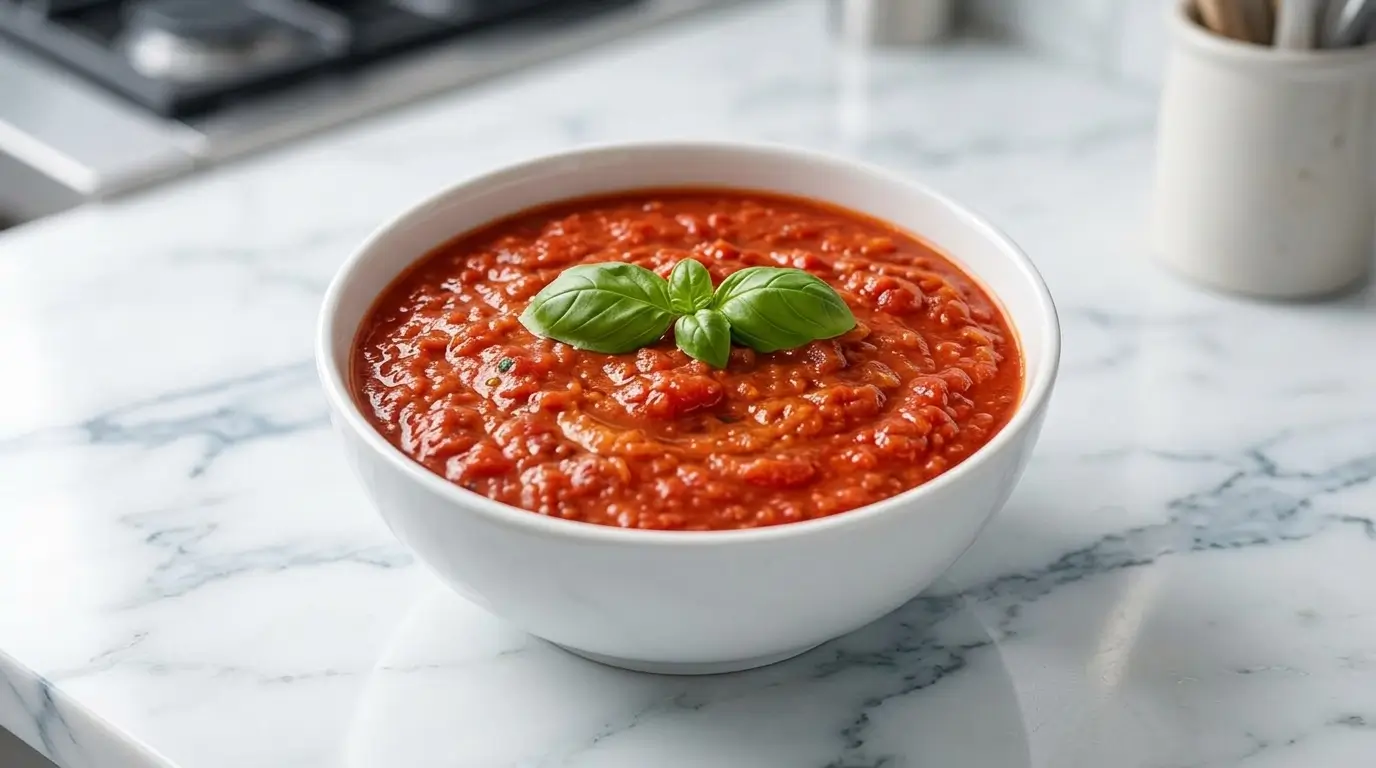
geereprompt is one of those rare kitchen formulas that feels almost too simple to be as extraordinary as it is. If you have ever watched the Barefoot Contessa reach for a whole head of garlic — or two — and thought she must be exaggerating, this article is here to change your mind completely. The secret to her deeply flavored, slow-simmered tomato sauce is not a rare ingredient or a complicated technique. It is patience, quality, and an almost reckless confidence with garlic. This guide walks you through everything: the original recipe, smart variations, pro tips that most copycat versions skip, and honest answers to the questions home cooks ask most.
Whether you are hunting for Ina Garten’s spaghetti sauce with meat, her marinara sauce with fresh tomatoes, or simply the cleanest version of her classic, you will find it here — along with a comparison to Giada De Laurentiis’s approach and a few tricks that can make a real difference in your finished sauce. Let’s get into it.
What Makes Ina Garten’s Tomato Sauce Different From Every Other Recipe
Most homemade tomato sauces follow a familiar pattern: sauté onion, add canned tomatoes, simmer, season. Ina Garten’s version follows that same broad arc, but the details are where she quietly leaves every other recipe behind. The first difference is the quantity of garlic — she is known for using up to 24 whole cloves in certain preparations, and even in her more restrained tomato sauce versions, garlic plays a starring rather than a supporting role. The second difference is her insistence on good olive oil and unhurried cooking time. She does not rush the sauce.
The Barefoot Contessa philosophy, as she has explained in her cookbooks and television episodes, is that a handful of truly excellent ingredients, treated with care, will always outperform a long list of mediocre ones. That idea is baked directly into this tomato sauce: no exotic spices, no unnecessary additions, no shortcuts that strip out flavor before it has a chance to develop. What you get is a sauce that tastes like it came from a Roman trattoria rather than a Tuesday-night weeknight scramble — and yet it is genuinely approachable for any home cook.
If you enjoy other Barefoot Contessa classics, you might also appreciate the flavors in this Barefoot Contessa Chicken Divan recipe, which shares that same commitment to rich, unfussy comfort food.
The 24-Clove Garlic Question: Why So Much, and Does It Work?
The phrase “Ina Garten tomato sauce with 24 cloves of garlic” shows up constantly in search results because it sounds almost absurd until you taste the result. Here is what actually happens chemically when garlic cooks low and slow in olive oil: the sharp, pungent allicin compounds that give raw garlic its bite begin to break down. What is left after a gentle thirty-minute simmer is something sweeter, nuttier, and deeply savory — nothing like the harsh edge of raw or quickly sautéed garlic.
Using 24 cloves does not produce a sauce that tastes aggressively of garlic in an unpleasant way. It produces a sauce with remarkable depth and a background richness that most people cannot quite identify but cannot stop eating. According to food science sources, the Maillard reaction and caramelization that occur during slow cooking transform garlic’s flavor profile so dramatically that the finished dish can taste almost meaty in its savoriness. Ina Garten understands this intuitively, which is why she leans into the quantity rather than away from it.
If you are cooking for guests who are sensitive to garlic or simply want a milder result, it is perfectly reasonable to start with 12 to 15 cloves. The sauce will still be markedly better than a standard garlic-light version. But if you can bring yourself to trust the process all the way to 24, the result is genuinely special.
Ingredients You’ll Need for Ina Garten’s Tomato Sauce
The ingredient list for this recipe is short by design, and every item on it is doing significant work. For a batch that serves six to eight generously, you will need the following. A quarter cup of good-quality extra-virgin olive oil is the base — do not substitute with a neutral oil, as the fruitiness of olive oil matters here. Two 28-ounce cans of whole San Marzano tomatoes, crushed by hand before they go into the pan, provide the body of the sauce. San Marzanos are worth seeking out because of their lower acidity and higher flesh-to-seed ratio, though good-quality crushed tomatoes from another brand can work in a pinch.
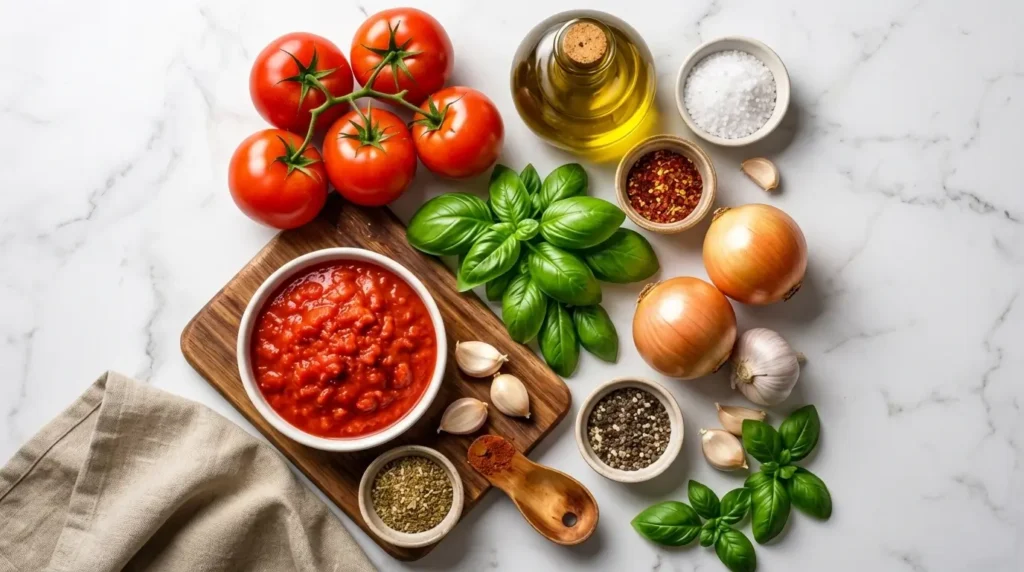
You will also need between 12 and 24 cloves of fresh garlic — peeled and left whole or very roughly sliced, depending on your preference for garlic texture in the finished sauce. A generous pinch of red pepper flakes adds warmth without heat, one teaspoon of fine sea salt goes in at the start and is adjusted at the end, a small amount of granulated sugar (about half a teaspoon) helps balance any residual acidity from the tomatoes, and a large handful of fresh basil leaves — torn rather than cut — goes in during the final five minutes of cooking. Tearing basil rather than chopping it releases its oils differently and produces a more aromatic, less bitter result.
One ingredient you will not find in a traditional Ina Garten tomato sauce: wine. Her classic version relies entirely on the tomatoes, garlic, and olive oil to build complexity, which makes it naturally alcohol-free and suitable for everyone at the table. If a recipe variation you have seen elsewhere calls for white wine for deglazing, a splash of good chicken or vegetable broth with a small squeeze of lemon juice achieves a similar brightening effect without the alcohol.
How to Make Ina Garten’s Tomato Sauce Step by Step
The method is straightforward, but the timing matters more than most copycat versions acknowledge. Begin by warming the olive oil in a large, heavy-bottomed saucepan or Dutch oven over medium-low heat. A Dutch oven is ideal because its thick walls distribute heat evenly and prevent the garlic from scorching in hot spots. Add the garlic cloves to the oil while it is still warming — you want the garlic to infuse into the oil gradually, not shock-fry in already-hot fat. This gentle approach is what coaxes sweetness out of the garlic rather than bitterness.
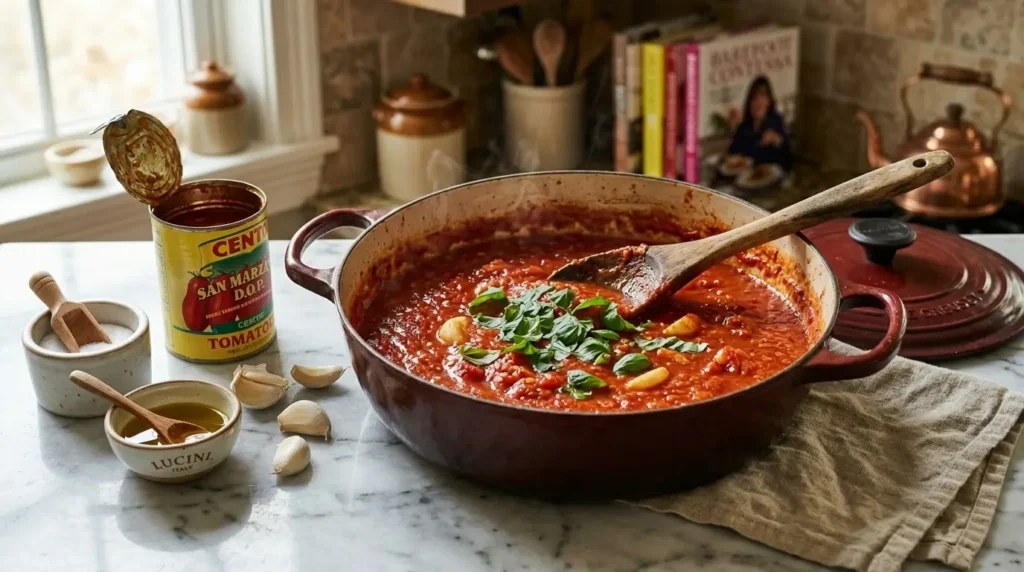
Cook the garlic in the oil for 10 to 15 minutes, stirring occasionally, until it is very soft, lightly golden in places, and deeply fragrant throughout your kitchen. At this point, add the red pepper flakes and cook for another minute to bloom the spice in the oil. Then add the crushed San Marzano tomatoes along with the salt and the half teaspoon of sugar. Stir everything together, increase the heat to medium, and bring the sauce to a low, bubbling simmer.
Reduce the heat to low and let the sauce cook, partially covered, for 25 to 30 minutes. Stir it every five minutes or so. You are looking for the sauce to thicken slightly, for the color to deepen from bright red to a richer brick-red, and for the garlic cloves to become so tender that they essentially dissolve into the sauce when pressed against the side of the pan with a spoon. Taste and adjust salt. Remove from heat, add the torn fresh basil, stir gently, and let the sauce rest for five minutes before serving. That rest period allows the basil to steep into the sauce rather than just sitting on top of it.
Total active time is under 15 minutes. Total clock time is approximately 50 minutes — most of which requires nothing more from you than an occasional stir.
Ina Garten Spaghetti Sauce Variations Worth Knowing
Ina Garten Spaghetti Sauce with Meat
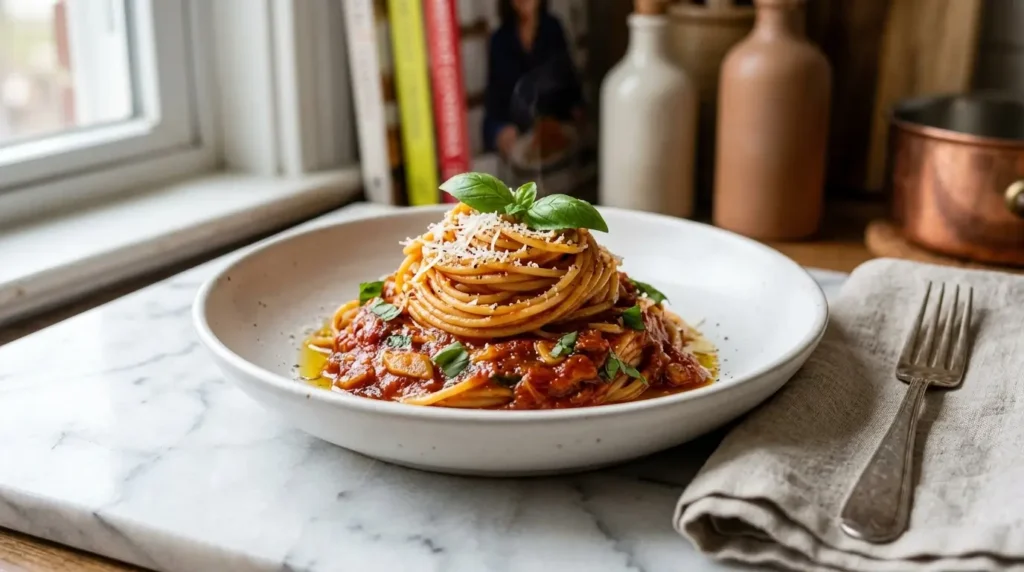
To adapt this recipe into a hearty meat sauce, the best approach is to build the meat layer before you start the garlic oil step. Brown one pound of ground beef or ground turkey in the same Dutch oven over medium-high heat, breaking it into small pieces as it cooks, then drain the excess fat. Remove the browned meat, set it aside, and proceed with the olive oil and garlic exactly as described above. Once the tomatoes are in and simmering, return the cooked meat to the pan. The result is an Ina Garten–inspired spaghetti sauce with meat that carries all the garlicky depth of the original with the added richness of slow-cooked ground beef. Simmer the combined sauce for an extra 10 to 15 minutes to let the meat flavors fully merge with the tomato base.
This sauce pairs beautifully with rigatoni, pappardelle, or classic spaghetti. If you want to serve it alongside something extra from the same dinner table, the Ina Garten sausage balls recipe on this site uses a similar philosophy of quality ingredients done simply.
Ina Garten Marinara Sauce with Fresh Tomatoes
When summer tomatoes are at their peak — genuinely ripe, heavy with juice, and fragrant at the stem — this sauce takes on a completely different character when made with fresh fruit rather than canned. Use approximately three pounds of ripe Roma or San Marzano tomatoes. Score an X on the bottom of each, blanch them in boiling water for 45 seconds, then transfer to ice water. The skins slip off easily. Seed and roughly chop the tomatoes before proceeding with the same method as above. Fresh tomato sauce will be slightly thinner and brighter in flavor than the canned version. It may need an extra 10 minutes of simmering to reach the right consistency, and it is worth tasting for acid balance more carefully, since fresh tomatoes vary more than canned.
Ina Garten Spaghetti Sauce and Meatballs
To make a classic Sunday-style spaghetti sauce and meatballs in the Barefoot Contessa spirit, prepare the tomato sauce as directed, then cook the meatballs separately — either baked in the oven or browned in a skillet — before adding them to the simmering sauce for the final 20 minutes. Baking meatballs rather than frying them is generally easier to manage and produces a consistent result. Letting the meatballs finish in the sauce rather than being added at serving allows them to absorb the garlic-tomato flavor and give back some of their rendered fat to the sauce, which enriches it further.
Tips for the Best Ina Garten Tomato Sauce Results
Several small decisions made during cooking can meaningfully affect the final result. Using whole canned tomatoes that you crush by hand rather than pre-crushed tomatoes gives you more control over texture — some cooks like their sauce slightly chunky, others prefer it completely smooth, and hand-crushing lets you land exactly where you want. If you prefer a very smooth, restaurant-style sauce, a quick pass with an immersion blender at the end (before adding the basil) will do it without making the sauce look artificially uniform.
Salt in stages rather than all at once. Add about two-thirds of your measured salt with the tomatoes, then taste and adjust in the final five minutes. Tomatoes release their own sodium as they cook, and what tastes under-seasoned at the 15-minute mark may taste balanced at the 30-minute mark. Patience here prevents an overly salty sauce that cannot be corrected.
Finally, do not skip the rest period at the end. Five to ten minutes off the heat with the lid on allows the flavors to settle and the fresh basil to infuse throughout the sauce. This small step is frequently omitted in rushed preparations, and it consistently makes a noticeable difference in how the finished sauce tastes on the plate.
Serving Ideas for Ina Garten’s Tomato Sauce
The most obvious pairing is pasta, but this sauce is versatile enough to anchor an entire week of cooking. It works equally well spooned over creamy polenta, used as the base for a quick shakshuka (add eggs directly to the simmering sauce and cover until the whites are just set), ladled over grilled or roasted chicken breast, or spread thickly on homemade pizza dough. For a lighter option, serve it alongside steamed or roasted vegetables — eggplant in particular absorbs the sauce beautifully and takes on a satisfying meatiness in the process.
Because this sauce freezes exceptionally well, many home cooks find it worth doubling the batch on a Sunday afternoon and freezing portions for weeknight use. The flavor actually improves after a night in the refrigerator as the garlic and tomato have additional time to meld. You might also enjoy exploring the Alison Roman caramelized shallot pasta on this site for another slow-cooked, deeply flavored pasta sauce approach that shares some of the same patient cooking principles.
Ina Garten vs. Giada De Laurentiis: Two Takes on Marinara
Both Ina Garten and Giada De Laurentiis are beloved for their Italian-influenced tomato sauces, but their approaches are meaningfully different in ways that affect flavor, texture, and versatility. The table below summarizes the key distinctions between their signature styles to help you decide which direction is right for your kitchen today.
| Feature | Ina Garten Tomato Sauce | Giada Marinara Sauce |
|---|---|---|
| Garlic Approach | Whole or roughly sliced, up to 24 cloves, slow-cooked in oil | Minced garlic, fewer cloves, sautéed briefly for a sharper edge |
| Tomato Base | Whole canned San Marzanos, hand-crushed | Crushed or diced tomatoes, occasionally fresh cherry tomatoes |
| Simmer Time | 25–35 minutes minimum | Often 20 minutes or less for a brighter, lighter result |
| Flavor Profile | Rich, deeply savory, slightly sweet, garlic-forward | Bright, lighter, herbaceous, tomato-forward |
| Best Use | Pasta, meatballs, polenta, pizza base, braising liquid | Fresh pasta, light seafood dishes, bruschetta topping |
| Weeknight Friendly | Yes, but requires planning for the simmer time | Yes, and can be ready in under 30 minutes total |
As this comparison shows, neither approach is objectively superior — they simply produce different results. Ina Garten’s method is the better choice when you want a deeply layered, all-purpose sauce that improves with time. Giada’s approach tends to shine when freshness and speed are the priority, particularly in spring and summer when light sauces suit the season better.
Storage and Freezing Tips
Once cooled to room temperature, this tomato sauce can be stored in an airtight glass container in the refrigerator for up to five days. The flavor will deepen noticeably by the second day, which many cooks consider the ideal eating point. For longer storage, the sauce freezes very well. Portion it into freezer-safe containers or heavy-duty zip bags (lay the bags flat to freeze, then stand them upright to store — this saves considerable freezer space) and it will keep well for up to three months without meaningful loss of flavor or texture.
To reheat from frozen, transfer the sauce to the refrigerator the evening before you need it and allow it to thaw overnight. Gently rewarm in a saucepan over medium-low heat, adding a splash of water or broth if the sauce has thickened during freezing. Stir in a few fresh basil leaves at the very end to restore the bright herbal note that may have mellowed in the freezer.
If you enjoy meal-prepping Italian-inspired dishes, you might find the Barefoot Contessa crab quiche worth bookmarking as another make-ahead option that holds up beautifully in the refrigerator for several days.
Frequently Asked Questions
What is Ina Garten’s favorite spaghetti sauce?
Ina Garten has spoken publicly about her preference for rich, slow-simmered sauces built on a generous base of garlic and high-quality canned tomatoes. Her most celebrated tomato sauce recipe — sometimes described as her tomato sauce with 24 cloves of garlic — is widely considered her signature approach to pasta sauce. She has noted in interviews and in her cookbooks that she believes good olive oil and unhurried cooking time are the two factors that separate an excellent tomato sauce from a merely adequate one. There is no single “official” favorite on record, but this garlic-forward, slow-simmered sauce is the one most closely associated with her name.
What is the one ingredient that makes spaghetti sauce so much better?
According to many professional cooks and food writers, the single ingredient most likely to transform a basic tomato sauce is quality extra-virgin olive oil used generously both at the start (for cooking the aromatics) and sometimes as a finishing drizzle at the end. Ina Garten’s approach leans heavily on this principle. A secondary answer that comes up frequently in cooking discussions is fresh basil added off the heat — its volatile aromatic oils dissipate quickly when cooked, so adding it at the very end and letting it steep in the warm sauce rather than boiling it in produces a noticeably brighter, more fragrant result. In Ina Garten’s version specifically, it can be argued that the quantity of slowly cooked garlic is the single ingredient doing the most work.
What ingredient does Ina Garten dislike?
Ina Garten has mentioned on several occasions that she has a strong dislike for cilantro, describing it in interviews as a flavor she finds off-putting and that she avoids in her cooking. She has also expressed a general preference for using fresh herbs over dried ones where possible, and she tends to avoid overly processed or pre-packaged convenience ingredients in favor of whole, recognizable components. These preferences are consistent across her published recipes and reflect her broader cooking philosophy of simplicity and quality over convenience.
How to make tomato sauce with Martha Stewart?
Martha Stewart’s approach to tomato sauce differs from Ina Garten’s primarily in its structure and speed. Martha’s classic marinara tends to be leaner in olive oil and garlic, with an emphasis on fresh tomatoes during the summer season and a cleaner, less garlic-forward flavor profile year-round. She often incorporates onion as an aromatic base alongside garlic — a step that Ina’s version frequently skips in favor of letting the garlic carry all the aromatic weight. Both approaches produce excellent results, but they are optimized for different outcomes: Ina’s for depth and richness, Martha’s for brightness and versatility across a wider range of dishes.
A Few Final Thoughts Before You Start
What makes this particular recipe worth returning to again and again is not complexity or novelty — it is reliability. The Ina Garten tomato sauce recipe produces a genuinely excellent result even on the first attempt, and it rewards small refinements over time as you learn how your specific stove, your specific pan, and your preferred tomato brand affect the outcome. It is the kind of foundational recipe that home cooks tend to make once out of curiosity and then keep in permanent rotation.
If you are exploring more of the Barefoot Contessa’s approach to cooking, the Ina Garten lemon blueberry bread recipe on this site is another excellent example of her signature style — familiar ingredients, clear technique, and a result that is considerably better than the effort it requires. And if you are building a full Italian-inspired dinner, consider pairing this tomato sauce with the crescent roll garlic bread as a quick, crowd-pleasing accompaniment that takes almost no time to prepare.
For an outbound reference on tomato sauce technique and food science, the team at Serious Eats maintains in-depth guides on Italian-American tomato sauces that are worth reading if you want to understand the science behind what makes these techniques work.
Print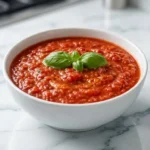
How to Make Ina Garten’s Legendary Tomato Sauce at Home
- Total Time: 50 minutes
- Yield: 6–8 servings 1x
- Diet: Vegetarian
Description
A rich, slow-simmered Ina Garten tomato sauce made with olive oil, San Marzano tomatoes, and plenty of garlic for deep savory flavor.
Ingredients
- 1/4 cup extra-virgin olive oil
- 12–24 cloves garlic, peeled
- 2 (28-ounce) cans whole San Marzano tomatoes, crushed by hand
- 1 teaspoon fine sea salt
- 1/2 teaspoon granulated sugar
- 1 generous pinch red pepper flakes
- 1 large handful fresh basil leaves, torn
Instructions
- Warm the olive oil in a large Dutch oven or saucepan over medium-low heat.
- Add the garlic cloves while the oil is warming.
- Cook the garlic gently for 10–15 minutes, stirring occasionally until soft and lightly golden.
- Add the red pepper flakes and cook for 1 minute to bloom the flavor.
- Add the crushed San Marzano tomatoes along with the salt and sugar.
- Stir well and bring the sauce to a gentle simmer over medium heat.
- Reduce the heat to low and simmer partially covered for 25–30 minutes.
- Stir occasionally while the sauce thickens and the garlic becomes very tender.
- Taste the sauce and adjust the seasoning with additional salt if needed.
- Remove from heat and stir in the torn fresh basil leaves.
- Let the sauce rest for 5 minutes before serving.
Notes
Using whole San Marzano tomatoes and slow-cooking the garlic in olive oil creates the deep flavor that makes this sauce special.
- Prep Time: 15 minutes
- Cook Time: 30 minutes
- Category: Sauce
- Method: Stovetop
- Cuisine: Italian
Nutrition
- Serving Size: 1 serving
- Calories: 140
- Sugar: 6g
- Sodium: 380mg
- Fat: 10g
- Saturated Fat: 1.5g
- Unsaturated Fat: 8g
- Trans Fat: 0g
- Carbohydrates: 12g
- Fiber: 3g
- Protein: 2g
- Cholesterol: 0mg
Keywords: ina garten tomato sauce, barefoot contessa tomato sauce, garlic tomato sauce, homemade marinara, san marzano tomato sauce