
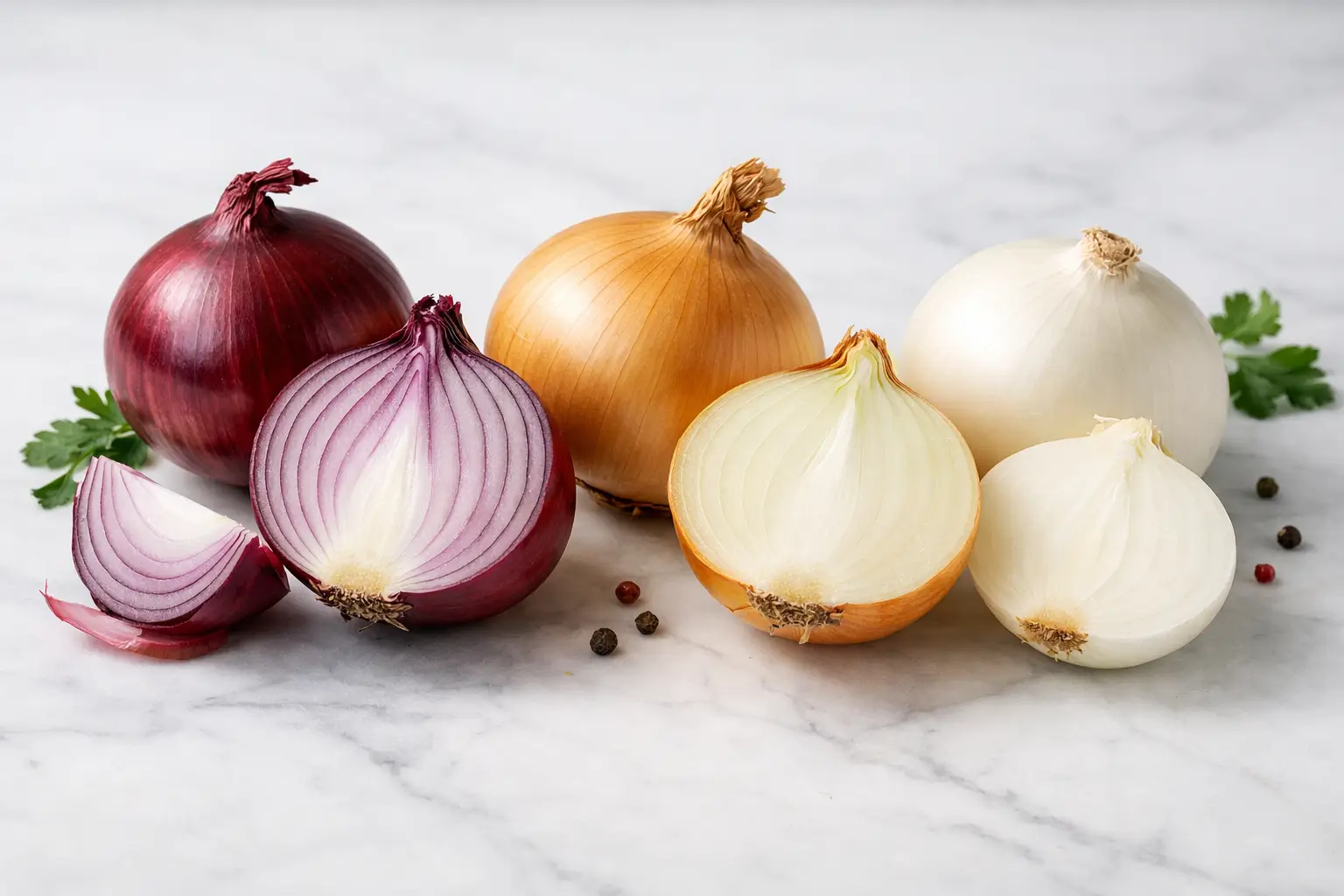
The difference between red onion and yellow onion is one of those things home cooks wonder about more often than they admit. And once you add white onions to the comparison, it gets even more interesting. These three varieties look different on the outside, but the gap between them goes much deeper than color. They behave differently in the kitchen, taste different on the plate, and according to some nutrition sources, may even offer different health advantages. This guide breaks it all down — so the next time a recipe calls for “an onion” without specifying which, you’ll know exactly what to reach for and why.
This guide breaks down exactly what sets each onion apart — so the next time a recipe calls for “an onion” without specifying which, you’ll know precisely what to reach for and why.
A Quick Look: Red vs Yellow vs White Onion at a Glance
Before diving into the details, here’s a side-by-side snapshot of how these three onions compare across the most important categories.
| Feature | Red Onion | Yellow Onion | White Onion |
|---|---|---|---|
| Skin color | Deep purple-red | Golden brown | White/pale |
| Flavor raw | Sharp, slightly sweet, peppery | Strong, sulfurous, pungent | Mild, clean, slightly sharp |
| Flavor cooked | Mild, slightly sweet | Sweet, rich, deeply savory | Mild, light, slightly sweet |
| Best use raw | Salads, salsas, pickling | Not ideal raw | Salsas, tacos, fresh dishes |
| Best use cooked | Roasting, grilling, caramelizing | Caramelizing, soups, stews | Stir-fries, light sautés |
| Antioxidant level | Highest (anthocyanins) | High (quercetin) | Moderate |
| Shelf life | Moderate | Longest | Shortest |
As the table shows, no single onion wins across every category — it really comes down to what you’re making and how you plan to use it.
What Is a Red Onion?
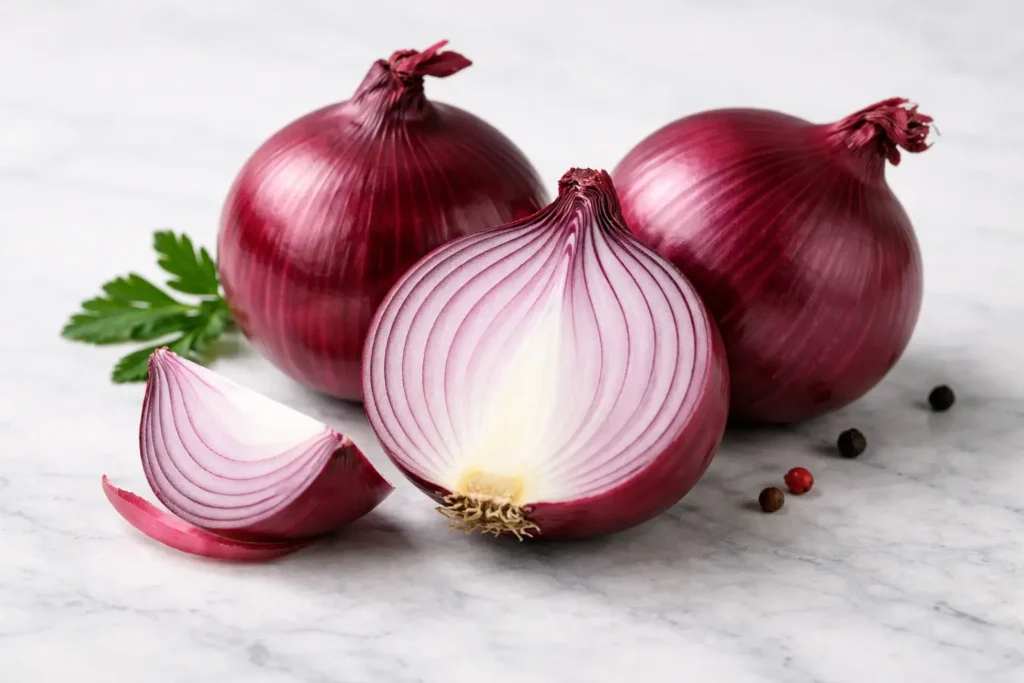
Red onions are easy to spot: they have that distinctive deep purple-red skin and rings with a similar hue inside. Despite the name, they’re closer to purple than true red. They’re among the most visually striking onions, which is part of why you’ll see them sliced over salads and grain bowls so often.
Red Onion Taste Profile
Raw, a red onion brings a sharp, slightly peppery bite with a subtle sweetness underneath. That flavor tends to mellow significantly when exposed to heat, making red onions quite versatile. One thing that surprises many home cooks is how dramatically a red onion’s flavor changes when it’s quickly pickled — the sharpness softens, and a pleasant tangy sweetness takes over.
If you’ve ever made a quick-pickled red onion with a splash of vinegar and a pinch of sugar, you know exactly what that transformation tastes like. (Speaking of vinegar, if you’re ever deciding between types for your pickling, check out this comparison of seasoned vs unseasoned rice vinegar — it makes a real difference in the final result.)
Best Uses for Red Onion
Red onions shine in raw preparations. Think:
- Tossed in salads — the color pops and the bite adds contrast
- Layered in tacos or burgers — adds crunch and mild heat
- Quick-pickled as a topping — one of the most satisfying condiments you can make in 10 minutes
- Roasted or grilled — the sugars caramelize beautifully, turning the onion jammy and sweet
- In salsas or pico de gallo — especially when you want a little more color and depth than white onion alone
What Is a Yellow Onion?
Yellow onions are the most common variety sold in American grocery stores, and for good reason. They’re a workhorse in the kitchen — affordable, widely available, and incredibly adaptable. Most restaurants and home cooks default to yellow onions unless a recipe specifically calls for something else.
Yellow Onion Taste Profile
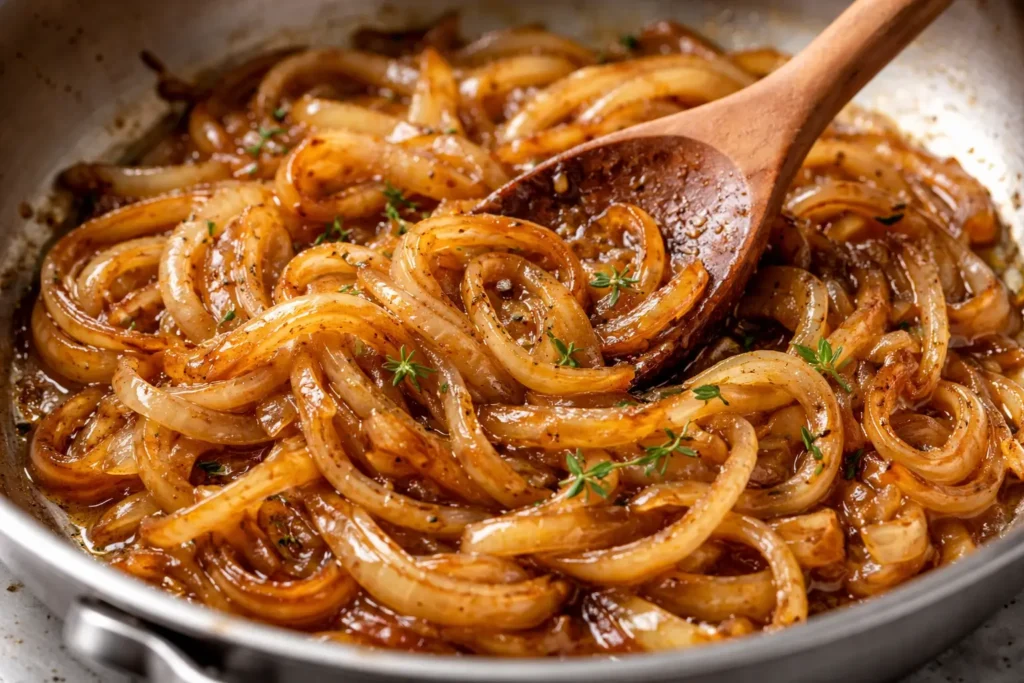
Raw, yellow onions are assertive. They’re pungent, sulfurous, and can be almost aggressive in flavor — not the ideal choice for eating uncooked if you’re sensitive to that sharp bite. But something remarkable happens when you apply heat. The sulfur compounds break down, and a deep, rich sweetness develops in their place.
This is why yellow onions are the undisputed king of caramelized onions. Given enough time and low heat, they transform into a golden, jammy, deeply savory ingredient that’s almost unrecognizable compared to their raw state.
Best Uses for Yellow Onion
Yellow onions are the go-to for almost any cooked application:
- Caramelized onions — this is their highest calling
- Soups, stews, and braises — they dissolve into the base and add depth
- Sautéed as an aromatic — alongside garlic as the foundation for hundreds of dishes
- Roasted alongside meats — they hold up to long cooking times without turning mushy
- French onion soup — yellow onions are the traditional and best choice here
What Is a White Onion?
White onions are less common in American kitchens but are a staple in Mexican cuisine and certain Asian cooking traditions. They have a thinner, papery white skin and a cleaner, more straightforward flavor compared to red or yellow onions.
White Onion Taste Profile
White onions are milder and less sulfurous than yellow onions when raw. They have a clean, slightly sharp flavor without as much of the heavy pungency you get from yellow. Cooked, they turn tender and mild relatively quickly, but they don’t develop the same deep caramel notes that yellow onions do — they simply soften and sweeten lightly.
Best Uses for White Onion
White onions are especially valued in:
- Mexican-style fresh salsas and pico de gallo — they’re the traditional choice for authentic flavor
- Ceviche and fresh dishes — mild enough to eat raw without overpowering other ingredients
- Stir-fries and quick sautés — they cook fast and stay light
- As a topping for tacos and street food — the classic white onion and cilantro combo is iconic
- In dishes where you want onion presence without heaviness — like light broths or delicate seafood preparations
If you love fresh, clean flavors, you might find white onion shows up naturally alongside dishes like this Korean bok choy recipe where light aromatics matter.
Are Red Onions Stronger Than Yellow Onions?
This is one of the most common questions about onions, and the answer depends on what you mean by “stronger.”
In terms of raw pungency: Yellow onions are typically more aggressively pungent and sulfurous when raw. That sharp, eye-watering quality is stronger in yellow onions for most people.
In terms of distinctive flavor: Red onions have a more complex raw flavor — peppery, slightly bitter, and sharp in their own way. They’re not necessarily stronger, but they’re more noticeable in finished dishes because of their flavor profile and color.
After cooking: Yellow onions develop a more dominant, savory sweetness. Red onions mellow out more uniformly and can sometimes fade into the background of a cooked dish.
So if you’re asking which one is stronger raw, yellow onions typically win that contest. If you’re asking which one has a more distinctive presence in a dish (especially raw), the answer leans toward red.
Red Onion vs Yellow Onion vs White Onion: Nutrition & Health Benefits
From a nutritional standpoint, all three onion types offer meaningful benefits — and while no single food is a cure or treatment for any condition, according to some nutrition research, onions in general may support health in several ways.
Red onions may have an edge when it comes to antioxidant content. Their distinctive purple-red color comes from compounds called anthocyanins, which are the same pigments found in blueberries and red cabbage. Some studies suggest anthocyanins may be associated with reduced inflammation and cardiovascular support, though this area of research is ongoing.
Yellow onions are particularly high in quercetin, a plant flavonoid that has been studied for its potential anti-inflammatory properties. According to some sources, yellow onions may contain higher total flavonoid levels than white onions, partly because of their thicker, more pigmented outer layers.
White onions still contain fiber, vitamin C, and certain sulfur compounds, but they’re generally considered to have a lower overall antioxidant load compared to red and yellow varieties.
All onions contain prebiotic fibers that may support gut health in certain individuals. It’s worth noting that individual responses to dietary changes can vary significantly, and anyone with specific health concerns is best served by speaking with a qualified healthcare provider.
If you’re interested in exploring other foods that may support metabolic health, you might also find this article on the green banana trick for diabetes worth reading — it covers some interesting nutritional ground around blood sugar and whole foods.
Can You Substitute a Red Onion with a Yellow Onion?
Understanding the difference between red onion and yellow onion becomes especially important when you’re considering a substitution — and the answer depends largely on whether the onion is raw or cooked.
Where it matters more is in raw applications. If a recipe calls for raw red onion — say, in a salsa, salad, or as a garnish — substituting yellow onion will give you a noticeably stronger, sharper flavor. The visual difference is also significant: yellow onion won’t give you that pop of color that red onion brings to a dish.
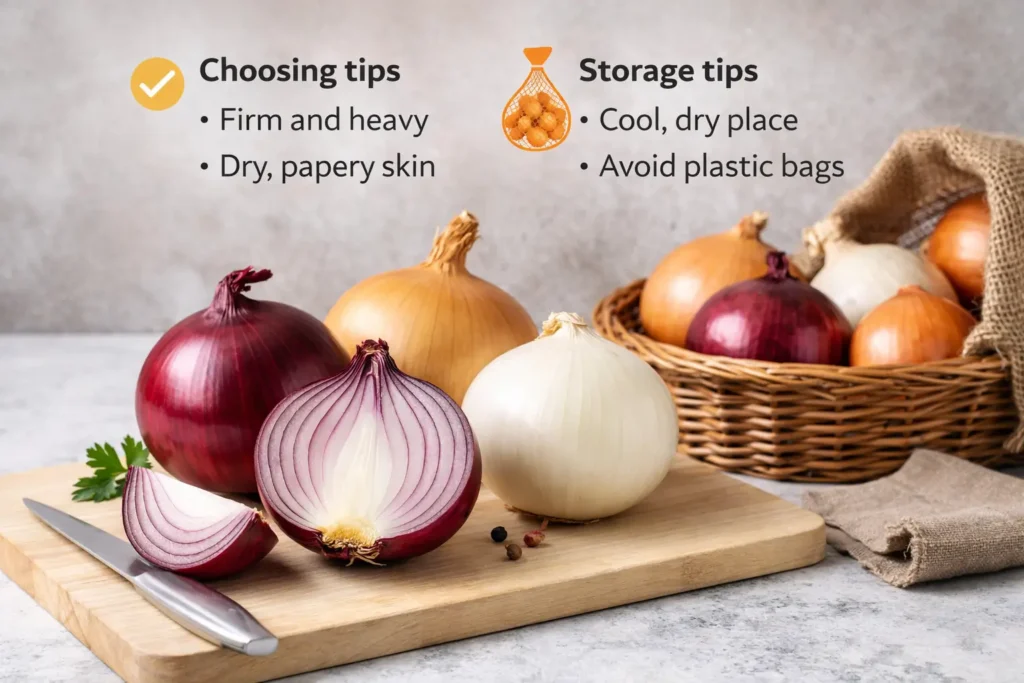
Quick substitution guide:
- Red → Yellow (cooked): Almost always fine
- Yellow → Red (cooked): Works well, may be slightly sweeter
- Red → White (raw): Works reasonably well, especially in Mexican-style dishes
- Yellow → White (raw): White onion is milder, less pungent — a decent swap if you want something gentler
- Red → Yellow (raw): Yellow is more aggressive; use slightly less and consider soaking in cold water first to mellow it
Which Onion Is Best for Cooking? A Practical Guide
There’s no single best onion — it depends entirely on the dish:
For caramelizing and long-cooked dishes: Yellow onion, every time. The sugar content and flavor development during long, slow cooking make it unbeatable for French onion soup, stews, and braises.
For fresh and raw applications: Red or white onion. Red for color and a slightly more complex bite; white for cleaner, milder flavor in salsas and fresh preparations.
For grilling or roasting: Red onion holds up beautifully and gets jammy and sweet. Yellow also works great.
For light, delicate dishes: White onion. Its mild flavor won’t overpower subtle ingredients.
For everyday cooking when you’re unsure: Yellow onion is almost always a safe default.
FAQ
Can I substitute a red onion with a yellow onion?
In most cooked recipes, yes — the flavor difference becomes minimal once heat is applied. For raw uses like salads, salsas, or toppings, a yellow onion will taste noticeably sharper and more pungent, so it’s worth knowing what you’re getting into before making that swap.
Which color onion is healthiest?
According to some nutritional sources, red onions may have an advantage due to their higher anthocyanin content — the same antioxidant compounds found in dark berries. Yellow onions are also considered a strong option, particularly for their quercetin levels. All onions offer fiber and beneficial plant compounds, and including any variety regularly in a balanced diet is generally considered a positive dietary choice.
Which onion is best for cooking?
Yellow onion is widely considered the best all-purpose cooking onion because of how beautifully it caramelizes and how well it blends into cooked dishes. For raw applications and fresh preparations, red and white onions are typically better choices. The “best” onion really depends on what you’re making.
Can cooked onions lower cholesterol?
Some research suggests that the quercetin and sulfur compounds found in onions may be associated with modest cardiovascular benefits in certain individuals, but it would be inaccurate to say that eating cooked onions directly lowers cholesterol in a clinically significant way. According to some studies, regular consumption of quercetin-rich foods as part of an overall heart-healthy diet may support cardiovascular health — but this is an area where more research is still needed, and individual responses vary. Anyone with specific concerns about cholesterol is encouraged to speak with a licensed healthcare provider.
Final Thoughts
Red, yellow, and white onions each have a real place in the kitchen — and understanding their differences means you’ll stop reaching for whatever’s closest and start cooking with intention. Yellow onion is your reliable everyday workhorse. Red onion is your go-to for raw freshness, color, and versatility on the grill. White onion brings a clean, mild presence that’s indispensable in Mexican cooking and delicate dishes.
The next time a recipe says “one onion,” you’ll know exactly which one it’s really asking for.
Nutrition & Health Note: Information in this article is provided for general educational purposes only. It is not intended as medical advice. Always consult a qualified healthcare professional for guidance specific to your health situation.