
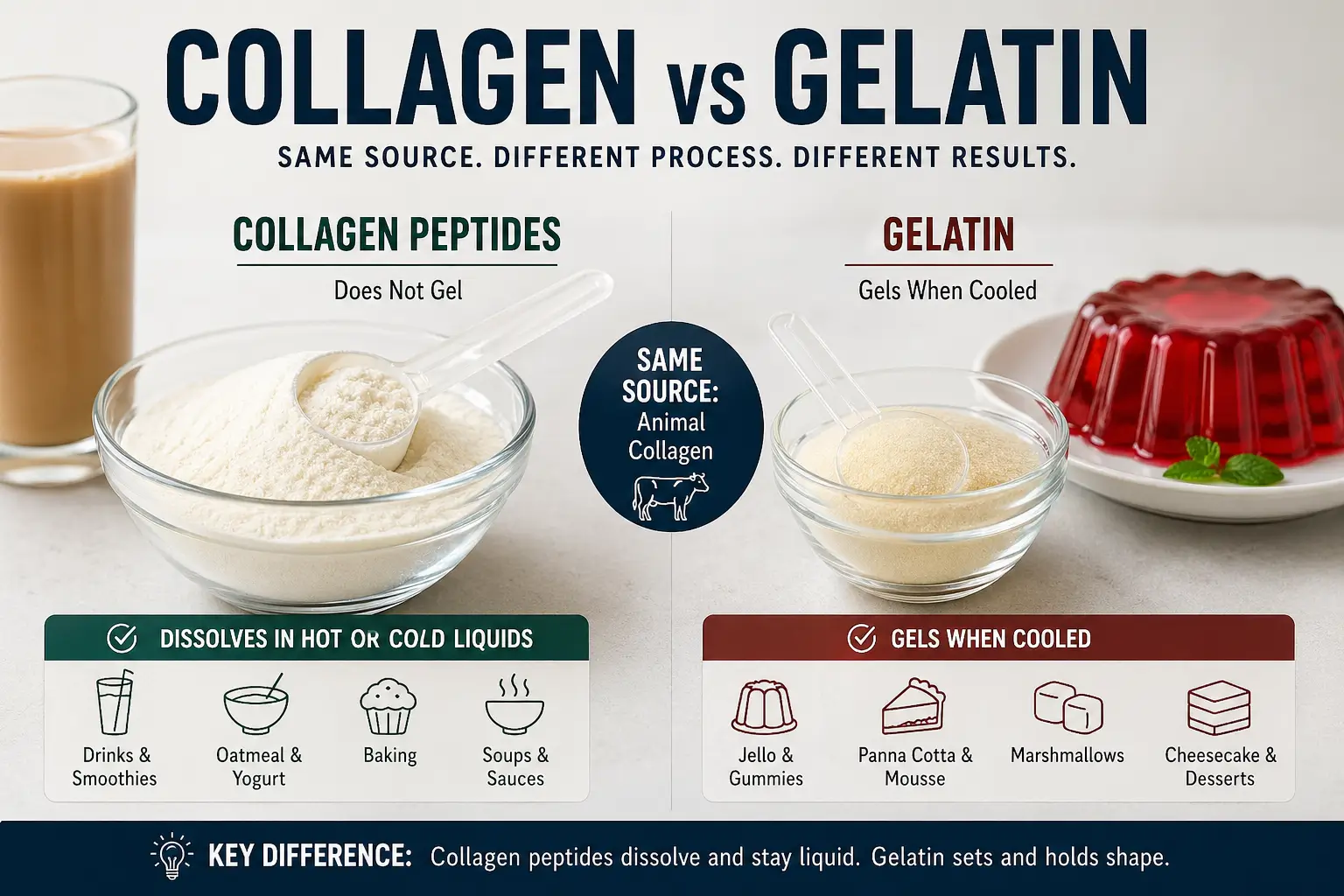
Collagen vs Gelatin is one of the most confusing ingredient questions in the kitchen because they look similar, come from the same source, and then behave like total opposites—like twins where one runs marathons and the other naps professionally.
If you’ve spent any time in the health food aisle lately, you’ve seen both collagen powder and gelatin powder sitting side by side on the shelf. They look nearly identical. They come from the same source. And yet they behave completely differently in your kitchen.
The question I get asked all the time is: are collagen and gelatin the same thing? The honest answer is that they’re closely related but not interchangeable — and understanding the difference helps you pick the right one for what you’re actually trying to do.
This article sticks to what you can actually observe and verify: how they’re made, how they behave in food, and which one to use for cooking.
Where They Both Come From
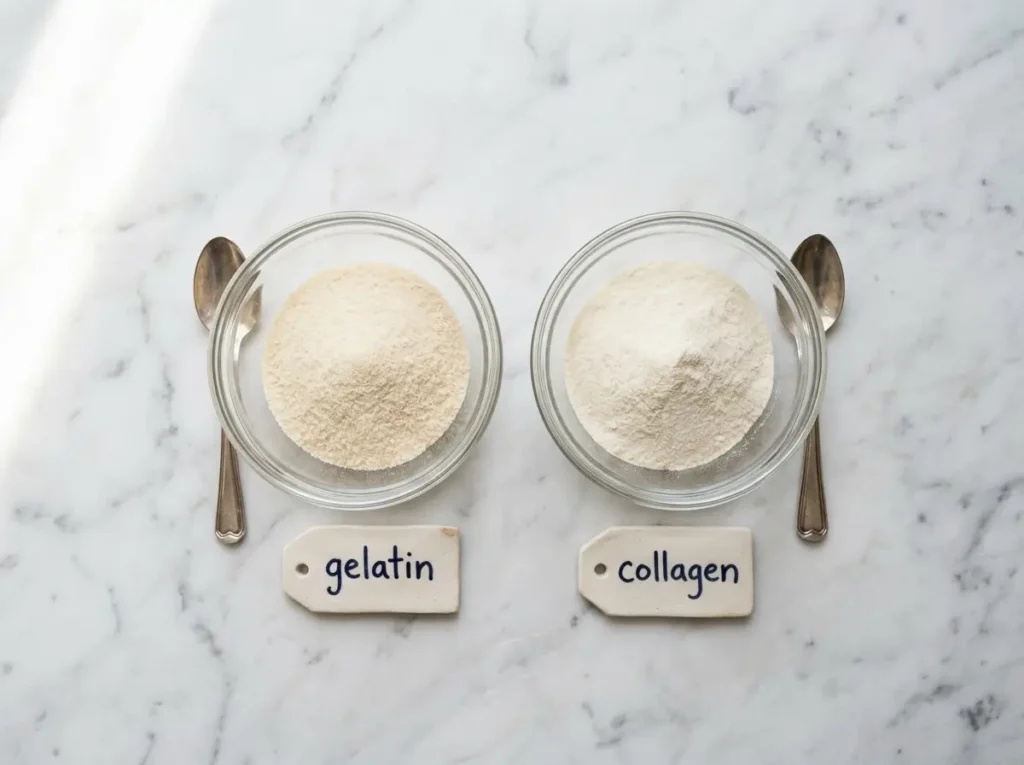
Both collagen and gelatin come from the same raw material: collagen protein, found in the connective tissue, skin, and bones of animals — most commonly cattle (bovine) or fish (marine). If you’ve ever wondered exactly where gelatin comes from, this full guide on what gelatin is made of breaks it down in detail.
Both can also come from beef sources, which matters for readers looking for halal-friendly options. If you’re specifically choosing bovine gelatin, this guide on is beef gelatin halal explains what to check before buying.
The difference is what happens during processing:
- Collagen peptides (also called hydrolyzed collagen) are produced by breaking down the collagen protein into very small fragments using water and enzymes. The result is a fine powder that dissolves easily in both hot and cold liquids.
- Gelatin is produced by partially breaking down collagen through prolonged cooking with water and acid or alkali. The proteins are denatured but not fully broken apart. The result gels when cooled.
The Key Difference: Gelling vs Non-Gelling
This is the most important practical distinction:
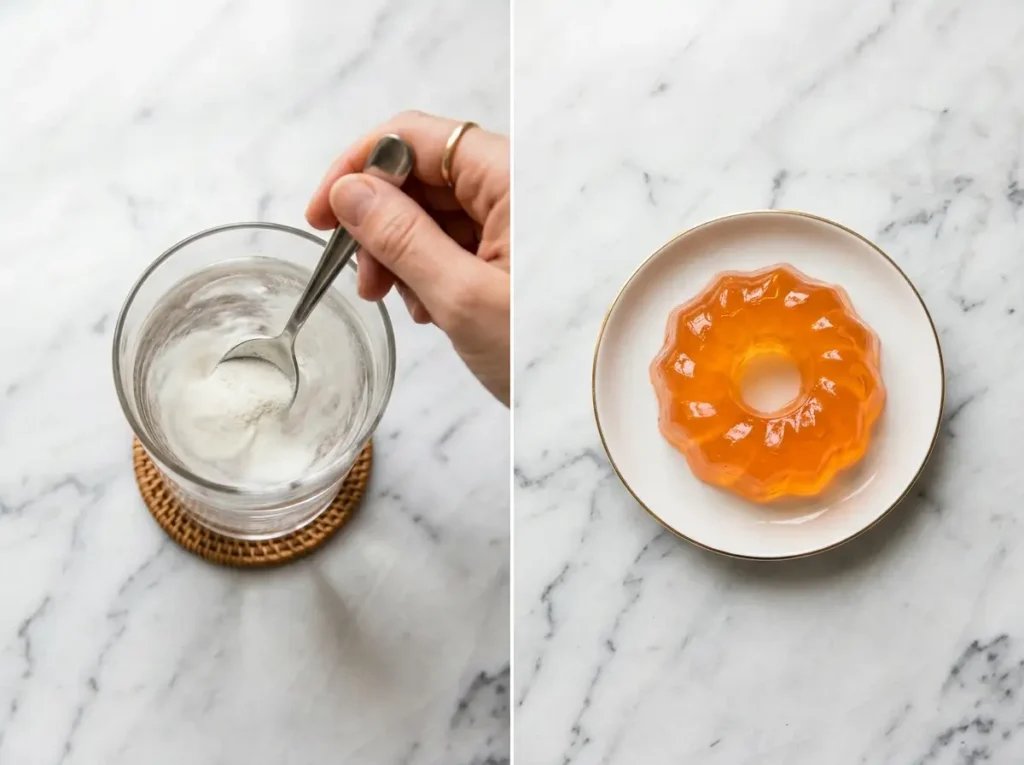
Gelatin gels. Add it to warm liquid, let it cool, and it sets into a firm, jiggly texture. This is what makes jello, panna cotta, marshmallows, and gummy candies work.
Collagen peptides do not gel. They dissolve completely and stay liquid. A drink made with collagen powder stays liquid whether hot or cold.
This means they are not interchangeable in cooking. If a recipe calls for gelatin to set a dessert, using collagen powder will give you a liquid dessert.
| Property | Gelatin | Collagen Peptides |
| Source | Animal connective tissue | Animal connective tissue |
| Processing | Partial hydrolysis (larger proteins) | Full hydrolysis (small peptides) |
| Dissolves in cold liquid? | No — needs warm/hot liquid | Yes |
| Gels when cooled? | Yes | No |
| Flavor | Neutral (slight savory in high amounts) | Neutral |
| Main culinary use | Setting desserts, gummies, aspics | Adding to drinks, smoothies, baked goods |
| Texture | Sets firm | Stays liquid |
The comparison above covers the functional differences that matter most in everyday cooking.
Culinary Uses: Which One to Reach For
Use Gelatin When You Need Something to Set
- Panna cotta, jello, mousse
- Marshmallows
- Gummy candies
- Cheesecake filling
- Savory terrines and aspics
- Stabilizing whipped cream
- Recipes specifying ‘unflavored gelatin’ — Knox, Great Lakes, etc.
Use Collagen Peptides When You Don’t Need a Set
- Gelatin is the right choice for recipes that need actual structure and a proper set:
- Panna cotta, jello, mousse
- Marshmallows
- Gummy candies
- Cheesecake filling
- Savory terrines and aspics
- Stabilizing whipped cream
Classic desserts like easy panna cotta rely on gelatin for that smooth, delicate wobble, while functional recipes like the Jillian Michaels gelatin trick recipe use the same gelling property for satiety and texture.
If you’re working with powdered gelatin for the first time, learning how to bloom gelatin first saves a lot of kitchen disasters—and fewer suspicious bowls of sweet soup.
Beef Gelatin Benefits
Many people specifically look for beef gelatin instead of pork-derived gelatin, especially for dietary or halal reasons. Beyond sourcing, some readers also want to know about texture, protein content, and culinary uses. This guide on beef gelatin benefits covers how it works in both recipes and everyday cooking.
Can You Use Them Interchangeably?
In the kitchen, no. Because gelatin gels and collagen peptides don’t, they cannot replace each other in recipes that depend on setting. If you’re making a recipe from our site like panna cotta or a gelatin-based weight loss recipe, you need gelatin specifically.
Collagen peptides are for a completely different use case — adding protein to foods and beverages without changing their texture.
Which Is Better for Cooking?
This depends entirely on what you’re making. For recipes that need to set — jello, gummies, custards, marshmallows — gelatin is the only choice. For adding protein to everyday food and drinks without changing texture — collagen peptides are the right pick.
Both have their place. They’re complementary, not competitive.
Frequently Asked Questions
Is collagen the same as gelatin?
They come from the same source (animal collagen) but are processed differently. Gelatin gels when cooled; collagen peptides don’t. They’re closely related but not the same thing and not interchangeable in cooking.
Can I use collagen powder instead of gelatin?
No, not in recipes that require setting. Collagen peptides are fully hydrolyzed and won’t gel. Your panna cotta or jello will stay liquid.
Can I use gelatin powder instead of collagen?
You can add gelatin to drinks and smoothies, but it won’t dissolve well in cold liquids and will create a thick, gel-like texture if the drink cools down. Collagen peptides are designed for cold-liquid use; gelatin is not.
Is gelatin just cooked collagen?
In a broad sense, yes — gelatin is produced by partially denaturing collagen protein through cooking. Traditional bone broth, which is rich in gelatin, is essentially this process done in your kitchen.
Are gelatin and collagen both from pork or beef?
Both can be sourced from pork, beef, or fish. Most commercial gelatin in the US is pork-derived. Beef (bovine) gelatin and collagen are also widely available, including halal-certified options. Always check the label for the specific source—especially if halal sourcing matters, as explained in is beef gelatin halal