
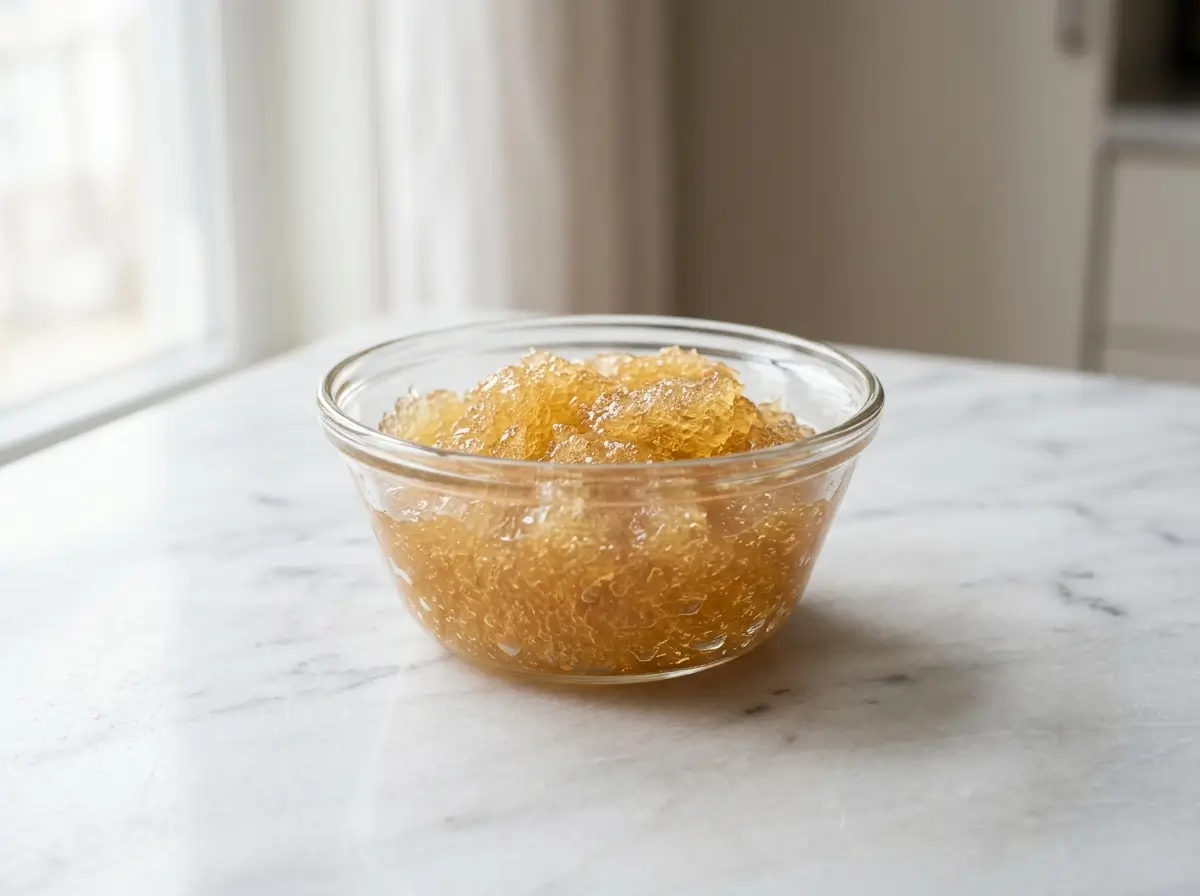
I’ll be honest with you. The first time I started reading gelatin ingredient labels, I had no idea what I was looking at. Knox unflavored gelatin, Great Lakes beef gelatin, bovine gelatin capsules — it all blurred together. But once I started looking for halal-friendly options for my recipes, one term kept coming up: bovine gelatin. And I quickly realized that understanding what is bovine gelatin would change the way I cook and shop forever.
If you’ve been searching for a clear, no-fluff explanation of bovine gelatin — what it is, where it comes from, whether it’s halal, and how to actually use it in your kitchen — you’re in the right place. This is everything I’ve learned, laid out simply.
What Is Bovine Gelatin?
Bovine gelatin is a protein derived from the collagen found in the bones, skin, and connective tissues of cattle. The word bovine simply refers to cows or beef — so bovine gelatin is, at its core, a beef-based gelatin.
To make it, manufacturers process raw bovine collagen through controlled heating and extraction. The result is a flavorless, odorless protein powder or sheet that gels when dissolved in warm liquid and cooled. That gel-forming property is exactly why gelatin has been used in cooking, food production, and supplements for over a century.
Bovine Gelatin vs Porcine Gelatin vs Fish Gelatin
Not all gelatin is the same — and the source matters enormously depending on your diet, religion, or personal values.
Bovine gelatin comes from cattle. It has a strong gelling power and a neutral flavor, making it ideal for recipes and supplements. It is considered halal when sourced from properly slaughtered cattle.
Porcine gelatin comes from pigs and is the most widely used gelatin in commercial food production — including many candies, marshmallows, and packaged desserts. It is not halal and not kosher.
Fish gelatin comes from fish skin and bones. It is halal and kosher, but it has a slightly weaker gelling strength and a faint oceanic scent that can affect delicate recipes.
For most home cooks looking for a halal-friendly, versatile gelatin option, bovine gelatin is the clear choice.
Is Bovine Gelatin Halal?
This is the question I get most often — and the answer is: it depends on the source and the slaughter method.
Bovine gelatin can be halal, but only when it meets these two conditions:
1. The cattle must be slaughtered according to Islamic law (dhabiha). This means the animal must be alive and healthy at the time of slaughter, slaughtered by a Muslim, and the name of Allah must be invoked at the time of slaughter.
2. The gelatin must be certified halal by a recognized certification body. Look for logos from organizations like IFANCA, HMA, or similar certifying bodies on the packaging.
How to Know If Your Bovine Gelatin Is Halal
When shopping, check for these indicators:
- A clear halal certification logo on the packaging
- Labels that say “beef gelatin” or “bovine gelatin” — this rules out pork
- Brands that specialize in halal or kosher products
Popular halal-certified bovine gelatin brands available in the US include Great Lakes Wellness Beef Gelatin and Zint Beef Gelatin. Always verify the current certification on the brand’s website, as certifications can change.
For a deeper breakdown of halal gelatin rules and which brands qualify, I’ve covered this in detail in my guide on is beef gelatin halal.
Bovine Gelatin Benefits
Beyond the halal question, bovine gelatin has a genuinely impressive nutritional profile. Here’s why it’s worth adding to your routine.
1. High in Protein
One tablespoon of bovine gelatin provides approximately 6 to 8 grams of protein with fewer than 30 calories. That makes it one of the most efficient low-calorie protein sources available.
2. Supports Joint Health
Bovine gelatin is rich in glycine and proline — two amino acids that support cartilage, tendons, and joint tissue. Regular consumption as part of a balanced diet may help maintain joint comfort over time.
3. May Support Gut Health
Glycine, the primary amino acid in bovine gelatin, plays a role in supporting the gut lining. Some research suggests that glycine may help maintain digestive integrity, though gelatin is not a medical treatment for digestive conditions.
4. Promotes Satiety
Protein increases feelings of fullness. Consuming bovine gelatin before meals — as in the popular gelatin trick recipes — may help reduce overall calorie intake by slowing digestion and curbing appetite.
5. Supports Skin and Hair
Collagen-derived proteins like those in bovine gelatin may support skin elasticity and hair structure over time, particularly when consumed consistently as part of a nutrient-rich diet.
For a complete breakdown of these benefits with sourcing, visit my article on beef gelatin benefits.
How to Use Bovine Gelatin in Your Kitchen
Once I understood what is bovine gelatin, I started using it everywhere. Here are the most practical ways to incorporate it into everyday cooking.
Blooming Bovine Gelatin (The Essential First Step)
Before using bovine gelatin in any recipe, you must bloom it. Sprinkle the powder over cold water and let it sit for 2 to 3 minutes until it absorbs the liquid and becomes spongy. Then add warm (not boiling) liquid to fully dissolve it. Skipping this step causes lumps that never dissolve properly.
For a full visual walkthrough of this technique, see my guide on how to bloom gelatin.
Simple Gelatin Wellness Drink
Dissolve 1 tablespoon of bovine gelatin in 1 cup of warm water. Add fresh lemon juice and a small amount of honey. Drink warm before meals to support fullness. This is the base of many viral gelatin weight loss recipes.
Gelatin Cubes for Meal Prep
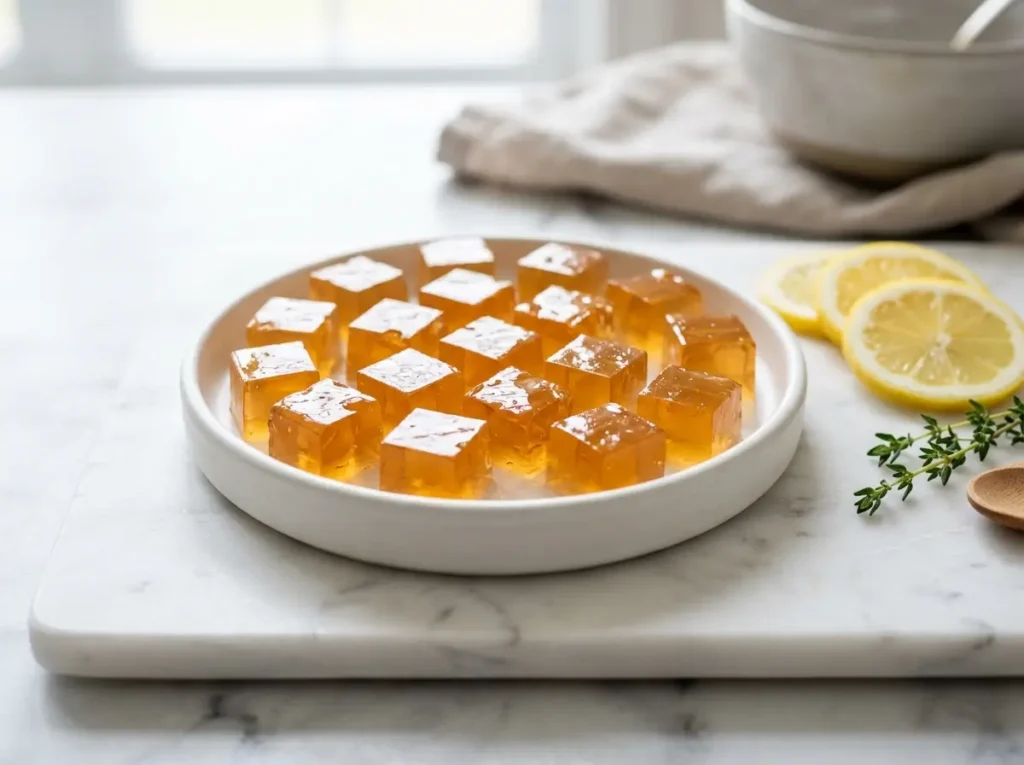
Prepare the wellness drink, pour into silicone ice cube molds, and refrigerate for 3 hours. Eat 3 to 4 cubes 20 minutes before your main meal. These keep in the fridge for up to 5 days — perfect for weekly batch prep.
Panna Cotta and Jellies
Bovine gelatin is the ideal base for panna cotta, fruit jellies, and layered desserts. Use 2 teaspoons per 2 cups of liquid for a firm set, or 1 teaspoon for a softer, spoonable texture.
Soups and Broths
Stir 1 teaspoon of bovine gelatin into warm broth to add body, protein, and a silky mouthfeel. This technique is especially useful for thin broths that need more substance.
Frequently Asked Questions About Bovine Gelatin
What is bovine gelatin made from?
Bovine gelatin is made from the collagen extracted from the bones, skin, and connective tissue of cattle. The collagen is processed with heat and water until it breaks down into gelatin protein.
Is bovine gelatin the same as beef gelatin?
Yes. Bovine gelatin and beef gelatin refer to the same product. Bovine is the scientific term for cattle, so both labels describe gelatin derived from cows.
Can vegetarians or vegans use bovine gelatin?
No. Bovine gelatin is an animal-derived product and is not suitable for vegetarians or vegans. Agar-agar, derived from seaweed, is a plant-based alternative with similar gelling properties.
How much bovine gelatin should I use per day?
Most wellness applications suggest 1 to 2 tablespoons per day, either in drinks or recipes. There is no established upper limit for healthy adults, but consuming very large amounts may cause digestive discomfort.
Does bovine gelatin have a taste or smell?
Unflavored bovine gelatin is virtually tasteless and odorless when dissolved properly. It takes on the flavor of whatever liquid it is added to, which makes it extremely versatile in both sweet and savory recipes.
Conclusion
Understanding what is bovine gelatin completely changed the way I read food labels and shop for supplements. It’s a clean, halal-friendly, high-protein ingredient that works beautifully in recipes, wellness drinks, and everyday cooking.
If you’re looking for a pork-free gelatin option that is widely available, versatile, and backed by real nutritional value, bovine gelatin is exactly what you need. Just make sure it carries a recognized halal certification if that matters to you — and in my kitchen, it always does.
Ready to put bovine gelatin to work? Start with my guide on how to bloom gelatin and explore the full breakdown of beef gelatin benefits to learn exactly what this ingredient can do for your health and your recipes.