
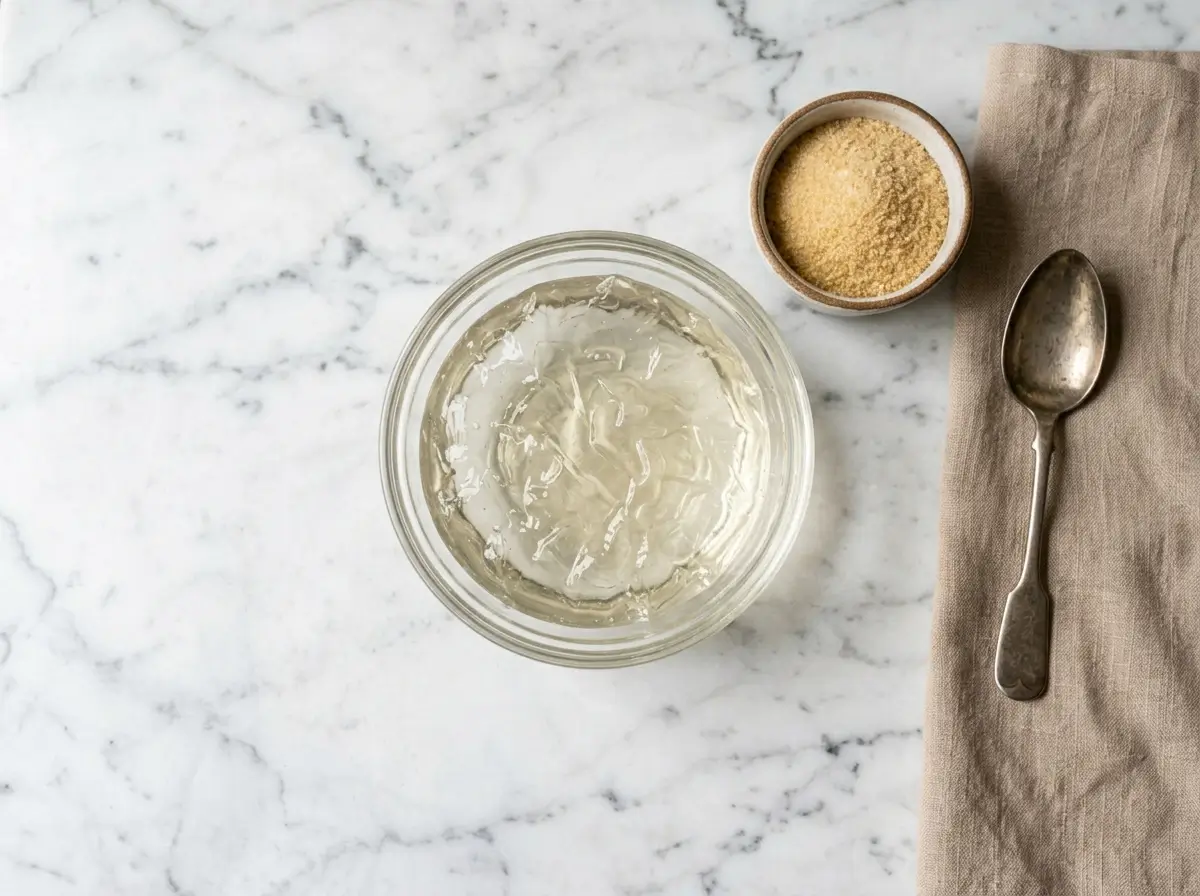
How to bloom gelatin is the one kitchen skill that separates silky panna cotta from rubbery, lumpy disappointment — and it takes exactly five minutes. I learned this the hard way years ago, when I dumped a packet of gelatin straight into hot cream and watched it turn into stringy little globs nothing could save. Since then, I’ve bloomed gelatin hundreds of times for everything from my easy panna cotta to strawberry gelatin desserts, and I promise: once you learn the right way, you will never get lumps again.
What Is Blooming Gelatin (and Why It Matters)?
Blooming gelatin simply means hydrating it in cold liquid before melting it. Gelatin granules are hard and dry — if you understand what gelatin is actually made of, it makes sense: it’s a dried protein that needs time to absorb water evenly. During blooming, each granule soaks up liquid and swells into a soft gel. When you melt that gel afterward, every particle dissolves at the same rate, giving you one smooth, uniform set.
Skip the bloom, and the outside of each granule cooks before the inside hydrates. The result: gritty bits, stringy threads, and a dessert that sets in patches. Blooming isn’t optional — it’s the whole game.
Cold Water or Warm Water? (Always Cold)
Cold. Always cold. This is the question I get most, so let me be blunt: warm or hot water dissolves the surface of the granules instantly and seals the dry centers inside. That’s exactly how lumps are born.
- Cold water (50–60°F / 10–15°C): granules hydrate slowly and evenly. Zero lumps.
- Warm water (above 90°F / 32°C): partial dissolving, clumping, gummy layer at the bottom of the bowl.
- Boiling water: destroys the gelatin’s setting power entirely. There’s no rescuing it.
You can also bloom in cold milk, cream, or juice — anything cold works. Just avoid fresh pineapple, kiwi, papaya, and ginger juice. Their enzymes chew through gelatin proteins and your dessert will never set.
How to Bloom Powdered Gelatin (Step-by-Step)
This is the method for standard unflavored powdered gelatin — Knox-style packets or bulk beef gelatin. The ratio to memorize: 1 packet (2 1/4 teaspoons) of gelatin to 1/4 cup (60 ml) of cold water.
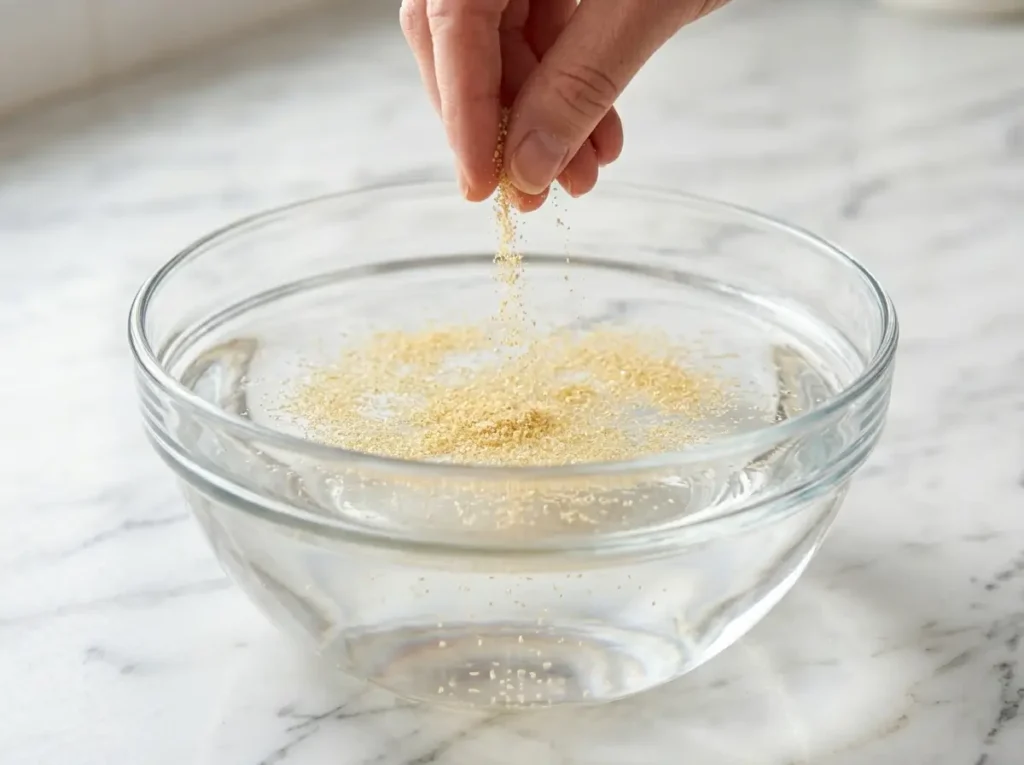
- Pour the cold water into a small bowl FIRST. Water first, gelatin second — this order is non-negotiable.
- Sprinkle the gelatin evenly over the entire surface of the water in a thin layer. Never dump it in one pile — granules buried under other granules can’t reach the water.
- Walk away for 5 minutes. No stirring. The mixture will swell into a firm, wrinkled, sponge-like gel. That wrinkly surface is your visual cue that it’s done.
- Melt gently. Stir the bloomed gelatin into your warm base (under 140°F / 60°C), or microwave it 5–10 seconds until just liquid. It should be clear with no visible granules.
That’s the entire technique. It works for every recipe in my Knox gelatin recipe collection and any no-bake dessert you’ll ever make.
How to Bloom Sheet (Leaf) Gelatin
Sheet gelatin is what pastry kitchens use, and blooming it is even easier:
- Fill a shallow dish with plenty of cold water — sheets need room to soak flat.
- Submerge the sheets one at a time so they don’t stick together.
- Soak 5 to 10 minutes, until completely soft, floppy, and glassy.
- Lift them out and squeeze gently to remove excess water, then stir straight into your warm base.
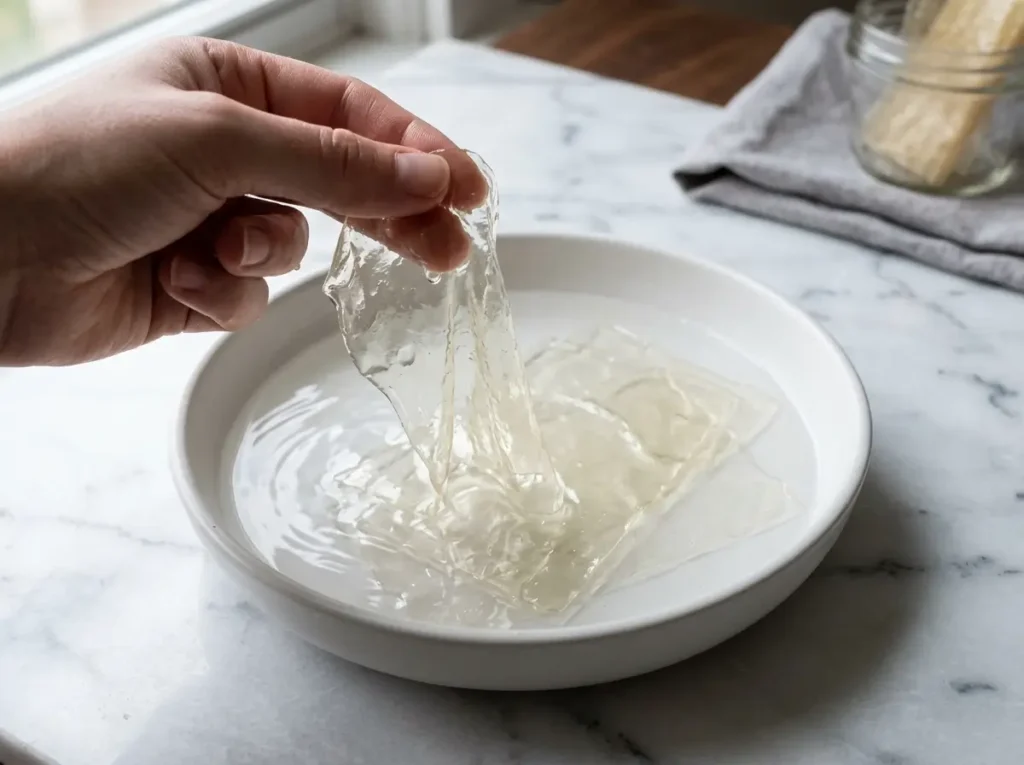
Unlike powder, you discard the soaking water with sheets — the squeeze step replaces measuring. One reason pros love them: no ratio math, and an exceptionally clear set.
Powdered vs Sheet Gelatin: Quick Conversion
| Powdered gelatin | Sheet gelatin (silver grade) | |
| Equivalent | 1 packet = 2 1/4 tsp (7 g) | ≈ 4 sheets |
| Bloom liquid | 1/4 cup cold water (measured) | Plenty of cold water (discarded) |
| Bloom time | 5 minutes | 5–10 minutes |
| Visual cue | Firm, wrinkled gel | Soft, floppy, glassy sheets |
| Sets about | 2 cups (480 ml) of liquid | 2 cups (480 ml) of liquid |
How Long Should Gelatin Bloom?
Five minutes is the sweet spot for powder; up to ten for sheets. Less than that and the centers stay dry. Much longer doesn’t hurt — bloomed gelatin can sit 15–20 minutes without issue. Blooming time is separate from setting time, though: once your dessert is assembled, it needs hours in the fridge. I break down exactly how long gelatin takes to set (and how to speed it up) in a dedicated guide.
5 Common Blooming Mistakes (and How to Fix Them)
- Adding gelatin first, water second. The bottom layer turns into glue. Water always goes in the bowl first.
- Dumping the powder in one spot. Sprinkle in a thin, even layer across the whole surface.
- Stirring during the bloom. Stirring pushes dry granules inside wet clumps. Hands off for 5 minutes.
- Boiling the bloomed gelatin. Heat above 140°F / 60°C weakens the set; a full boil kills it. Melt low and slow.
- Blooming in enzymatic juices. Fresh pineapple, kiwi, papaya, ginger: use the canned/cooked versions instead.
Already have lumps? Set the bowl over barely simmering water, stir until they melt, and strain through a fine-mesh sieve. If the mixture boiled, start over with a fresh packet.

What If You Can’t Use Gelatin?
Blooming only applies to true gelatin. If you’re cooking vegetarian or just out of packets, agar agar behaves completely differently — it needs a boil, not a bloom. I compare the two head-to-head in my agar agar vs gelatin guide, round up all my favorite plant-based gelatin substitutes, and even have a full gelatin-free jello recipe if you want the wobble without the gelatin.
FAQ
Can I bloom gelatin in warm or hot water?
No. Warm water dissolves the outside of each granule before the inside hydrates — that’s the number one cause of lumps. Bloom cold, melt gently afterward.
What happens if I skip blooming?
Gelatin added dry to hot liquid hydrates unevenly: stringy threads, gritty texture, patchy set. Five minutes of blooming prevents all of it.
Can I bloom gelatin in milk or juice?
Yes, as long as it’s cold. Skip fresh pineapple, kiwi, papaya, and ginger juice — their enzymes stop gelatin from setting.
How do I fix lumpy gelatin?
Warm it gently over a water bath, stir until smooth, then strain. If it boiled, the setting power is gone — start over.
Does beef gelatin bloom the same way?
Yes. Beef and fish gelatin follow the exact same cold-water method; beef gelatin occasionally wants one extra minute to fully hydrate.
Final Thoughts
Water first, sprinkle evenly, wait five minutes, melt gently — that’s how to bloom gelatin properly, and it never changes. Master this tiny ritual and every wobbly dessert on this site is yours, starting with my easy panna cotta. If you try it, leave a comment and tell me how it set — I read every single one. — Sophie
1 thought on “How to Bloom Gelatin Properly (No Lumps, Step-by-Step)”