
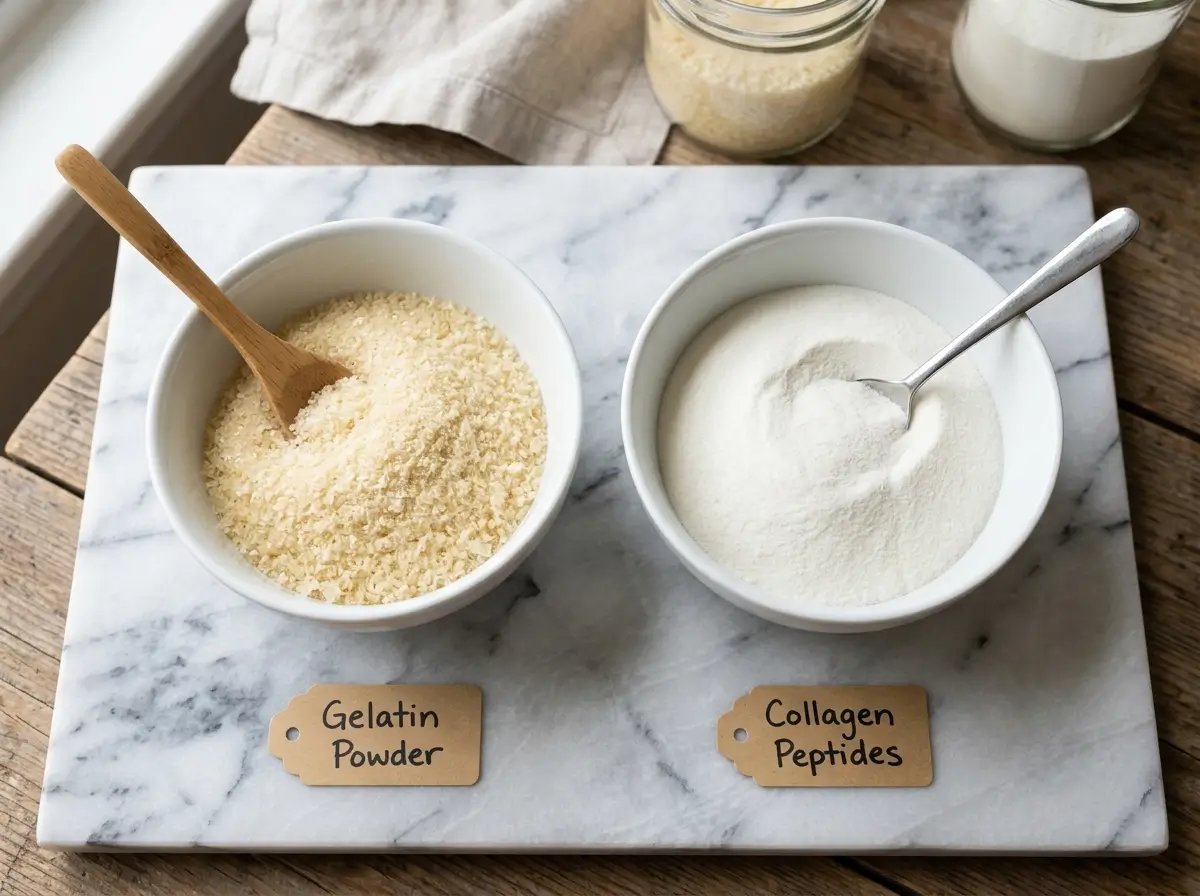
Does gelatin have collagen? This question has been trending at over 80% growth in 2026 as more people explore gelatin-based wellness habits and try to understand the difference between the products on store shelves. The short answer is yes — gelatin is derived from collagen — but the relationship between the two is more nuanced than most people realize. Understanding the difference matters practically because gelatin and collagen peptides behave very differently in the body and are not interchangeable for all purposes.
Does Gelatin Have Collagen?
Yes — gelatin is made from collagen. Specifically, gelatin is produced by partially hydrolyzing collagen from animal connective tissue, bones, and skin. When collagen-rich animal parts are heated with water over time, the triple-helix structure of collagen protein partially unravels, releasing gelatin. So in a direct sense, all gelatin contains collagen-derived protein.
However, the collagen in gelatin is not the same as the intact collagen in your body, and it is not the same as the collagen peptides sold in most supplement products. The processing that creates gelatin changes the protein structure in ways that significantly affect how each behaves.
| Gelatin | Collagen Peptides | Intact Collagen | |
| Source | Collagen (partially hydrolyzed) | Collagen (fully hydrolyzed) | Animal connective tissue |
| Processing | Partial hydrolysis + drying | Complete hydrolysis | None (found in food) |
| Dissolves in | Hot liquid only | Hot or cold liquid | Not a supplement |
| Gels when cooled? | Yes ✅ | No ❌ | N/A |
| Absorbed quickly? | Slower | Faster | Depends on digestion |
| Used for | Satiety trick, desserts, gummies | Skin, joints, daily protein | Bone broth, slow cooking |
How Gelatin Is Made From Collagen
Collagen is the most abundant protein in the human and animal body, found in skin, bones, tendons, ligaments, and cartilage. It has a distinctive triple-helix molecular structure that gives connective tissue its strength and elasticity.
To produce gelatin, manufacturers heat collagen-rich animal materials — typically bovine (cow) or porcine (pig) hides, bones, and connective tissue — in water at controlled temperatures for an extended period. This heat exposure partially breaks the triple-helix structure, releasing gelatin molecules. The liquid is then filtered, concentrated, and dried into a powder or sheet form.
The result is a protein powder with a similar amino acid profile to collagen — rich in glycine, proline, and hydroxyproline — but with a molecular structure that allows it to form a gel when dissolved in hot liquid and cooled.
Gelatin vs Collagen Peptides — The Critical Difference
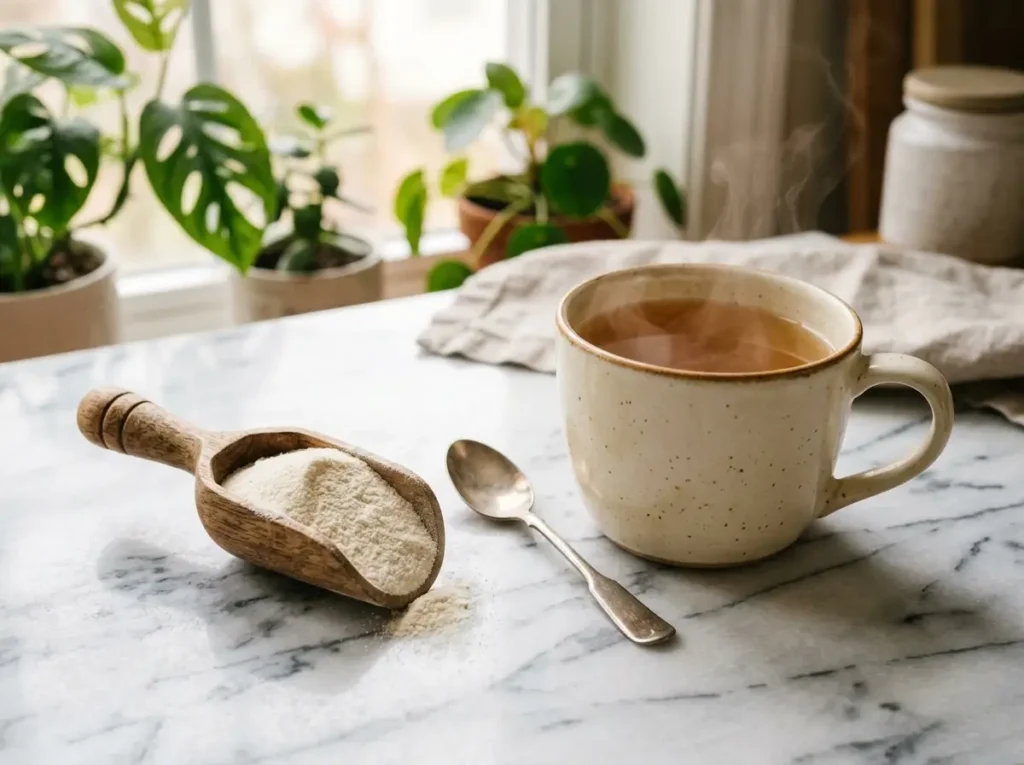
Collagen peptides, also called hydrolyzed collagen, are produced by taking the hydrolysis process one step further. Where gelatin is partially hydrolyzed, collagen peptides are fully hydrolyzed into very short peptide chains. These short chains dissolve completely in both hot and cold liquids and do not gel.
This is the single most important practical distinction for anyone using gelatin for the pre-meal satiety trick. The gelatin trick works specifically because gelatin gels in the stomach, creating physical volume that triggers stretch receptors. Collagen peptides dissolve completely and pass through the stomach at the same rate as water — there is no gel matrix and no mechanical fullness effect.
If you buy a product labeled collagen peptides, hydrolyzed collagen, or collagen protein and use it for the gelatin trick, it will not work. You must use a product labeled gelatin or unflavored gelatin powder.
| Use Case | Gelatin | Collagen Peptides |
| Pre-meal satiety trick | ✅ Works — gels in stomach | ❌ Does not work — no gel forms |
| Making gummies or desserts | ✅ Works — sets firmly | ❌ Does not work — stays liquid |
| Adding to smoothies or coffee | ❌ Poor — clumps in cold liquid | ✅ Works — dissolves completely |
| Skin and joint support supplements | ✅ Works (slower absorption) | ✅ Works (faster absorption) |
| Bone broth preparation | ✅ Natural component | ❌ Not used in cooking |
Do Both Gelatin and Collagen Peptides Support Skin and Joint Health?
Yes — both gelatin and collagen peptides provide the amino acids your body uses to synthesize new collagen for skin, joints, tendons, and bones. The key amino acids are glycine, proline, and hydroxyproline, which are present in similar amounts in both products.
The difference is in absorption speed. Collagen peptides are smaller molecules that are absorbed more quickly and efficiently. Gelatin molecules are larger and may take slightly longer to digest. For general collagen supplementation purposes, collagen peptides are often preferred because they are easier to use — they dissolve in any temperature liquid without clumping.
For the gelatin trick and appetite control specifically, only gelatin works because only gelatin gels.
Which Should You Choose — Gelatin or Collagen Peptides?
Choose Gelatin If:
- You want to use the pre-meal satiety trick for weight management
- You are making gummies, jellies, marshmallows, or gelatin desserts
- You want to try the mounjaro jello recipe or similar gelatin trick variations
- You prefer a lower cost option — gelatin is typically cheaper than collagen peptides
Choose Collagen Peptides If:
- You want to add collagen protein to cold beverages like smoothies or iced coffee
- Your primary goal is skin, hair, nail, or joint support supplementation
- You want faster absorption and easier daily use
- You follow a routine that does not involve making pre-meal gelatin drinks
What Is the Best Gelatin for the Gelatin Trick?
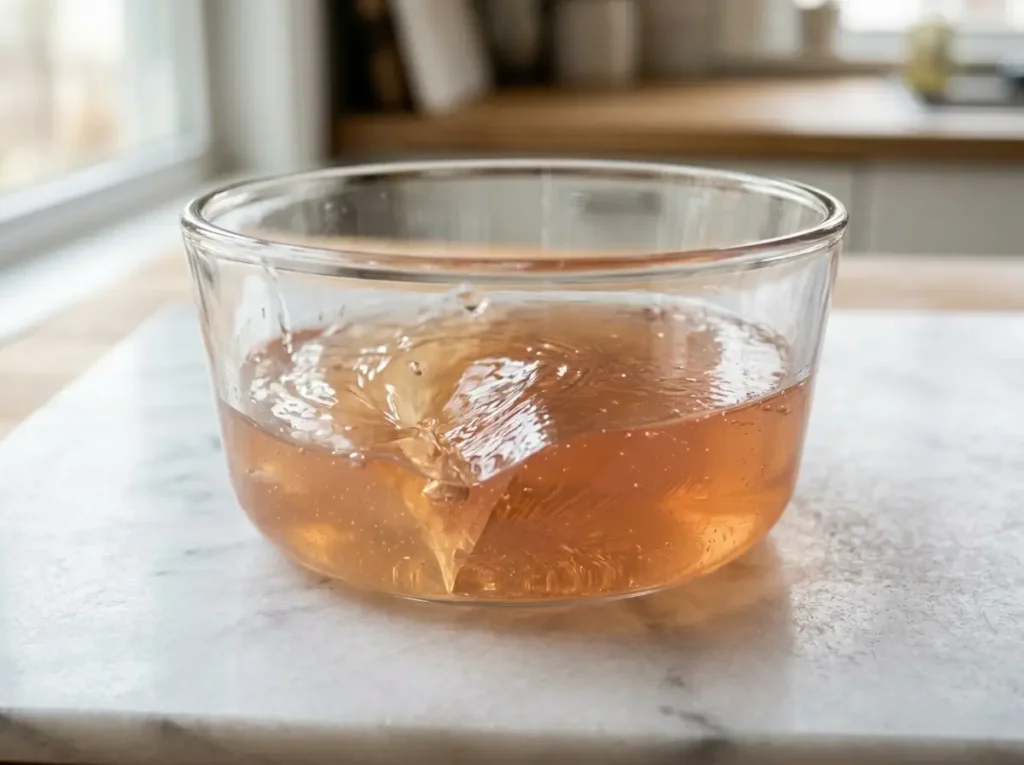
For the gelatin trick specifically, unflavored gelatin powder from a reputable brand is what you need. The most widely used options in the US are Knox Unflavored Gelatin and Great Lakes Grass-Fed Beef Gelatin. Both provide approximately 6 to 7 grams of protein per tablespoon and have a bloom strength suitable for the pre-meal satiety preparation.
For a full guide on using Great Lakes gelatin specifically, including the correct canister to choose and step-by-step preparation, see our dedicated Great Lakes gelatin recipe guide.
Complete Gelatin Guide — All Articles
This article is part of our full gelatin series. Each guide covers a different angle:
- Does Gelatin Help With Weight Loss? The Science
- Does the Gelatin Trick Really Work? Honest Verdict
- What Is Gelatin Made Of?
- Beef Gelatin Benefits
- How to Bloom Gelatin — Step by Step
- How Much Gelatin Per Day
- Is Beef Gelatin Halal?
- Is Gelatin Gluten-Free?
- Great Lakes Gelatin Recipe
- Gelatin-Free Marshmallows
Frequently Asked Questions
Does gelatin have collagen?
Yes — gelatin is derived from collagen. It is produced by partially hydrolyzing collagen from animal connective tissue. The amino acid profile is similar to collagen, but the molecular structure is different.
Is gelatin the same as collagen peptides?
No. Gelatin is partially hydrolyzed collagen that gels when dissolved in hot liquid and cooled. Collagen peptides are fully hydrolyzed and dissolve completely without gelling. They are not interchangeable for the gelatin trick.
Can I use collagen peptides for the gelatin trick?
No. Collagen peptides do not gel and will not produce the stomach-filling effect that makes the gelatin trick work. You must use unflavored gelatin powder — Knox or Great Lakes gelatin — not collagen peptide supplements.
Does gelatin contain the same amino acids as collagen?
Yes — gelatin contains the same primary amino acids as collagen: glycine, proline, and hydroxyproline. These amino acids support connective tissue synthesis in the body, which is why both gelatin and collagen supplements are associated with skin, joint, and bone health benefits.
Which has more collagen — gelatin or collagen peptides?
Both come from the same collagen source and contain similar amino acid profiles. Collagen peptides are absorbed faster due to their smaller molecular size, but gelatin provides the same building blocks at a lower cost per serving.
Disclaimer: This article is for informational purposes only and does not constitute medical advice. Always consult a healthcare professional before making dietary changes.