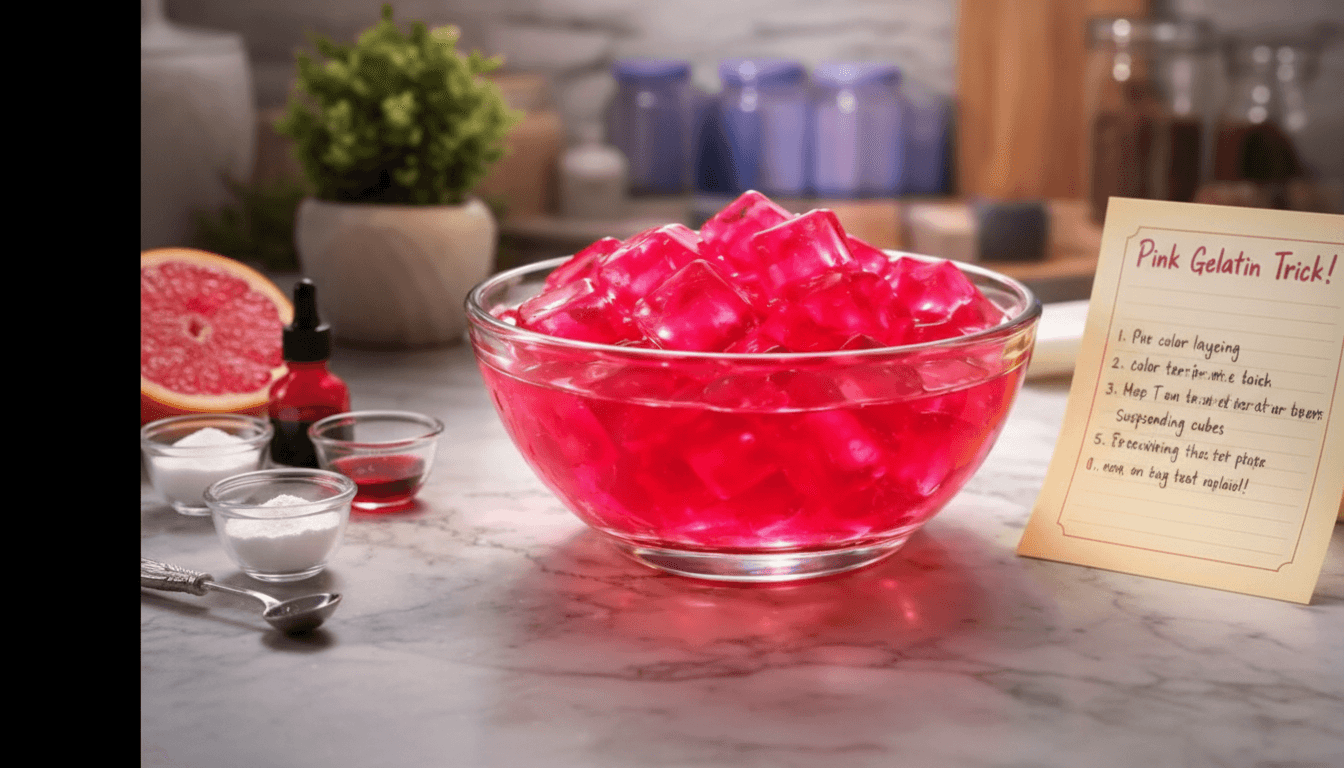
Dr Oz pink gelatin trick recipe is exploding in U.S. search trends, sparking questions about its legitimacy as a weight loss hack or just clever marketing hype. If you’re Googling dr oz pink gelatin recipe reviews, dr oz pink gelatin trick recipe tiktok, or what are the 3 ingredients in the pink gelatin trick, you’re likely verifying if Dr. Oz truly endorsed this nighttime snack for fat burning, cravings, or metabolism boost.Recipe Subscription Box
Dr oz pink gelatin recipe video clips and bariatric gelatin recipe for weight loss posts show a basic sugar-free pink mix (strawberry/raspberry Jell-O style) dissolved in hot water, chilled, and eaten evenings to supposedly activate overnight fat loss. Yet credible checks reveal no official Dr. Oz transcript, episode, or site confirms a branded dr oz pink gelatin drops or dr oz pink gelatin recipe—it’s largely viral rebranding of general protein snack advice.
Why the surge? Pink gelatin weight loss recipe gets tied to collagen hacks, ACV add-ins, and “easy trick” narratives on TikTok and YouTube, implying TV breakthrough without direct proof. This guide dissects the origins, common formulas, viral psychology, myths, safety, and real expectations to arm you with facts before trying.
Curious why the pink gelatin trick recipe easy versions went viral and what’s the real story? Dive into the full truth below.
What Does the Dr Oz Pink Gelatin Trick Recipe Actually Refer To?
The dr oz pink gelatin trick recipe surfaces online as a low-cal evening gelatin made with sugar-free strawberry/raspberry mix, hot water, cold water set, and optional collagen or ACV—touted for curbing cravings and “sleep fat burn.” Pink gelatin weight loss recipe videos claim it swaps desserts while boosting protein satiety, but U.S. platforms treat it as a TikTok trend label, not medical protocol.
In viral dr oz pink gelatin recipe video formats, it includes:
Sugar free strawberry or raspberry gelatin mix
Hot water
Sometimes cold water to set it
Optional additions like apple cider vinegar, collagen powder, or lemon juice
| Component | Purpose Claimed Online | Reality Check |
|---|---|---|
| Sugar free pink gelatin | Low calorie dessert substitute | Flavored gelatin with artificial sweeteners |
| Collagen powder | Supports metabolism & skin | Protein source, not a proven fat burning agent |
| Apple cider vinegar | Boosts fat loss | Limited evidence for significant weight reduction |
| Nighttime consumption | Burns fat during sleep | No strong clinical proof of this mechanism |
Content implies Dr. Oz TV endorsement, but no verified clip shows him demoing dr oz pink gelatin drops specifically—likely stems from broader snack talks.Recipe Subscription Box
Was the Dr Oz Pink Gelatin Trick Recipe Officially Recommended?
The core query on dr oz pink gelatin trick recipe is Dr. Oz creation—clarification: no evidence of a formal “dr oz pink gelatin trick recipe” intro, publish, or episode under that name.
Dr. Oz has covered protein snacks, cravings, metabolism broadly, but not this exact pink variant as a branded weight loss fix.Recipe Subscription Box
Why the Confusion Happens
Health trends follow: public tip → blogger spin → catchy SEO label → detached virality. Dr oz pink gelatin recipe fits perfectly—search-optimized over substance.
What This Means for Readers
Key facts for dr oz pink gelatin trick recipe seekers: no official title endorsement; it’s a snack hack; fat burn claims lack clinical backing. Set grounded hopes to avoid hype pitfalls.
Ingredients Commonly Linked to the Dr Oz Pink Gelatin Trick Recipe
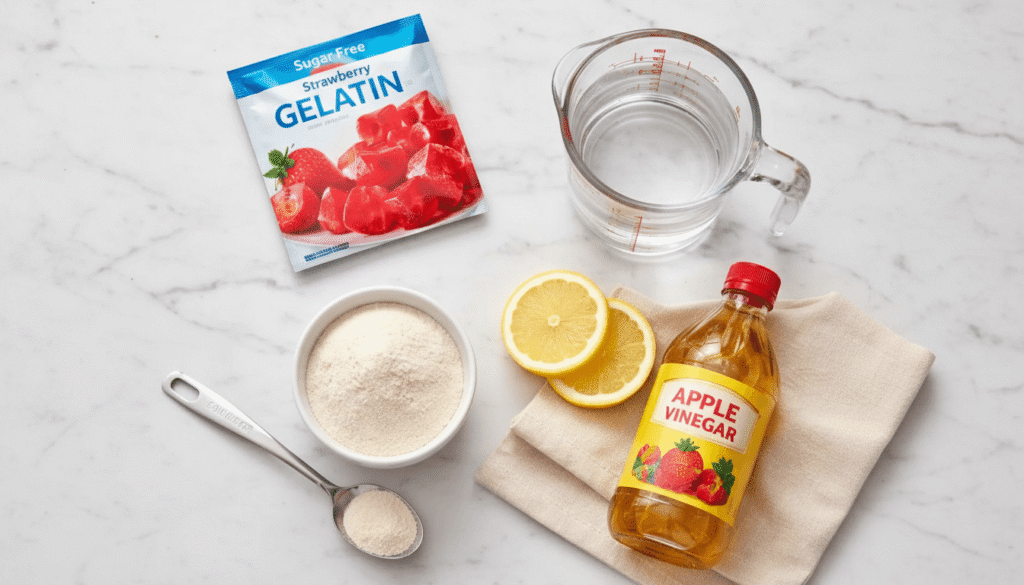
Searches for dr oz pink gelatin trick recipe chase exact lists—simple, cheap home prep dominates, no branded formula.
dr oz pink gelatin trick recipe Ingredients commonly used in pink gelatin weight loss recipe
Common Ingredients
Sugar Free Pink Gelatin (Strawberry or Raspberry)
Hot Water
Cold Water
Optional Add Ins: Collagen powder, Apple cider vinegar, Lemon juice, Stevia
| Ingredient | Claimed Benefit Online | What It Actually Does |
|---|---|---|
| Sugar free gelatin | Burns fat at night | Low calorie flavored gelatin |
| Collagen powder | Speeds metabolism | Provides protein; not a fat loss shortcut |
| Apple cider vinegar | Melts belly fat | May slightly affect appetite; limited evidence |
| Lemon juice | Detoxifies body | Adds flavor; liver already detoxifies naturally |
How the Recipe Is Usually Prepared
Dissolve pink mix in hot water, stir optionals, chill firm, eat evenings—simplicity drives appeal as dessert swap.Recipe Subscription Box
No “fat burning compound” proven; benefits tie to calorie cuts via habit, not magic.
Why the Dr Oz Pink Gelatin Trick Recipe Went Viral
Dr oz pink gelatin trick recipe thrives on U.S. easy-fix appeal: Dr. Oz name + pink visual + “trick” hook. Fits nighttime hacks, collagen trends, low-cal swaps. TikTok/YouTube bold claims (“Dr Oz bedtime trick”) detach from origins, fueling shares.
Psychological Factors Behind Its Popularity
| Factor | Why It Matters |
|---|---|
| Authority bias | Doctor name boosts trust |
| Simplicity bias | 3-ingredient easy wins belief |
| Scarcity language | “Trick” hints secret edge |
| Visual appeal | Bright pink pops on feeds |
Cheap, instant-try boosts trials/shares—no validation needed.Recipe Subscription Box
Virality ≠ science; hype separates from evidence.
Common Misconceptions About the Dr Oz Pink Gelatin Trick Recipe
Dr oz pink gelatin drops claims breed myths—here’s the breakdown.
Comparison between pink gelatin myth and balanced diet reality
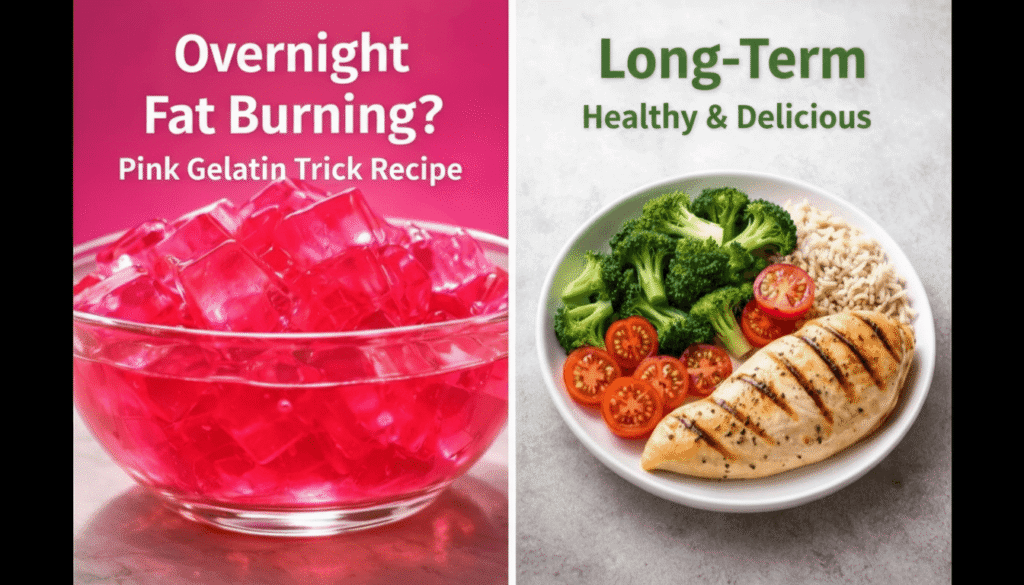
Misconception 1: It Automatically Burns Fat Overnight
Bedtime fat trigger? No—deficit over time rules; gelatin doesn’t override diet/activity.
Misconception 2: It “Detoxifies” the Body
Body self-detoxes via liver/kidneys; add-ins don’t enhance.
Misconception 3: It Was a Secret TV Reveal
No exact-title episode; post-hoc branding.
Misconception 4: More Is Better
Low-cal tempts excess—sweeteners/ACV can upset digestion.Recipe Subscription Box
Misconception 5: It Replaces a Balanced Diet
Dessert aid only—not nutrient/full-meal sub.
Facts curb letdowns/risks.
Safety Considerations and Realistic Expectations
Ingredients safe for most, but nuance key.
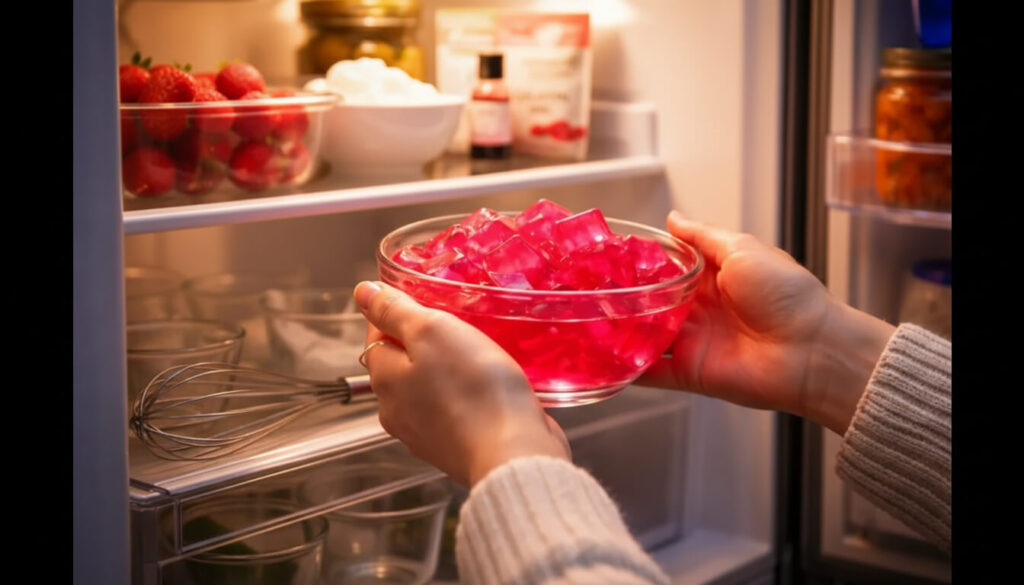
Placing pink gelatin snack in refrigerator at night.
Safety Considerations
Artificial sweeteners: bloating risk.
Apple cider vinegar: dilute to avoid irritation.
Collagen: brand‑vary quality.
Check labels; consult doc if GI/diabetes/pregnant.
Realistic Expectations
Dessert swap for calorie dip—if ditching chips/ice cream. Doesn’t override habits, burn solo, skip exercise, treat medically.Recipe Subscription Box
| Expectation | Reality |
|---|---|
| Rapid fat loss | Not supported by strong evidence |
| Appetite control | May help as structured snack |
| Metabolism boost | Minimal impact |
| Magic solution | No |
Sustainability: nutrition + move + sleep > trends.
Should You Try the Dr Oz Pink Gelatin Trick Recipe?
Aligns if fits goals—not trends.
Practical: low-cal evening structured snack; indirect aid via swaps, not burn mech.
When It Might Make Sense
- Late cravings
- Low-cal dessert need
- Gelatin fan
- Realistic view
When Caution Is Warranted
- Sweetener sensitivity
- Dramatic loss hopes sans changes
- Vinegar/GI issues
| Reason to Try | Reason to Reconsider |
|---|---|
| Low calorie dessert swap | Expecting rapid weight loss |
| Easy and inexpensive | Sensitive stomach |
| Simple preparation | Belief in “overnight fat burning” |
Diet choice, not shortcut—habits drive long-term.Recipe Subscription Box
Dr. Oz Pink Gelatin Recipe Reviews — Is It a Scam?
One of the most common questions surrounding the Dr. Oz pink gelatin trick recipe is whether it is legitimate or simply clever marketing. Many people searching for honest reviews want to know if the pink gelatin drink actually delivers results — or if the Dr. Oz association is misleading.
The honest answer: the Dr. Oz pink gelatin trick recipe is not a scam in the traditional sense. The recipe itself is real, the ingredients are safe, and the appetite control mechanism — gelatin protein triggering fullness before meals — has genuine scientific logic behind it. What is misleading is the implied Dr. Oz endorsement, which appears to have developed through social media amplification rather than any verified official recommendation.
What Real Users Say
People who try the Dr. Oz pink gelatin trick recipe typically report one of two experiences. Those who use it consistently before meals — 15 to 30 minutes before eating — often describe reduced appetite and smaller portions at their next meal. Those who expect dramatic overnight fat loss, as some viral videos suggest, are usually disappointed.
The most realistic outcome is a modest but consistent reduction in calorie intake when the recipe replaces higher-calorie snacks or pre-meal habits. Combined with balanced nutrition and daily movement, this can contribute to gradual weight management over several weeks.
Is the Dr. Oz Pink Gelatin Recipe a Scam?
| Claim | Verdict |
|---|---|
| Dr. Oz officially created this recipe | ❌ No verified evidence |
| The recipe burns fat overnight | ❌ Not supported by science |
| Gelatin supports pre-meal fullness | ✅ Legitimate mechanism |
| The ingredients are safe | ✅ Generally safe for healthy adults |
| Results require consistent use | ✅ Correct |
The recipe is not a scam — but the marketing surrounding it often overpromises. Treat the Dr. Oz pink gelatin trick recipe as a simple, low-calorie pre-meal habit rather than a guaranteed weight loss solution, and the results will align with realistic expectations.
For a deeper comparison of similar trending supplements making bigger claims, see our Jelly Lean Review and Slimpic Weight Loss Reviews.
Conclusion
Dr oz pink gelatin trick recipe captivates searches/social via name + simple promise, but scrutiny shows no verified branded method—just repackaged snack with marketing spin.
Practical dessert alt for some, aiding control via swaps. No science backs overnight burn/dramatic loss.
Progress roots in nutrition/activity/sleep/decisions. View as snack option, not breakthrough—test wisely.
FAQs About the Dr Oz Pink Gelatin Trick Recipe
Is the dr oz pink gelatin trick recipe real?
It’s a real recipe circulating online, but there is no verified evidence that Dr. Oz created or officially named it. It’s more of a viral gelatin snack trend.
Did Dr. Oz officially recommend the pink gelatin trick?
There is no public record or transcript confirming that Dr. Oz specifically recommended the “pink gelatin trick recipe.” It’s loosely مرتبط general wellness discussions.
What ingredients are usually in the dr oz pink gelatin trick recipe?
Most versions include sugar-free strawberry or raspberry gelatin mixed with hot water and chilled. Variations may add collagen, apple cider vinegar, lemon juice, or stevia.
Does the dr oz pink gelatin trick recipe help with weight loss?
There is no scientific proof that it directly burns fat. However, it may support weight loss if used as a low-calorie substitute for higher-calorie desserts.
Why do people say it works overnight?
Claims of overnight results are mostly marketing hype. Real weight loss happens gradually through a calorie deficit, not from gelatin or any single food.
Is the dr oz pink gelatin trick recipe safe?
In moderate amounts, it is generally safe for healthy adults. However, some people may experience discomfort from artificial sweeteners or ingredients like vinegar.
Can I make it with regular gelatin instead of sugar free?
Yes, but using regular gelatin increases the sugar and calorie content, which may reduce its usefulness as a low-calorie snack.
Is collagen necessary in the recipe?
Collagen is optional. It can add protein and may support skin or joint health, but it is not essential for weight loss.
Where did the dr oz pink gelatin trick recipe originate?
The exact origin is unclear. It likely evolved from general high-protein snack ideas and gained popularity through blogs and TikTok.
Should I rely on the dr oz pink gelatin trick recipe alone for results?
No. Sustainable results require a balanced diet, regular physical activity, good sleep, and consistency. This recipe should only be considered a small addition, not a solution.
3 thoughts on “Does the Dr. Oz Pink Gelatin Trick Recipe Actually Work?”