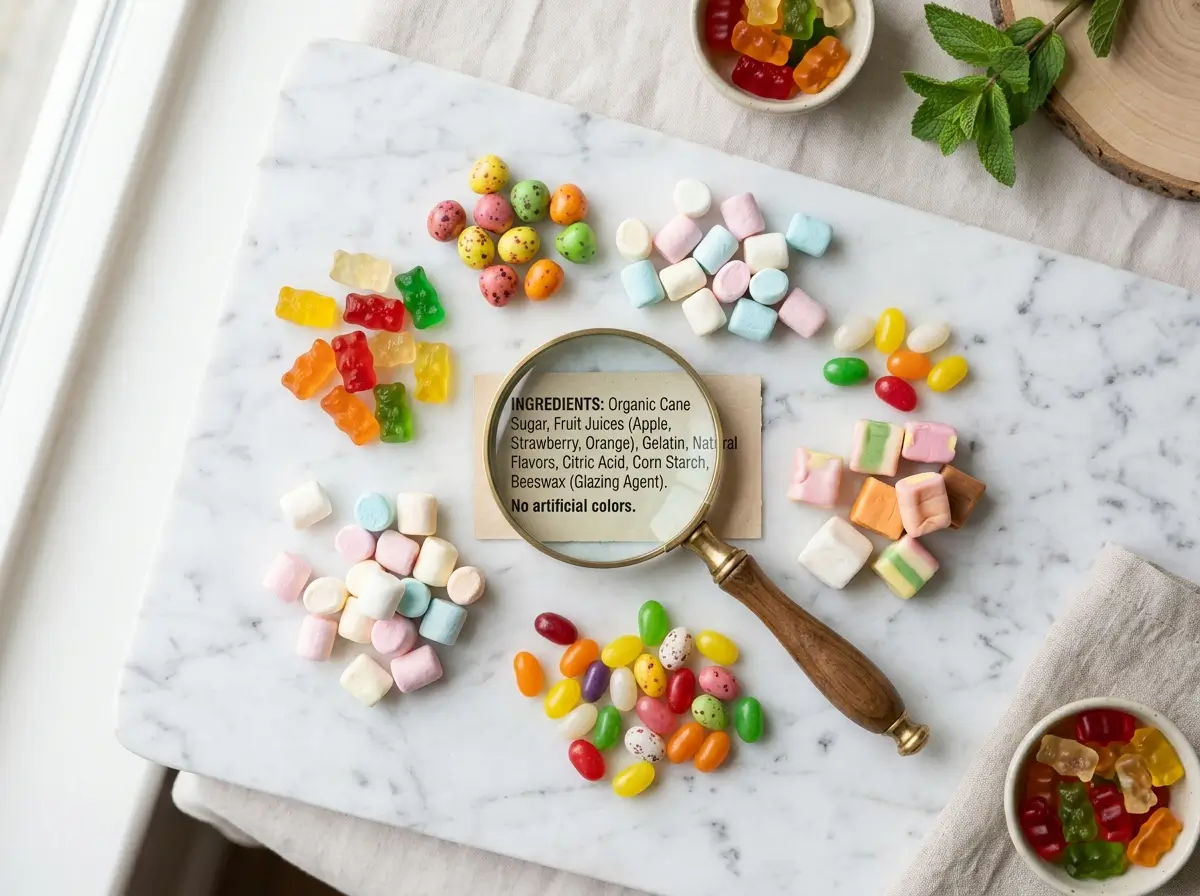
Is gelatin halal is a question I get asked more than almost any other ingredient question, and for good reason. Gelatin hides in candy, marshmallows, yogurt, capsules, and gummy vitamins, yet the label rarely tells you where it came from. The honest answer is that it depends entirely on the source, and once you understand the few rules that govern it, you will never have to guess again.
In this guide I walk through every source of gelatin and its halal status, how to read a label, what the major certification bodies say, and which alternatives make the whole problem disappear. If you specifically want the cattle-based ruling, my focused piece on whether beef gelatin is halal goes deeper on that single source.
Quick answer: Pork gelatin is always haram. Beef gelatin is halal only if the animal was slaughtered Islamically (zabiha) and certified. Fish gelatin and plant-based alternatives like agar-agar and pectin are always halal. If a label just says “gelatin” with no source, treat it as doubtful.
What Gelatin Is and Why the Source Matters
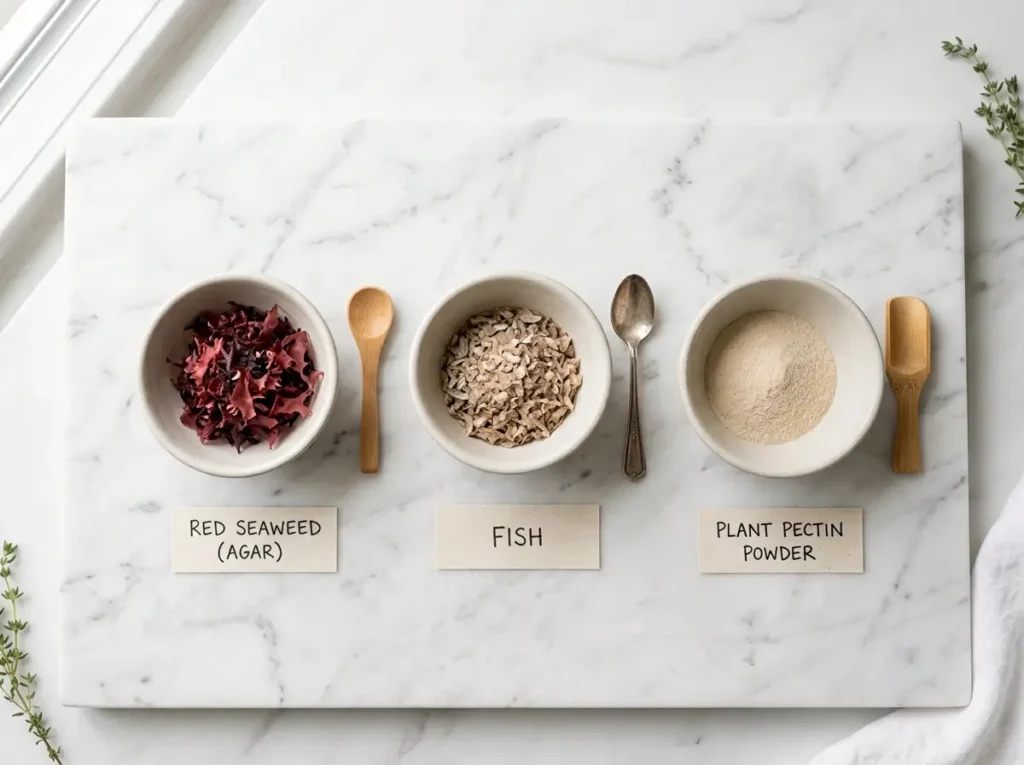
Gelatin is a protein made from collagen found in the skin, bones, and connective tissue of animals. Through a process of boiling and extraction, that collagen becomes the colorless, flavorless powder that gels when it cools. If you want the full production breakdown, my explainer on what gelatine is made of covers the sourcing and processing in detail.
Because gelatin is an animal by-product, its permissibility in Islam follows the same rules as the animal it came from. The chemistry of the powder is identical whether the source was a pig or a halal-slaughtered cow, which is exactly why the source, not the final product, decides everything.
Halal Status of Each Gelatin Source
Here is where most of the confusion clears up. According to Islam Question & Answer (IslamQA) and the Islamic Fiqh Council of the Muslim World League, the ruling depends on the origin and the method of slaughter.
| Gelatin Source | Halal Status | Condition |
| Pork (porcine) | Haram | Always forbidden, no exceptions |
| Beef / bovine | Conditional | Halal only if zabiha-slaughtered and certified |
| Fish | Halal | Permissible without special slaughter |
| Plant (agar, pectin) | Halal | Always permissible |
| Poultry | Conditional | Same slaughter rules as beef |
| Unlabeled “gelatin” | Doubtful | Assume pork in Western products; avoid |
The fish exception is worth highlighting. Most scholars across all four schools hold that fish is permissible without ritual slaughter, which makes fish gelatin the safest animal-derived option. It is just less common in mainstream products.
Why Pork Gelatin Is Always Haram
Pork-derived gelatin is the most widely used and cheapest type, made from pig skin and bones. It is haram under Islamic law regardless of how heavily it is processed. The prohibition on pork is explicit in the Quran, and the overwhelming majority of scholars agree that processing does not purify it.
A small minority cite istihalah, the idea of complete chemical transformation, to argue that processing changes the substance entirely. However, most scholars, particularly in the Hanafi school, reject this for gelatin because the transformation is not considered complete. The practical takeaway is simple: do not rely on the transformation argument for pork gelatin.
Beef Gelatin: Halal Only Under Conditions
This is where the word “beef” misleads people. Beef gelatin is not automatically halal. The cow must have been slaughtered according to Islamic guidelines, and in most Western facilities it was not. Without zabiha slaughter and recognized certification, the majority of scholars consider beef gelatin doubtful or impermissible. My full breakdown lives in is beef gelatin halal.
One related trap: kosher certification does not automatically equal halal. Kosher fish gelatin is fine, but kosher beef gelatin is not halal unless it also carries halal certification, because the animal was not slaughtered by a Muslim in the prescribed manner. For background on the ingredient itself, see what is bovine gelatin.
How to Read a Label and Spot Hidden Gelatin
Manufacturers do not always make this easy. Gelatin appears under several names, and learning them is the single most useful skill for halal shoppers.
- Gelatin or Gelatine — the most common listing
- E441 — the European food code for gelatin; can be pork, beef, or fish
- Hydrolyzed collagen — another form to watch for
- E120 (carmine) — not gelatin, but often appears alongside it for red coloring and is also haram (insect-derived); check for it at the same time
The golden rule: if a product does not say “halal-certified,” “fish gelatin,” or “suitable for vegetarians,” and you are in a Western country, assume the gelatin is pork-derived and treat it as haram until proven otherwise.
Which Certifications to Trust
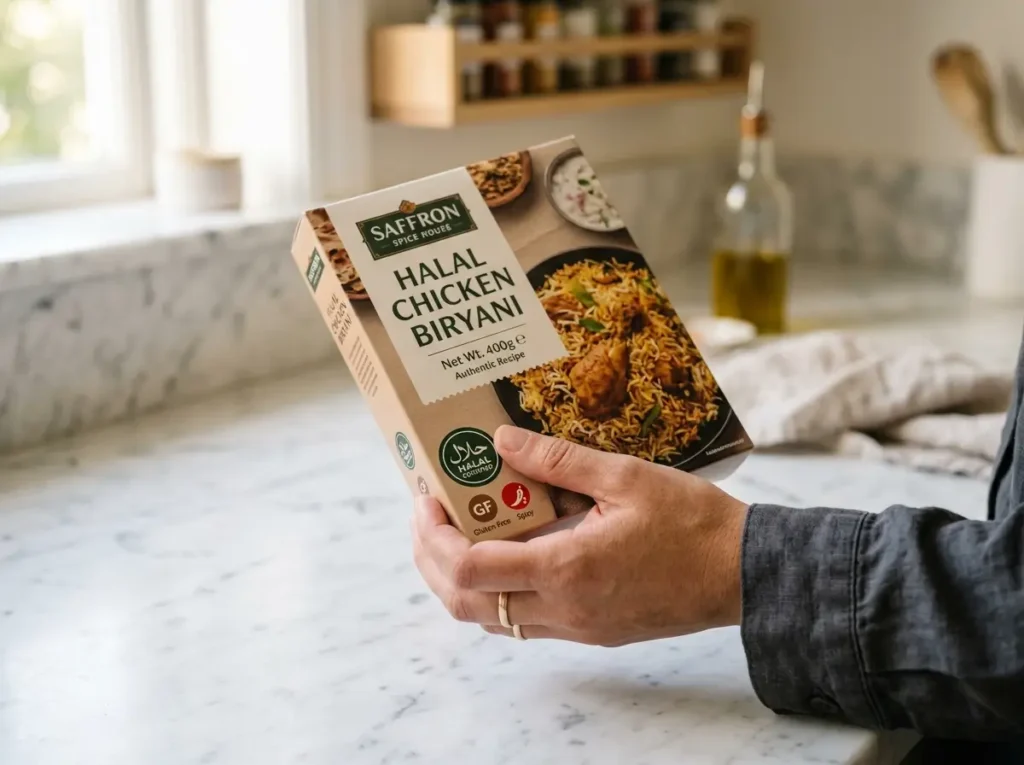
Certification removes the guesswork. The bodies most widely recognized include IFANCA in the United States, the American Halal Foundation, JAKIM in Malaysia, and MUIS in Singapore. Look for their logos on the packaging — a written “halal” claim without an official logo is not sufficient.
These bodies also require that halal gelatin be produced on segregated lines, because cross-contamination with pork gelatin in shared facilities can compromise the halal status even when the source animal was permissible.
Common Products That Often Contain Gelatin
| Product | Typical Gelatin Risk | Halal Tip |
| Gummy candies | Usually pork | Look for halal-certified or vegan brands |
| Marshmallows | Usually pork | Choose beef-zabiha or carrageenan-based |
| Yogurt | Sometimes beef/pork | Check label or pick gelatin-free |
| Capsules / vitamins | Often bovine | Seek halal or plant capsules |
| Jello desserts | Usually pork | Use agar-agar or halal-certified mixes |
If you are checking specific candies, I keep a running set of source guides, including whether nerds gummy clusters contain gelatin and whether gushers contain gelatin.
Halal Alternatives That Solve the Problem
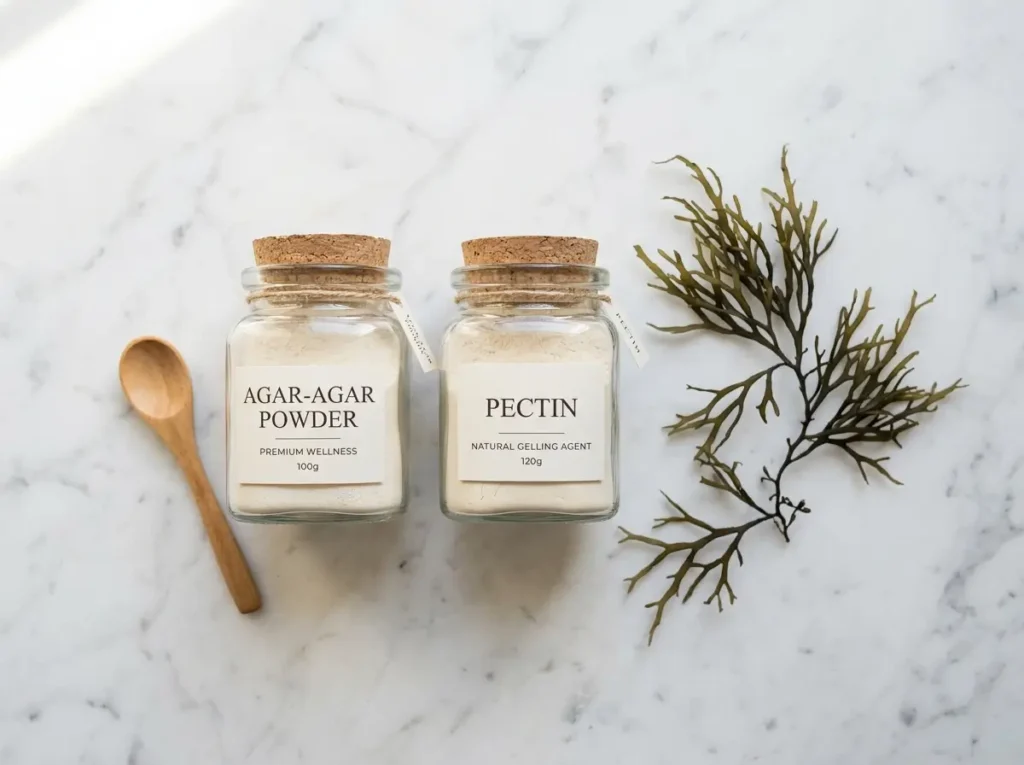
The simplest way to avoid the whole question is to use plant-based gelling agents, which are always halal. Agar-agar from seaweed, pectin from fruit, and carrageenan from red algae all work as substitutes. My guides on plant-based gelatin substitutes and agar-agar vs gelatin show how to swap them in without ruining the texture. For a candy you can make at home, the gelatin-free jello recipe uses agar instead.
Frequently Asked Questions
Is gelatin halal in Islam?
Gelatin is halal only when it comes from a halal-slaughtered animal (zabiha beef) or from fish or plants. Pork gelatin is always haram, and unlabeled gelatin in Western products should be treated as doubtful and avoided.
Is fish gelatin halal?
Yes. Most scholars agree that fish is permissible without special slaughter, which makes fish gelatin the safest animal-derived option. It is just less common in mainstream products.
Is beef gelatin halal?
Only if the cow was slaughtered according to Islamic law and the product is halal-certified. “Beef” alone does not make it halal, because most commercial beef gelatin is not zabiha.
Is gelatin with E441 halal?
E441 is simply the European code for gelatin and can be pork, beef, or fish. It is only halal if the product is halal-certified or clearly states a permissible source.
Is kosher gelatin halal?
Not automatically. Kosher fish gelatin is halal, but kosher beef gelatin is not halal unless it also carries halal certification, since the animal was not slaughtered in the Islamic manner.
What can I use instead of gelatin?
Agar-agar, pectin, and carrageenan are all plant-based and always halal. They replace gelatin in most desserts and candies with minor adjustments to quantity and technique.
The Bottom Line
Is gelatin halal? It comes down to one word: source. Pork gelatin is haram, beef gelatin is halal only when zabiha-slaughtered and certified, and fish and plant-based gelatins are always safe. When a label is silent, caution is the wise default, and certification logos are your fastest path to confidence.
Read labels, learn the E441 code, lean on recognized certifications, and keep agar-agar in your pantry for everything you make at home. For your next read, my guides on what gelatine is made of and plant-based gelatin substitutes are the natural next steps.
Disclaimer: This article is for general informational purposes and summarizes widely held scholarly positions. Rulings can vary between schools of thought and individual scholars. For personal religious guidance, consult a qualified scholar or your local halal certification authority.
2 thoughts on “Is Gelatin Halal? Beef, Pork, Fish & Plant Sources Explained”